Water heaters are among the most helpful appliances in our homes, supplying warm water whenever it is needed. For quite some time, this type of technology has been employed all over the world.
Most of the United States has been using tanks to store the water that their homes’ water heaters have been heating.
However, these water heater tanks take up quite a large amount of space, considering they’re designed to hold up to 80 gallons of water.
And once all the water has been used, the faucets and showers throughout the house are left supplying cold water while the heater heats up another 80 gallons of water.
In the 1970s, tankless water heaters were introduced to the United States. With the introduction of these water heaters, a home could now use heated water as long as they wanted without worrying about how much water was left before their water would run cold.
Today, however, many houses still use tank water heaters to run hot water through their homes. Here are a number of benefits of tankless water heaters in Phoenix that may convince you to replace your current water heater.
What Are Tankless Water Heaters?
Tankless water heaters, as the word suggests, don’t use tanks to hold and heat the water before sending it through the house. Also known as on-demand water heaters, they use high-power burners inside a heat exchanger to heat the water as it moves through.
This allows you to have access to hot water for as long as you have running water. On average, tankless water heaters can take about 5 seconds to heat and deliver hot water.
Depending on the model of the water heater, a tankless water heater can supply up to 5 gallons of water per minute. A gas-burning model, on the other hand, can produce even more hot water than an electric model.
Read Also:
Save Space in Your Home
As the name says, a tankless water heater is a small and compact piece of machinery that doesn’t use a tank. They only take up about 20% of the space a traditional water heater would, leaving more space for storage or other needs.
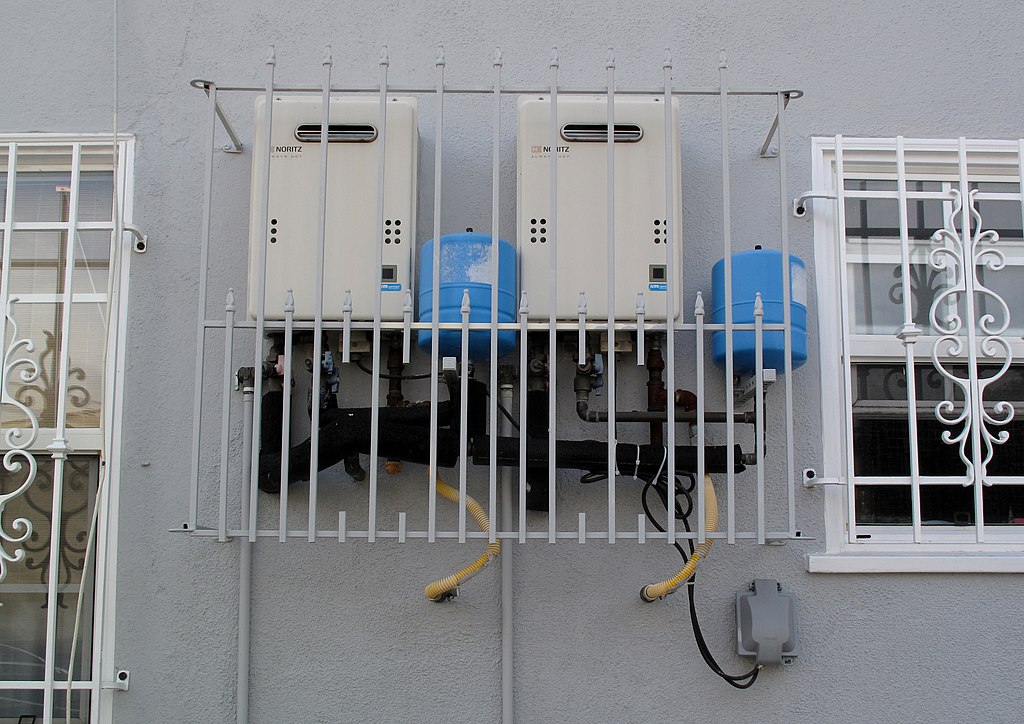
As such, these kinds of water heaters are best used for small homes or apartments. Additionally, if needed, tankless water heater systems can also be installed on the walls or even outdoors to further conserve space inside the house.
Saves More on Energy Costs
Tankless water heaters are regarded as considerably more energy-efficient than standard water heaters since they only heat the water when the taps are switched on.
An average tankless heater can save your home anywhere from 30% to 50% of your energy. In fact, research has shown that homes that use less water – about 40 gallons or less on average daily – with a tankless heater end up saving around 35% more energy.
Have A Longer Life Span?
On average, a tankless water heater can last between twenty and thirty years before needing to be replaced. A traditional water heater, on the other hand, may last about half that long, anywhere between ten and fifteen years.
While tankless water heaters may need maintenance every two to three years due to more internal workings and potential environmental wear, a water softener can easily help achieve the benefits you can get.
Thankfully, the same strain that a traditional system faces in desert areas is avoided by tankless systems and can even be designed for these specific areas.
Saves You Money in The Long Run
Depending on the general layout of the pipes in the house, installing a tankless water heater can save you more money.
As mentioned, these kinds of water heaters are available in gas and electric models, as well as hybrids. When it comes to installing the water heater, the system can also simply be adjusted to fit into the existing infrastructure.
However, if your house needs adjustments to the venting system or the gas lines, the overall installation may be rather costly. The switch in types of systems tends to include both the tankless heater and the materials as well. After, though, the costs are paid back from the energy saved.
Offers Hot Water Whenever You Need It
A tankless system, while right for small residences or families, is also a good option for individuals who require hot water throughout the day. The system can instantly heat and circulate water throughout the house without causing severe temperature swings.
The volume of heated water is ideal for filling hot tubs or jacuzzis on colder nights, as long as your taps are turned on and your home has gas or electricity.
Any Size for Your Needs
One of the best features of a tankless water heater is that there are many different sizes offered to suit the needs of your house or how many people are in your family.
The specifications vary depending on the amount of water you need per fixture in your house. Many tankless heater systems offer between 2 GPM (gallons per minute) and 12 GPM.
On average, many homes only need a 5-10 GPM system to work effectively. The higher the capacity needed, the higher the price.
Similarly, electric models of tankless systems offer similar ranges. Smaller households can use a system that uses 10 to 18 kW while larger ones use 34kW and up.
Depending on what the house and its occupants’ needs, the type and size of the tankless heater’s system can change to accommodate them as well.
Conclusion
Depending on the size of your home and the number of people that live there, a tankless water heater can be a great replacement for an existing traditional system.
Despite an initially high installation cost, the energy saved can not only recover the costs but also save more in the long run.
Additionally, the longer lifespan also allows access to hot water whenever it’s needed and for as long as it’s needed. Once the tap is turned off, both energy and money are being saved.