• DIY
    • Crafts
      • Outdoors & Garden Projects
    • Decorating
      • Exterior Painting & Decorating
      • Painting & Wallpaper
      • Room by Room
    • Furniture
      • Cabinets
      • Tables
    • Woodworking
  • Home Improvement
    • Real Estate
    • Living
    • Entertaining
    • Home Building & Design
      • Home Interior
      • Home Exterior
    • Home Management
      • Home Organization
    • Remodeling
    • Living Areas
    • Bathroom
    • Kitchen
  • Lawn & Garden
    • Lawn Care
    • Vegetable Gardening
    • Landscaping
      • Irrigating
    • Flowers
    • Trees & Shrubs
  • Categories
    • Home Improvement
    • Lawn & Garden
    • Landscaping
    • Real Estate
Housesumo.com
  • DIY
    • Crafts
      • Outdoors & Garden Projects
    • Decorating
      • Exterior Painting & Decorating
      • Painting & Wallpaper
      • Room by Room
    • Furniture
      • Cabinets
      • Tables
    • Woodworking
  • Home Improvement
    • Real Estate
    • Living
    • Entertaining
    • Home Building & Design
      • Home Interior
      • Home Exterior
    • Home Management
      • Home Organization
    • Remodeling
    • Living Areas
    • Bathroom
    • Kitchen
  • Lawn & Garden
    • Lawn Care
    • Vegetable Gardening
    • Landscaping
      • Irrigating
    • Flowers
    • Trees & Shrubs
  • Categories
    • Home Improvement
    • Lawn & Garden
    • Landscaping
    • Real Estate
Featured of Mix Mortar for Bricklaying
  • Home Exterior
  • DIY
  • Home Improvement

Mix Lime Mortar and Sand for Bricklaying

  • Perla Irish
  • November 9, 2018
Total
103
Shares
103
0
0
0

Lime cement mix, sand, and water go into the preparation of mortar. Below is advice on mixing mortar for various masonry projects (Mix mortar for bricklaying).

Mortar, commonly called “mud” by masons, is the adhesive that cements bricks, stones, blocks, and various tiles together. It is an essential part of any brickwork . Following is how to mix lime mortar with sand and water to make mud for bricklaying.
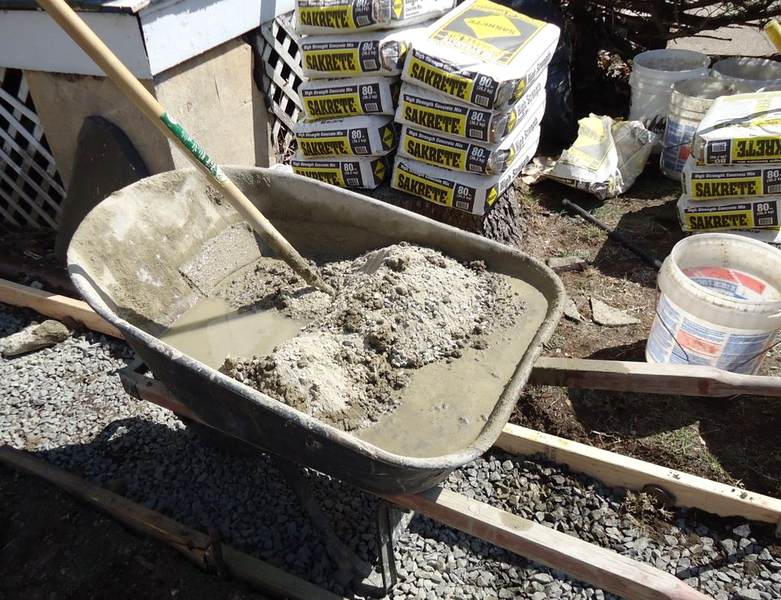
Mix mortar for bricklaying
Mix Mortar for Bricklaying By Tomwsulcer [CC0], from Wikimedia Commons

Mix Lime Mortar, Sand, and Water for Brick Mud

Masonry supply companies sell bags of cement mix with lime, which is then mixed with sand and water to make brick mud. For serious projects, a mixer is necessary.

This is a gasoline-powered machine that spins the ingredients together, forming a mortar with an even consistency that may be used to lay brick. For smaller, home projects, a shovel, hoe, and wheelbarrow can be enough to make mud.


Read Also:

  • How to Install Fiber Cement Lap Siding
  • How to Repair Cracks on Concrete Foundations
  • Brilliant Ideas for Your 2019 Home Renovation Project
  • How to Make Concrete Molds for Patio Blocks and Walkway Pavers
  • Revving Up a Renovation: Which Rooms to Begin With
  • How Do I Tell How Many Bags of Concrete I Need for a Project?

Proportions and Quantities for Mortar Making

To make a load of mud, the following basic proportions should be loosely followed:

  1. 1 bag lime mortar cement mix
  2. 18 shovel scoops of sand
  3. 5 gallons of water

To mix this up, first, crank up the mixer, and add the five gallons of water to it. Then, as the water is sloshing around with the machine’s spinning, break open the cement back and pour the dry powder contents into the mixer.

Then shovel in the sand, until the right consistency results, usually after around 18 shovel-fulls. On colder days, slightly less water or slightly more sand, to make a stiffer mud, is best, and on hot, summer days, wetter mortar is better.

Mixing Mortar in a Wheelbarrow

To make mortar in a wheelbarrow, combine the lime mortar cement mix and 18 full scoops of sand. Then, pour in some of the water, and take a hoe to it to mix the wheel barrow’s contents around. Pull the hoe from front to back, over and over, scraping the bottom of the tub to mix everything together.

Then, add more water, and repeat this, until about five gallons have been poured in with the cement and sand. The result should be a wet, thick mud that looks like fresh, frozen ice cream, with small creases in it when it is turned over. Make sure, before using the mixed mud, that all clumps of sand have been stirred around, broken up, and have disintegrated into the rest of the homemade brick mortar.

Using Mixed Mortar for Bricklaying

Once mixed, brick mud may be set out in pans near workstations, between stacks of brick, so that masons or a single mason can lay courses of brick, one at a time, moving down the line until one is complete, before building the other.

Mud may need to be shaken up every once in a while if it begins to harden, which requires adding a little water to pans or the wheelbarrow and stirring the water into the firmer drying mud with a hoe, using a pulling and pushing motion.

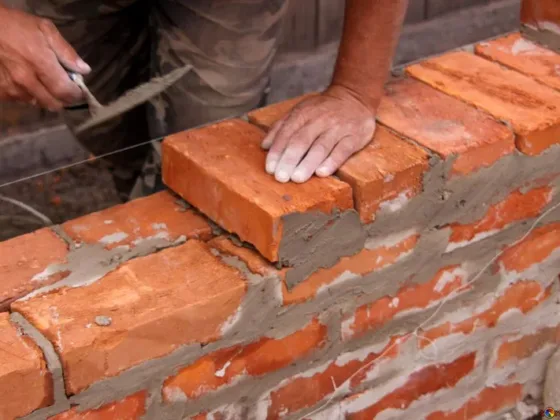
Working with brick mud, formed with a mix of lime mortar, sand, and water, is the business of masons. Trowels are used to apply the mortar to surfaces and brick, and after brick has been laid, the joints must be perfected, and the excess mud, removed before it dries too stiff.
0
0
103
0
Total
103
Shares
Pin it 103
Share 0
Tweet 0
Share 0
Share 0
Previous Article
Featured of How to Fix Peeling Paint and Flaking Paint
  • Home Renovation
  • DIY
  • Home Improvement

Paints and Primers for Peeling Paint and Flaking Paint

  • Perla Irish
  • November 8, 2018
View Post
Next Article
Featured of Bricklaying Tools for Masonry, What Tools are Needed for Bricklaying
  • Home Renovation
  • DIY
  • Home Improvement

What Tools are Needed for Bricklaying?

  • Perla Irish
  • November 9, 2018
View Post

You May Also Like

New residential asphalt driveway with smooth surface and landscaped edges
View Post
  • Home Improvement

Asphalt Driveway Advantages vs Concrete: Cost, Lifespan & Structural Value

  • Perla Irish
  • February 20, 2026
Modest kitchen with wood-look faux butcher block countertop
View Post
  • Kitchen

DIY Faux Butcher Block Countertops: Cost, Durability & Long-Term Reality

  • Perla Irish
  • February 14, 2026
Modular furniture components arranged as an adaptive interior system rather than fixed standalone pieces.
View Post
  • Furniture

Modular Furniture Beyond Sofas: Designing Interiors That Adapt Over Time

  • Perla Irish
  • January 27, 2026
Flexible living room interior layout illustrated as a system, showing modular seating, storage, and furniture arranged for long-term adaptability rather than fixed styling.
View Post
  • Home Interior

Flexible Living Room Layouts: Designing Spaces That Adapt Over Time

  • Perla Irish
  • January 26, 2026
Neutral living space illustrating eco-friendly interior design through flexible layout and long-term adaptability.
View Post
  • Home Interior

Transforming Your Home With Eco-Friendly Interior Design

  • Perla Irish
  • January 26, 2026
Illustration showing a neutral living room layout with abstract seating zones and circulation space.
View Post
  • Furniture

What Is a Modular Sofa and Why It Works for Modern Living Rooms

  • Perla Irish
  • January 21, 2026
Architectural visualization showing an off-the-plan residential project before construction begins.
View Post
  • Home Building & Design

A Builder’s Guide to Marketing New Property Projects

  • Perla Irish
  • January 13, 2026
Technician checking a refrigerator in a home kitchen in Winter Garden, Florida
View Post
  • Home Improvement

Refrigerator Repair in Winter Garden: A Practical Homeowner’s Guide

  • Perla Irish
  • December 31, 2025

Leave a Reply Cancel reply

Your email address will not be published. Required fields are marked *

This site uses Akismet to reduce spam. Learn how your comment data is processed.

Join 13,000 folks!

Get instant access to our weekly newsletter where we share the best! 100% Privacy. No Spam.

  • Disclosure & Affiliate Policy
  • Privacy Policy
  • Terms of Use
  • About
  • Sitemap
  • Contact Us

Input your search keywords and press Enter.