• DIY
    • Crafts
      • Outdoors & Garden Projects
    • Decorating
      • Exterior Painting & Decorating
      • Painting & Wallpaper
      • Room by Room
    • Furniture
      • Cabinets
      • Tables
    • Woodworking
  • Home Improvement
    • Real Estate
    • Living
    • Entertaining
    • Home Building & Design
      • Home Interior
      • Home Exterior
    • Home Management
      • Home Organization
    • Remodeling
    • Living Areas
    • Bathroom
    • Kitchen
  • Lawn & Garden
    • Lawn Care
    • Vegetable Gardening
    • Landscaping
      • Irrigating
    • Flowers
    • Trees & Shrubs
  • Categories
    • Home Improvement
    • Lawn & Garden
    • Landscaping
    • Real Estate
Housesumo.com
  • DIY
    • Crafts
      • Outdoors & Garden Projects
    • Decorating
      • Exterior Painting & Decorating
      • Painting & Wallpaper
      • Room by Room
    • Furniture
      • Cabinets
      • Tables
    • Woodworking
  • Home Improvement
    • Real Estate
    • Living
    • Entertaining
    • Home Building & Design
      • Home Interior
      • Home Exterior
    • Home Management
      • Home Organization
    • Remodeling
    • Living Areas
    • Bathroom
    • Kitchen
  • Lawn & Garden
    • Lawn Care
    • Vegetable Gardening
    • Landscaping
      • Irrigating
    • Flowers
    • Trees & Shrubs
  • Categories
    • Home Improvement
    • Lawn & Garden
    • Landscaping
    • Real Estate
Featured Wood Filler and Wood Sealer: Their Use in Wood Finishing
  • Woodworking
  • Home Improvement
  • Painting
  • Tips

Wood Filler and Wood Sealers, The Role of Sealers and Fillers in Wood Finishing

  • Perla Irish
  • March 5, 2018
Total
4
Shares
4
0
0
0

Wood Filler and Wood Sealer: Their Use in Wood Finishing — Most people are familiar with stains and clear coats, but when it comes to the fillers and sealers used in wood finishing they become confused. I have seen wood filler (“Plastic Wood”) used to fill nail holes, I have heard of sanding sealer recommended as a way to fill the pores of hard wood etc…
Wood Filler and Wood Sealer: Their Use in Wood Finishing

Wood Filler and Wood Sealer: Their Use in Wood Finishing

I want to outline here the wood fillers and sealers, their purpose and when to use them.

Wood Fillers

There are two types of wood fillers that I am familiar with. The first type is used to repair dents, gouges etc.. in wood by filling and surfacing the imperfection. These are made with some sort of fibrous material and a resin as a binder. I have heard of wood workers using saw dust and glue for this type of wood filler. The universal problem with these types of fillers is that they won’t take stain the same way that the surrounding wood will for a couple of reasons:

  1. There is no “wood grain” in these fillers – they are just a paste of fiber and resin.
  2. They are not the same porosity as the surrounding wood nor the same type of wood.

The second type of filler is used to fill the pores of hardwoods like oak. This is a “paste wood filler”. This type of filler is applied to the surface and squeegeed off, leaving it in the pores of the wood filling and leveling the surface. Commercial paste wood filler comes in premixed colors and can be tinted to match using either universal colorants, dry pigments or japan colors depending on the wood filler

I use “Swedish putty” to fill the pores in lieu of using a commercial wood filler. One or two applications will do the job, and it will match the stain that I am using on the wood also without the need to match it with colorants of any type.

Must Read:

  • How to Shading and Toning Varnishes
  • What is the Difference Between Varnish and Other Clear Coats?
  • Varnish, Oil-based-Varnish
  • Kitchen Cabinet Refacing, Give Your Kitchen Cabinets a Makeover

Sanding Sealers

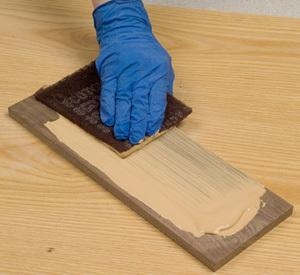
As their name implies, these are used to seal the wood – and are made for sanding. Sanding sealers are made with zinc stearate ( a soap-like material ) which is added so that the sandpaper will not gum up while sanding. The typical use of these would be after the staining and prior to the finish clear coat. Sanding sealers are quick drying, allowing for multiple coats in a short period of time and a quick finishing system. Sanding sealers, because of the stearates in them will repel some clear coat finishes.

Latex and Polyurethanes in particular will not adhere well to these intermediate clear coats. It is important that you use a “system” of stain, sealer and clear coat that is compatible. Don’t just assume that anything can be used over anything.
Wood Filler and Wood Sealers, The Role of Sealers and Fillers in Wood Finishing
Wood Filler and Wood Sealers, The Role of Sealers and Fillers in Wood Finishing (Image Source )

Shellac

My preference for a sanding sealer is shellac. Although shellac will gum up a little when sanding, it is very quick drying, will not lift an oil based stain, and will not re-soften when varnished over. Shellac (unless “de-waxed”) must be overcoated with an oil varnish. Other finishes will not adhere to shellac because of the naturally occurring wax contained in it.

You don’t have to use a sanding sealer, they are used for the advantages they impart. You can simply do two or three coats of whatever finish you choose, sanding them between coats.

Read: Shellac, It’s Role in Wood Finishing

Wood Putty

Wood putty is used to fill nail holes. There are a few different types of wood putty. You can make your own, called “Swedish putty” by mixing whiting with your stain, or you can buy pre-colored oil based putty. Minwax makes pre-colored putty that will match their stains. You can tint your own putty using universal colorants, which is a bit messy, but do-able. See article on How to Match Putty.

Pre-Stain Sealers

These are used on soft woods like pine to allow a more uniform and less blotchy stained finish. Be careful with these, you can overseal the bare wood so that it will not take any stain.

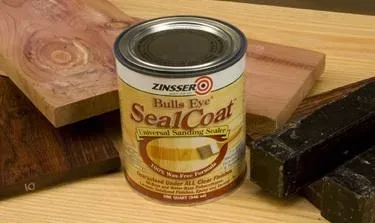
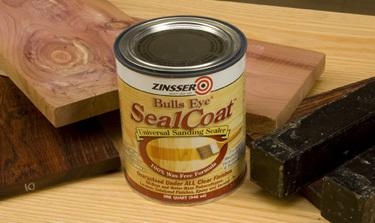
Of the pre-stain sealers I prefer to use dewaxed shellac (Zinsser’s SealCoat). SealCoat a 2lb cut of shellac, must be thinned to to a 1lb cut to be used as such or you will overseal the wood. To make a 1lb cut of shellac, you add 3 parts of alcohol to 2 parts of SealCoat. According to Zinsser, SealCoat is a universal sealer and can be used under any type of stain.


0
0
4
0
Total
4
Shares
Pin it 4
Share 0
Tweet 0
Share 0
Share 0
Previous Article
Featured of How to Make a Cornice: Easy Instructions for Making Cornices Yourself
  • Room by Room
  • Decorating
  • DIY

Easy to Follow Instructions for Making Cornices Yourself

  • Perla Irish
  • March 4, 2018
View Post
Next Article
Featured of How to Fix Shower Door Without Calling a Professional
  • Bathroom
  • DIY
  • Home Improvement

How to Fix a Shower Door

  • Perla Irish
  • March 5, 2018
View Post

You May Also Like

traditional living room interior with symmetrical layout fireplace and neutral tones
View Post
  • Home Building & Design
  • DIY
  • Home Improvement

What to Expect When Working With a Traditional Interior Designer for Your Dream Home

  • Perla Irish
  • April 28, 2026
partially completed kitchen remodeling showing different renovation stages in progress
View Post
  • Home Building & Design
  • DIY
  • Home Improvement

Kitchen Remodeling Timeline Explained for Homeowners Planning a Renovation

  • Perla Irish
  • April 28, 2026
slow draining sink with water pooling and early clog warning signs
View Post
  • Home Improvement
  • DIY

Drain Cleaning Services: Signs Your Drains Need Immediate Attention Before Costly Repairs

  • Perla Irish
  • April 28, 2026
white house exterior with fading paint and visible wear on siding
View Post
  • Painting
  • DIY
  • Home Improvement

What Actually Drives Exterior House Painting Costs (And How to Budget Without Regret)

  • Perla Irish
  • April 28, 2026
Bathroom remodel in progress showing tile installation and renovation tools during construction.
View Post
  • Bathroom

How Long Does a Bathroom Remodel Really Take?

  • Perla Irish
  • March 11, 2026
Side-by-side comparison of casement and double hung windows in a modern home interior
View Post
  • Remodeling

Replace Casement Window with Double Hung? Structural & Code Impacts

  • Perla Irish
  • February 20, 2026
New residential asphalt driveway with smooth surface and landscaped edges
View Post
  • Home Improvement

Asphalt Driveway Advantages vs Concrete: Cost, Lifespan & Structural Value

  • Perla Irish
  • February 20, 2026
Modest kitchen with wood-look faux butcher block countertop
View Post
  • Kitchen

DIY Faux Butcher Block Countertops: Cost, Durability & Long-Term Reality

  • Perla Irish
  • February 14, 2026

Leave a Reply Cancel reply

Your email address will not be published. Required fields are marked *

Join 13,000 folks!

Get instant access to our weekly newsletter where we share the best! 100% Privacy. No Spam.

  • Disclosure & Affiliate Policy
  • Privacy Policy
  • Terms of Use
  • About
  • Sitemap
  • Contact Us

Input your search keywords and press Enter.