Outdoor events do not damage yards because people gather. Damage occurs when weight, repetition, and moisture exceed what the surface can tolerate.
Grass fails under compression, pavers stain under prolonged exposure, and decking surfaces scratch when friction builds under movement.
Most homeowners notice the damage only after chairs are removed and the yard looks uneven in the morning light.
Before placing chairs or setting up food stations, define three variables:
- Total guest load
- Duration of static weight
- Surface recovery capacity
Surface protection starts with structural evaluation, not decoration.
Identify Where Surface Stress Will Concentrate
Every yard contains weak points. Treating the entire lawn or patio as equally durable leads to concentrated failure.
Risk accumulates in predictable locations:
- Entry and exit corridors
- Narrow walking paths
- Beverage and buffet stations
- Shaded or moisture-retaining lawn areas
These zones absorb repeated load, compressing soil and restricting oxygen flow to roots. Once airflow is limited, recovery time extends quickly.
Instead of attempting to protect every square foot, isolate where repetition will occur and reinforce those zones first.
Ask:
- Where will guests pause for extended periods?
- Where will weight remain static?
- Which path will be used most frequently?
Surface protection begins with traffic prediction. Layout decisions determine damage patterns.
Strengthen Surface Resilience Before Guests Arrive
Grass does not fail because of foot traffic alone. It fails when root structure and soil density cannot absorb temporary load.
Event preparation is not lawn beautification. It is tolerance preparation.
Surface tolerance depends on three conditions:
- Soil moisture balance
- Blade height
- Existing turf health
Overwatered soil compresses faster. Dry, stressed grass tears under lateral movement. Recently cut turf exposes crown structure and reduces cushioning.
Two to three days before the event, stabilize the lawn rather than stress it. Maintain moderate moisture. Avoid aggressive mowing. Address visibly weak patches before load is introduced.
The objective is structural resilience, not appearance. Healthy turf absorbs temporary pressure and rebounds within days. Compacted or stressed turf leaves visible damage that can last weeks.
Distribute Load Instead of Reducing Guest Count
Lawn damage rarely correlates with the number of guests. It correlates with how long weight remains concentrated in one location.
A moving guest applies temporary pressure. A stationary cooler, tent pole, buffet table, or seating cluster applies sustained compression.
Static weight blocks airflow to turf roots, restricting oxygen within hours. In warm or moisture-heavy soil, that stress compounds quickly.
The structural solution is not reducing attendance. It is distributing force across a wider footprint.
Smaller gatherings may require only layout redistribution. Once guest density increases or equipment remains stationary, reinforcement becomes structural rather than optional.
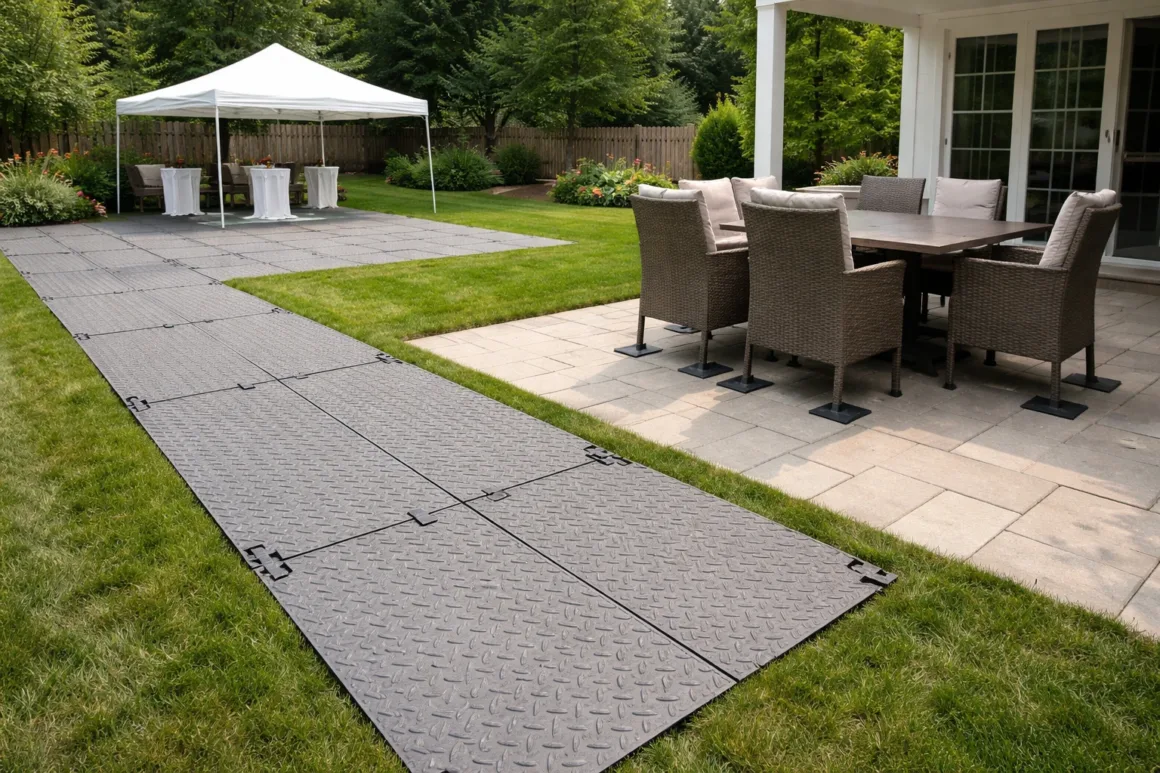
Ground protection mats, modular flooring panels, and interlocking event surfaces redistribute vertical pressure across the soil layer. Systems provided by companies such as Opus Event Rentals are designed to prevent direct point compression by expanding the contact area between load and ground.
When moisture and seasonal stress pose a greater threat than equipment load, review How To Protect Your Lawn from The Weather with Ground Protection for a weather-focused breakdown of turf vulnerability.
The decision threshold is clear:
- Weight remaining in place longer than three hours
- Equipment exceeding 75–100 pounds per point
- Tent poles or staging structures on natural turf
- Moist or clay-heavy soil conditions
When two or more of these conditions apply, reinforcement is no longer optional.
Assess Hard Surface Vulnerability Before Setup
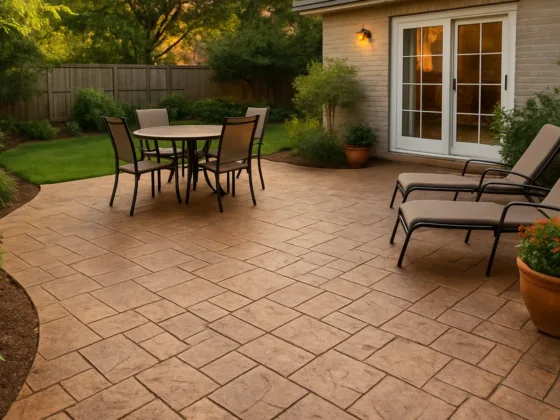
Patios, decks, and pavers tolerate weight better than turf, but they fail under friction, heat, and staining pressure.
Hard surfaces do not compress. They scratch, discolor, and absorb contaminants.
Common failure patterns during events include:
- Furniture drag marks across composite decking
- Grease penetration into porous concrete or stone
- Heat damage beneath grills or lighting fixtures
- Joint destabilization in interlocking pavers
Unlike grass, damage on hardscape rarely recovers naturally. Surface abrasion remains visible. Oil staining penetrates below the surface layer. Heat can permanently alter finish texture. Scratches and oil marks often become visible only after the furniture is cleared, when surfaces return to full exposure.
Protection strategy on hard surfaces focuses on isolation and friction control. Pads beneath furniture legs prevent micro-scratches. Heat-resistant barriers protect decking finishes. Spill containment beneath food and cooking stations prevents deep staining.
If your patio uses porous materials such as concrete pavers or natural stone, exposure risk increases significantly. Absorption occurs within minutes under warm conditions.
Porous materials remain vulnerable without proper sealing. See Paver Sealer: To Seal or Not to Seal? for a detailed analysis of durability trade-offs.
Hardscape damage is less dramatic than lawn compression, but repair costs are higher. Surface assessment belongs in layout planning, not as an afterthought.
Control Traffic Flow to Prevent Repeated Surface Stress
Surface damage accelerates when movement becomes repetitive. The same path, the same standing zones, the same turning points create compression lines that are easy to overlook until the event is over.
Guests naturally follow visual and spatial cues. They move toward light, shade, food, and open space. Without layout control, traffic condenses into narrow corridors.
Repeated footfall over a single strip of turf compacts soil faster than dispersed movement across a wider area. On pavers and decking, repetition increases abrasion and finish wear.
Managing flow does not require restricting guests. It requires designing pathways intentionally.
- Widen high-traffic walk zones
- Avoid funneling guests through narrow lawn strips
- Separate beverage stations from entry points
- Distribute seating across multiple zones
Layout determines repetition patterns, and repetition drives surface stress. Intentional flow design prevents concentrated surface failure.
Account for Weather as a Surface Stress Multiplier
Weather does not create surface damage on its own. It lowers the threshold at which damage begins.
Moisture, heat, and wind change how soil and hardscape respond under load. An event that leaves no mark on dry ground can leave visible compression after a single rainfall.
Wet Soil Conditions
Water fills air pockets within soil. When pressure is applied, those pockets collapse quickly. Compaction under wet conditions occurs faster and penetrates deeper.
Clay-heavy lawns are especially vulnerable. Compression in these soils restricts drainage and extends recovery time well beyond the event itself.
High Heat Exposure
Dry, heat-stressed turf loses elasticity. Lateral movement tears blades at the crown. Recovery slows as root systems divert energy to stress survival rather than repair.
On decking and composite materials, prolonged heat from grills or lighting can alter finish texture and leave permanent marks.
Wind and Surface Shift
Wind moves lightweight furniture and protective mats. Repeated micro-shifting increases abrasion on hard surfaces and exposes turf to uneven compression.
Weather conditions must shape layout decisions. Elevated moisture or extreme heat lowers surface tolerance immediately. If rainfall probability is elevated or temperatures are extreme, surface reinforcement moves from precaution to requirement.
Monitor Surface Stress in Real Time During the Event
Preparation reduces initial risk. Active monitoring prevents minor compression from becoming structural damage.
Surface failure rarely happens instantly. It develops progressively as pressure accumulates in one location.
During the event, observe high-risk zones identified earlier:
- Entry corridors
- Buffet or drink stations
- Areas beneath tents or shade structures
- Edges of patios where traffic transitions to grass
Early signs of lawn stress include visible soil compression, pooling moisture, or flattened turf that does not rebound after foot traffic clears.
On hard surfaces, look for grease accumulation, surface abrasion, or furniture shifting that creates friction marks.
When compression patterns begin to form, redistribute weight immediately. Move seating clusters. Shift stationary equipment. Expand walking paths.
Surface conditions shift throughout an event. Minor adjustments prevent compression from turning into weeks of recovery work.
Restore Surface Integrity After the Event
Event teardown is not the final step. Surface evaluation begins once weight is removed.
Immediate assessment determines whether damage is superficial or structural.
Lawn Recovery Actions
Inspect turf for compression lines, discoloration, and pooling water. Flattened grass that rebounds within hours indicates surface-level stress. Soil that remains compacted signals deeper structural pressure.
- Lightly rake compressed areas to restore airflow
- Water moderately to assist root recovery
- Aerate compacted zones if soil resistance remains
- Reseed visibly damaged sections when necessary
Addressing compression within 24–48 hours reduces long-term root restriction.
If your lawn struggles to recover after repeated seasonal use, revisit foundational turf strategy in 6 Ways to Protect Your Lawn This Summer.
Hard Surface Restoration
Clean spills immediately to prevent deep staining. Inspect paver joints for shifting. Examine decking for abrasion or heat marks.
- Remove grease and organic residue promptly
- Reposition furniture to relieve repeated pressure points
- Pressure wash porous materials when surface staining is visible
For surface-specific cleaning considerations, see Pressure Washing to Clean Your Home – Give it a Fresh Look.
Ignoring early signs of hardscape wear allows surface damage to deepen and spread. Early cleaning and inspection preserve finish integrity and structural alignment.
A structured recovery plan closes the surface management cycle. Without it, temporary event stress becomes long-term property wear.
Surface Protection Is a Structural Decision, Not an Afterthought
Outdoor events introduce temporary stress. Surface damage becomes permanent when load, repetition, and weather are ignored during planning.
Lawn failure results from compression and oxygen restriction. Hardscape damage results from friction, heat, and absorption. Each surface type responds differently, and each requires a distinct protection strategy.
Guest count alone does not determine risk. Static weight duration, soil moisture, material porosity, and traffic concentration define whether your yard rebounds in days or requires weeks of repair.
Evaluating surface stress before finalizing layout makes protection predictable. Ignoring it shifts the cost to recovery.
Protecting your lawn and outdoor surfaces is not about over-preparing for guests. It comes down to understanding how pressure interacts with materials and planning around it.
Frequently Asked Questions
How do I prevent lawn damage during large outdoor events?
Preventing lawn damage starts with distributing static weight and controlling repeated foot traffic. Use ground protection panels for tents or heavy equipment, widen walking paths, and avoid placing stationary objects directly on moist soil for extended periods.
Will grass recover after being compressed by guests?
Light surface flattening usually rebounds within a few days. Deep soil compaction, especially under wet conditions, restricts root oxygen and may require aeration or reseeding. Recovery depends on soil type, moisture level, and duration of compression.
Are patios and pavers safer than grass for events?
Patios and pavers tolerate weight better than turf but remain vulnerable to staining, scratching, and heat damage. Grease, furniture drag, and prolonged grill exposure can permanently mark porous or finished surfaces.
Does rain increase the risk of lawn damage during events?
Yes. Wet soil compacts faster because air pockets collapse under pressure. Events held after rainfall significantly increase the likelihood of deep compression and extended recovery time.
When should I use temporary flooring for an outdoor event?
Temporary flooring becomes necessary when heavy equipment, tents, or seating clusters remain in one location for several hours, especially on moist or clay-heavy soil. Reinforcement prevents concentrated load from penetrating the root zone.
Author & Editorial Review
Author: Perla Irish is a design and home improvement writer covering material performance, surface durability, and real-world property decisions. Her work focuses on practical evaluation of home systems, structural risk awareness, and long-term maintenance planning.
Editorial Review: This article was reviewed by the HouseSumo Editorial Team to ensure structural clarity, material accuracy, and decision-based guidance. Our review process prioritizes practical evaluation, surface performance awareness, and long-term property protection.