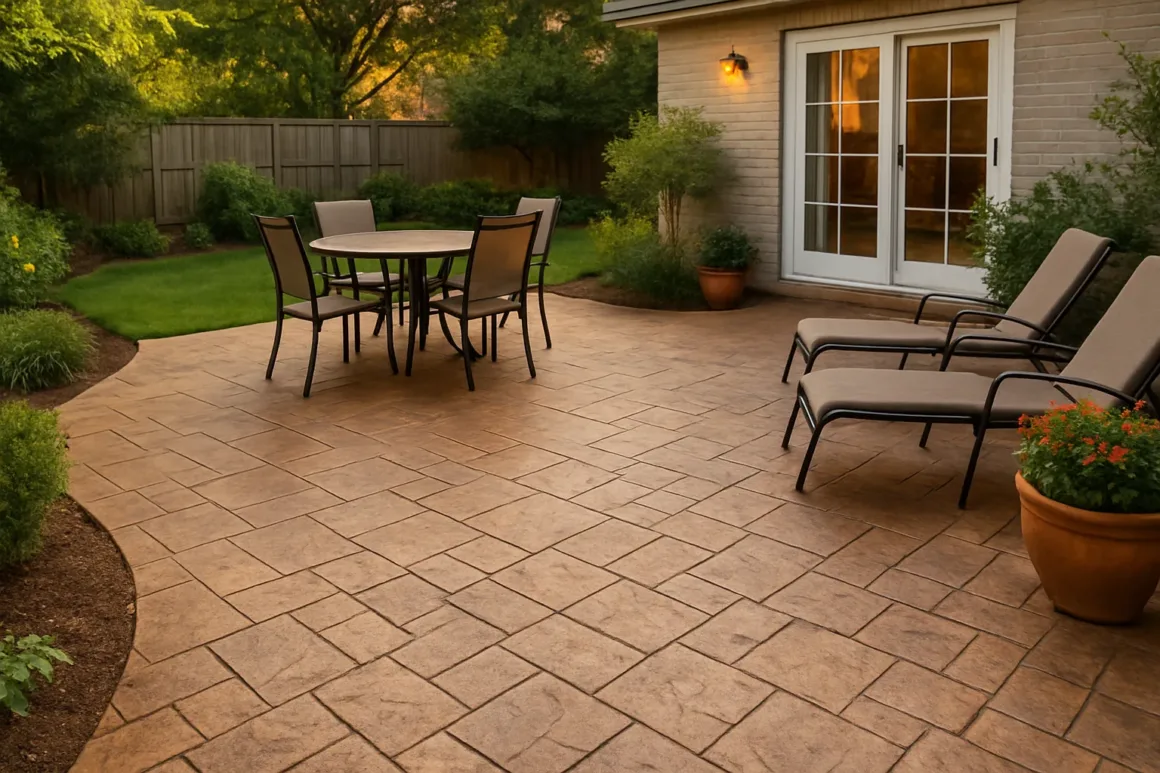
If you’re staring at a tired slab of gray concrete or a patch of uneven pavers and thinking, “There has to be a better way,” a decorative concrete patio is probably the option you’re looking for. It gives you the look of stone, brick, or even wood, without the constant weeding between joints, wobbly pavers, or boards that rot and splinter.
This guide walks through the real-world reasons homeowners choose decorative concrete for their patio, where it shines, and a few situations where it may not be the perfect fit. You’ll see how it can support your home’s value, outdoor lifestyle, and long-term maintenance budget so you can decide whether it makes sense for your yard and climate.
Note: Costs, lifespan, and performance always depend on local climate and the quality of the installation. Use these points as a starting framework, then confirm the details with contractors in your area.
Quick answer: Is a decorative concrete patio a good idea?
For most homes with a solid base and a reasonably well-prepared slab, a decorative concrete patio is a smart middle ground between “basic gray concrete” and premium materials like natural stone or high-end pavers. It offers strong value, long service life, and a huge range of looks – as long as it’s installed and maintained correctly.
Think about it this way: in a humid coastal backyard, a lightly textured, sealed decorative slab can stand up to salty air, wet feet, and patio furniture without turning into a slippery mess or a weed farm between joints. In a hot, dry inland climate, the same idea might look like a pale, stamped “stone” finish that stays cooler under bare feet and doesn’t shift or wobble like individual pavers. The basic material is the same, but the finish is tuned to how and where you live.
Decorative concrete patio cost and maintenance at a glance
| Patio surface | Typical upfront cost* | Durability (when properly installed) | Ongoing maintenance |
|---|---|---|---|
| Decorative concrete | Mid-range – higher than plain concrete, usually lower than natural stone or complex paver installs. | Often 25–30+ years, similar to standard exterior concrete slabs. | Low – sweeping, occasional washing, and resealing every few years. |
| Plain broom-finished concrete | Generally the lowest upfront cost of the three. | Often 25–30+ years with good base prep and joints. | Low – similar cleaning needs; stains and discoloration are more visible. |
| Pavers / natural stone | Usually the highest upfront cost (materials + labor for individual units). | High, but individual pieces can settle or shift and may need re-leveling. | Moderate to high – weed control between joints, refilling joint sand, occasional resetting of units. |
If you like having rough numbers in mind, most national cost guides put decorative or stamped concrete patios in the $8–$18 per square foot range for typical designs. Basic gray slabs usually cost less, while complex multi-color patterns run higher. Treat that number as a ballpark, not a quote. Your real price depends on local labor, access, site prep, and design details. It’s still essential to get a few written bids from contractors in your area.
Advantages of a decorative concrete patio vs other patio surfaces
- Budget sweet spot: Typically costs less than natural stone or complex paver installs, while looking far more high-end than plain broom-finished concrete.
- Durable and long-lasting: Properly installed decorative concrete patios can often last a few decades with routine care.
- Low day-to-day maintenance: Sweeping, the occasional wash, and resealing every few years are usually enough.
- Highly customizable: Colors, textures, and patterns can be tailored to your home’s style – from rustic stone looks to clean, modern finishes.
- Great for existing slabs: Overlays and resurfacing systems can revive a weathered but structurally sound patio instead of ripping it out.
If you’re planning a full outdoor makeover – furniture, lighting, a fire pit, and more – a decorative concrete patio also plays nicely with other upgrades. Once the slab is in, guides like 10 ways to make your patio cosy and must-have outdoor furniture pieces help you turn that hardscape into a comfortable outdoor room.
What exactly is a decorative concrete patio?
“Decorative concrete” is a broad term for patios where the concrete is doing double duty: providing the structural slab and acting as the finished surface. Instead of leaving the slab plain, installers use techniques and products to add color, texture, and pattern.
- Stamped concrete: Patterns are pressed into the surface to mimic stone, brick, slate, or even wood.
- Stained or dyed concrete: Chemical or water-based stains add translucent color and dimension.
- Scored or saw-cut designs: Shallow cuts create borders, tile effects, or geometric layouts.
- Decorative overlays: Thin, specialized topping mixes applied over an existing slab, then textured and colored.
Because the “design layer” is integrated with the slab itself, you get a single, monolithic surface rather than a patchwork of pieces. That’s a big part of why decorative concrete patios feel solid underfoot and don’t develop the same trip hazards you often see with shifting pavers.
Reason 1: High-end looks on a mid-range budget
Many homeowners start researching decorative concrete after getting a quote for natural stone or a complex paver layout. The appeal is simple: you can often get a similar visual effect without paying for individually laid blocks or quarried stone.
Flip through national cost guides or talk with a few experienced installers. You’ll usually see decorative patios priced between basic gray concrete and premium paver or stone work. Mid-level stamped or stained finishes cost more than a plain broom-finished slab, but less than natural flagstone set piece by piece or intricate brick patterns. That balance is why so many patios land in this “middle tier” – the space feels custom and finished without swallowing the whole project budget.
When you want to stretch your budget, a decorative border around a simpler main field can give you a custom look without inflating the price of every square foot.
Reason 2: A decorative concrete patio that’s built for real life
A patio surface has to stand up to much more than the occasional dinner outside. You’re asking it to handle heavy furniture, foot traffic, plant pots, kids’ toys, pets, and maybe the odd dropped grill tool or firewood log.
Decorative concrete is still concrete at its core. With a properly compacted base, the right mix, and steel reinforcement, a decorative concrete patio can often last several decades. Good control-joint layout further reduces the need for major repair. Many stamped concrete installers and homeowner guides report typical service lives in the 25–30 year range when patios are installed and maintained correctly – for example, this stamped concrete FAQ from a specialist contractor describes 25–30 years as a normal lifespan with regular sealing.
Structural engineer insight: Why reinforcing steel matters for a decorative concrete patio
From a structural point of view, the “boring” details under the surface are what keep a decorative concrete patio from cracking badly or settling over time. Reinforcing steel (rebar or welded wire mesh), a compacted base, and well-planned control joints help the slab act as one unit and manage shrinkage and temperature movement. When you’re comparing bids, ask each contractor exactly how they reinforce the slab, how thick the concrete will be, and where they plan to put joints. Those answers quickly show who is thinking beyond just the pattern and color.
Imagine two similar-looking patios poured in the same neighborhood. One has a compacted gravel base, reinforcing steel, and joints laid out where the engineer expects the slab to move. The other skips most of that to shave costs. Ten years in, the first patio may have a few hairline cracks that most people never notice. The second might have wide, uneven cracks and settled corners that make chairs wobble and trip hazards pop up around the edges.
Most homeowners never think about the mix design or joint spacing. They just notice that the patio still feels solid after many summers, doesn’t rock under chairs, and doesn’t turn into a minefield of uneven pavers.
Reason 3: Low day-to-day maintenance on a decorative concrete patio
One of the big selling points of a decorative concrete patio is that you’re not signing up for a weekend hobby just to keep it looking decent. Most patios only need:
- Regular sweeping or blowing to remove grit and leaves.
- Occasional washing with a hose and mild cleaner.
- Resealing every few years, depending on sun exposure and traffic.
Ask a couple of local concrete contractors and you’ll usually hear the same thing: once the patio is in and sealed properly, decorative concrete doesn’t ask for much. A good sealer helps resist stains, makes cleaning easier, and keeps colors from fading as quickly in the sun.
Compare that to pavers (with weeds popping in the joints and sand to re-level) or wood (which needs regular staining, sealing, and occasional board replacement). For anyone who would rather enjoy a patio than constantly maintain it, decorative concrete quickly starts to look appealing.
Reason 4: Design options that actually match your house
If “gray slab” doesn’t fit your vision, a decorative concrete patio opens up a surprising amount of flexibility:
- Color choices: Earthy browns, soft grays, warm terracotta tones, or cooler modern palettes.
- Patterns and textures: Hand-scored grids, stone or slate stamps, wood-plank textures, or subtle broom and trowel finishes.
- Borders and insets: Darker edges, contrasting bands, or a different texture in a dining zone vs. a lounge zone.
Instead of trying to force your outdoor space to match whatever paver colors are available locally, you can work backward from the look of your house. A good contractor will ask about your siding, trim, roof color, and how you plan to use the patio. Then they suggest finishes that feel like they belong there.
Think about how you actually live: do you host big family barbecues, quiet morning coffee, or both? That mix of activities can guide decisions like how large the slab should be, where to add borders, and whether you want a “stone” look or something more modern and clean-lined.
Reason 5: Safer, more comfortable underfoot
Patios should feel safe for kids, older relatives, and anyone carrying food or hot drinks in and out of the house. A decorative concrete patio can be finished with the right texture to balance comfort and traction:
- Textured finishes (broom, light stamp, or anti-slip additives) improve grip, especially around pools or in rainy climates.
- Fewer trip hazards since you’re walking on one continuous surface, not individual blocks that can settle unevenly.
- Custom drainage slopes can be designed into the slab so water runs away from the house instead of pooling in the middle.
In very cold regions with frequent freeze–thaw cycles, your contractor may recommend specific mixes and finishes. For example, they might suggest air-entrained concrete and a slightly more textured surface for better traction in icy conditions.
Reason 6: You can often resurface a decorative concrete patio instead of demolishing
If you already have a patio slab that’s structurally sound but looks rough, decorative overlays and resurfacing systems can be a smart way to avoid a full tear-out. Contractors bond these specialized topping mixes to the existing concrete, then stain, stamp, or trowel-finish the new surface.
That approach is especially useful if your current patio is solid but stained, discolored, or patchy from earlier repairs. It’s also a good option if you want to add design elements like borders or stone textures without redoing the entire base.
Resurfacing a decorative concrete patio in different climates
In very humid or rainy areas, resurfacing can solve a common problem: an older slab that has picked up mildew stains and small surface pits but still drains correctly. Instead of ripping everything out, a contractor can clean, repair, and overlay the slab with a textured, slip-resistant finish that handles wet feet better than the old, smooth surface.
In hot, dry climates, resurfacing lets you switch from a dark, heat-absorbing finish to a lighter, more reflective decorative surface. That small change can make a noticeable difference if you’re walking barefoot or your patio faces afternoon sun, without the cost of completely rebuilding the concrete base.
If you’re comfortable with smaller DIY projects, you can get a feel for decorative techniques on a small area first. For example, HouseSumo’s DIY concrete patio staining guide walks through basic staining, cutting, and stamping ideas you might use on walks or small pads before committing to a full-blown project.
Reason 7: Sustainability and smarter material use with a decorative concrete patio
Concrete isn’t perfect from a carbon perspective. Still, a well-planned decorative concrete patio can be part of a more sustainable hardscape strategy, especially when you compare it with tearing out and replacing materials every decade or constantly shipping new stone long distances.
- Long service life: A patio that lasts decades reduces the waste, trucking, and manufacturing tied to frequent replacements.
- Use what you have: Overlays can reuse an existing slab rather than sending tons of broken concrete to a landfill.
- Cooler, lighter colors: Lighter decorative finishes reflect more sunlight and reduce heat buildup in the patio area.
Some concrete suppliers and industry groups now promote decorative systems that use recycled pigments or supplementary cementitious materials where local codes allow. Stamped finishes can also reduce the need to quarry and ship natural stone long distances. Organizations such as the National Ready Mixed Concrete Association (NRMCA) and the American Concrete Institute (ACI) publish guidance and education on designing durable, longer-lasting concrete as part of a more sustainable built environment. Those principles carry over to decorative slabs and patios.
Climate-specific sustainability examples for decorative concrete patios
How this plays out in real backyards depends on your climate. Along coastlines, a well-sealed decorative slab helps limit salt and moisture from reaching the steel reinforcement. That protection can extend the life of the patio compared with an unsealed surface that spalls and flakes. In cold, snowy regions, choosing the right mix and being careful with de-icing chemicals can mean one well-built patio instead of several tear-out-and-replace cycles over the same period.
For hot, sunny climates, a lighter stamped or stained finish can keep the surface more comfortable under bare feet and reduce how much heat the patio radiates back into adjacent rooms in the evening. That’s a small but practical way decorative concrete design choices connect to comfort, energy use, and how often you actually enjoy the space.
Reason 8: Better curb appeal and potential resale value
Buyers notice outdoor spaces. A patio that feels like an extension of the living room – instead of an afterthought – can make your home stand out in listing photos and during showings.
Concrete-focused resources such as ConcreteNetwork.com note that decorative patios and other exterior concrete upgrades can improve curb appeal and perceived livable space. Exact return-on-investment always depends on your local market. Even so, outdoor living improvements regularly show up as projects buyers appreciate because they can picture themselves using the space right away.
Even if you’re not planning to sell soon, there’s something to be said for having a patio that looks “finished” rather than like a leftover builder-grade slab.
When a decorative concrete patio might not be the right choice
As with any building material, a decorative concrete patio isn’t perfect for every situation. It’s worth being honest about the downsides so you can make a balanced decision:
- Cracking is still possible: All concrete can crack. Good base prep, control joints, and mix design reduce the risk, but hairline cracks are still normal over time.
- Repairs are more visible than with pavers: If a stamped or stained area needs patching, perfectly matching color and pattern can be tricky.
- Extreme freeze–thaw climates: In very harsh climates, pavers may be favored because individual units can be lifted and reset. Your local pro will know how decorative slabs fare in your area.
- DIY limitations: While you can DIY simple staining and cleaning, full-depth stamped patios and high-end overlays are usually best left to experienced crews.
If you know your soil moves a lot, or your current patio has major structural cracks and settling, a structural fix or a different patio system might be more appropriate than a decorative overlay alone. A good contractor will be upfront about that instead of trying to sell you a finish that isn’t a good fit.
Choosing the right decorative concrete patio contractor
Decorative work is part structural, part art. The concrete itself must be right, and so do the timing, coloring, and finishing. When you’re interviewing contractors, ask:
- Can I see photos of your own decorative patio projects? Look for work similar to what you want.
- What base prep and reinforcement do you use? Ask about compacted base, thickness, steel, and control joints.
- Are you fully licensed and insured for decorative concrete work in this area? Ask for license numbers and proof of liability and workers’ compensation insurance so you know you’re protected if something goes wrong on site.
- How do you handle drainage? Patios should slope gently away from the house.
- What sealer do you recommend, and how often will it need recoating? Get a sense of long-term maintenance.
- Do you offer a written warranty? Understand what’s covered and what’s considered normal wear.
Bring photos of spaces you like, along with a rough sketch of where you want dining, lounging, and grilling areas. The more clearly you can describe how you want to use the patio, the easier it is for a contractor to recommend finishes that will hold up. If a contractor gets defensive when you ask basic questions about base prep, joints, or licenses, that’s usually a sign to keep looking.
Simple maintenance checklist for decorative concrete patios
- Weekly: Sweep or blow off leaves, sand, and debris so they don’t scratch the surface.
- Seasonally: Rinse with a garden hose and mild detergent, especially after pollen season or heavy use.
- Every 2–3 years (or as the sealer manufacturer recommends): Reseal the patio to protect color and surface texture.
- Winter care (in cold climates): Avoid harsh de-icing salts on decorative finishes and use sand for traction instead.
- Spot checks: Watch for low spots where water sits after rain; ask your contractor about options if puddling develops.
Basic care like this is usually enough to keep most decorative patios looking good for the long haul. When in doubt, ask your installer what products they recommend, and keep their care instructions handy.
FAQs about decorative concrete patios
How long does a decorative concrete patio last?
With good base preparation, control joints, and routine maintenance, many decorative concrete patios can perform well for a few decades. Some contractors cite typical lifespans of 25–30 years or more for properly installed stamped patios in moderate climates. Extreme freeze–thaw conditions, poor drainage, or neglected maintenance can shorten that timeline.
Is a stamped or decorative patio slippery?
It doesn’t have to be. Installers can use textures, broom finishes, anti-slip additives in the sealer, and thoughtful pattern choices to improve traction. If you’re concerned about slipperiness, especially near a pool or hot tub, talk to your contractor about finish options designed for wet areas.
Can I put decorative concrete over my old patio?
Often, yes – but only if the existing slab is structurally sound. Hairline cracks and cosmetic issues are usually fine for overlays; major heaving, large structural cracks, or poor drainage are signs that you might need a more substantial repair or replacement instead. A reputable contractor will evaluate the existing concrete before recommending a decorative resurfacing system.
The bottom line
If you want a patio that looks finished, feels solid underfoot, and doesn’t eat your weekends with maintenance, a decorative concrete patio is worth a serious look. It hits that sweet spot between beauty, durability, and cost – especially when paired with thoughtful furnishings, lighting, and landscaping.
Use the ideas above as a checklist when you talk with local installers, and keep building out your patio plans with related resources on HouseSumo, from concrete staining projects to outdoor furniture and cosy styling tips. The more clearly you can picture how you’ll use the space day to day, the easier it is to decide whether decorative concrete is the right “backbone” for your outdoor room.
Author: Perla Irish – Home improvement & remodeling writer
Perla writes in-depth guides on remodeling, outdoor living, and practical DIY projects for homeowners. Her work focuses on balancing design, budget, and long-term durability so readers can make confident decisions about their homes.
Profile: https://muckrack.com/perlairish/
Reviewed by: Ricky McLain, P.E., S.E. — Structural Engineer; Senior Technical Director (WoodWorks)
Ricky McLain is a U.S.-based structural engineer known for his work on modern wood and hybrid structures. As Senior Technical Director at WoodWorks, he advises architects, engineers, and builders on code compliance, structural performance, and real-world constructability for complex building projects. His background includes structural design, project management, and committee work focused on safe, efficient building systems.
Profiles: LinkedIn • Professional bio (CTBUH)
Technical review: Structural and concrete-related statements in this guide were reviewed for general accuracy and clarity; style and opinions are the author’s. Always follow local building codes and consult local professionals for site-specific advice.