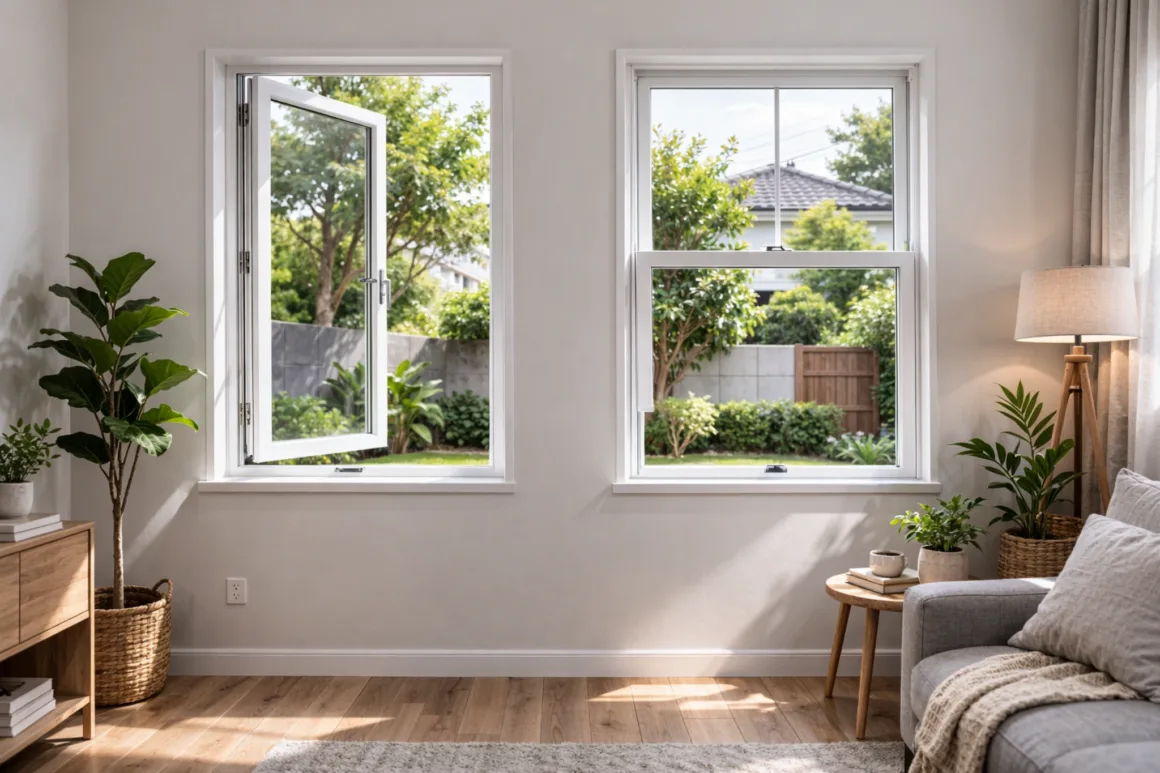
Can you replace casement windows with double hung windows? Yes. But this is a structural shift, not a simple style swap. The change affects framing alignment, emergency escape clearance, and the way the unit seals against air and moisture.
Homeowners often treat it as a cosmetic decision. It isn’t. You’re moving between two fundamentally different window design systems, and that shift changes how the window performs inside the wall assembly.
Before replacing casement windows with double hung units, understand exactly what changes inside the wall and how those changes affect structure, compliance, and long-term durability.
Yes, you can replace a casement window with a double hung window—but only if the rough opening, egress size, and sealing method remain compliant.
Understanding the Structural Difference First
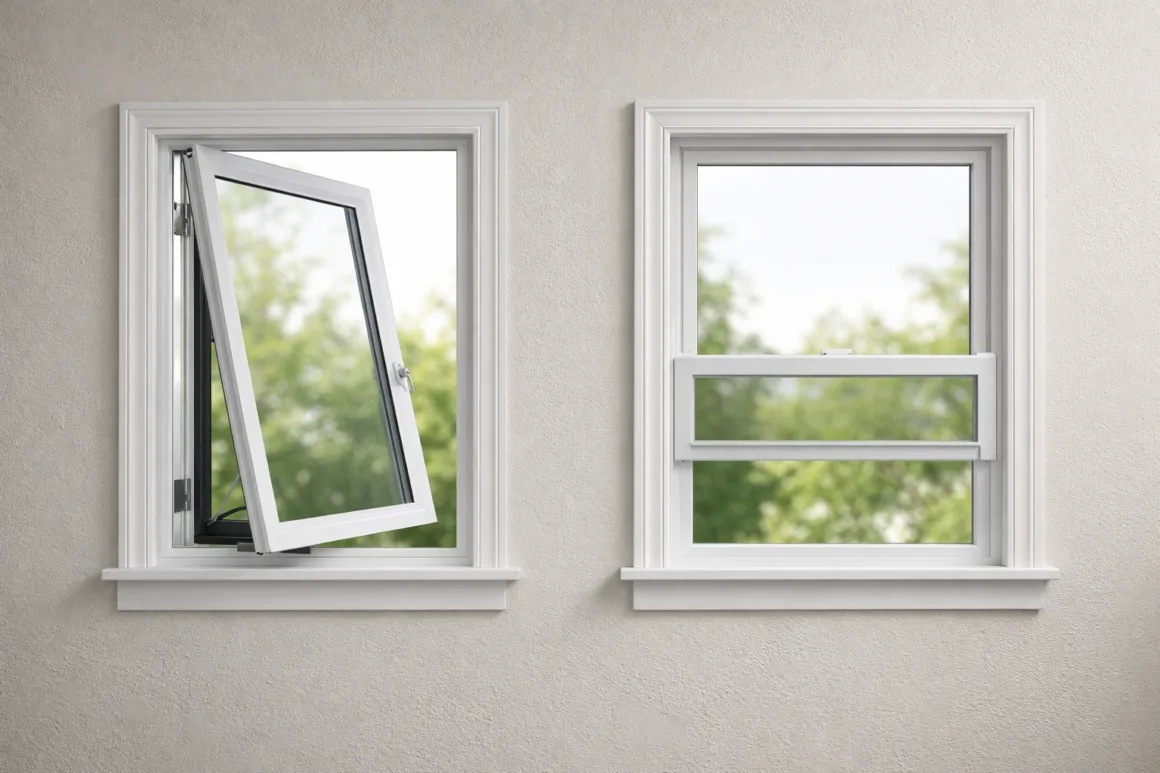
Casement windows hinge from the side and swing outward using a crank mechanism. When closed, the sash presses firmly into the frame, creating strong compression against weatherstripping. That compression seal is what gives them their air-tight advantage.
If you’re unfamiliar with how Casement windows operate, their hinge-and-crank system allows the entire sash to open outward, providing full ventilation and an unobstructed opening.
Double hung windows operate differently. Two sashes slide vertically within tracks inside the frame. Only one portion of the opening is exposed at a time. This difference affects:
- Airflow control
- Weather sealing method
- Frame load distribution
- Emergency egress opening size
These systems operate differently. Converting from casement to double hung requires more than removing one unit and inserting another. The wall opening was built around the original system. In homes that previously involved replacing steel casement windows, the rough opening may already have been modified, which affects compatibility.
Replace Casement Window with Double Hung: What Changes?
Replacing a casement window with a double hung window changes more than appearance; it changes how the opening performs structurally.
Switching to a double hung unit changes how the window sits inside the wall cavity. The rough opening must be square, structurally sound, and compatible with the new frame depth.
Expect structural adjustments such as:
- Interior trim removal and reset
- Exterior siding or brick molding adjustments
- Flashing corrections to maintain water management
- Insulation reapplication around the perimeter
- Occasional resizing of the opening
If the existing unit is tightly integrated into masonry or older framing systems, removal becomes more complex. In some cases, removing old casement windows reveals settling or framing distortion that must be corrected before installing the new unit.
A misaligned opening results in sash binding, premature weatherstrip wear, and air leakage. If the opening is not corrected properly, long-term performance suffers. The window will tell you quickly.
Egress and Building Code Considerations
If the window is located in a bedroom or basement, building code requirements are not optional. Egress rules define the minimum clear opening size required for emergency escape.
Casement windows often satisfy egress requirements more easily because the entire sash swings outward, creating a wide and unobstructed opening. Double hung windows, by design, provide only half of the total frame height as an opening at one time.
This difference has direct safety implications. Replacing a casement window with a double hung unit can reduce the clear escape opening below code minimums, especially in smaller framed openings.
If the conversion involves a basement or sleeping area, review basement egress window requirements before proceeding. Failing to meet code affects both safety and resale compliance.
Window replacement cannot be evaluated in isolation. Opening size, sill height, and operational clearance all factor into code approval.
Energy Efficiency: Does Performance Improve or Decline?
Casement windows typically outperform double hung units in air sealing. When closed, the sash presses tightly against the frame, forming a compression seal. Double hung windows rely on track systems and weatherstripping along sliding edges, which introduces more potential leakage points.
Modern double hung windows are well-engineered, yet they still rely on sliding tracks rather than compression sealing. The sealing principle is fundamentally different. If reducing drafts is the priority, replacing a tight-sealing casement unit with a standard double hung window often lowers air-tight performance.
Window replacement affects the entire building envelope, not just the opening itself. If improving thermal performance is the objective, consider how the change affects insulation strategy and overall envelope performance. Understanding reducing utility bills through window upgrades provides useful context before making a style conversion.
Installation quality and frame material outweigh style differences. Even a high-end unit fails if it’s installed poorly.
Cost Framework: What Actually Changes When You Convert?
The real cost driver is structural adjustment. Labor and structural correction determine the final invoice.
Cost variables include:
- Window unit price and material selection
- Labor complexity for removal
- Framing modifications
- Trim and siding restoration
- Flashing and insulation corrections
If the rough opening already matches the new unit, labor stays straightforward. If resizing is required, costs rise quickly due to structural carpentry and finishing work.
Any style conversion should be considered within the scope of larger remodeling work. Reviewing understanding home remodel cost factors helps set realistic expectations before starting structural changes.
Hardware maintenance also differs. Casement windows require periodic hinge and crank servicing. Double hung windows rely on balance systems and track alignment. Long-term ownership costs vary depending on build quality.
Can You Replace Double Hung Windows with Casement Windows?
Converting double hung windows to casement is possible, but it is more involved. Casement windows require exterior clearance to swing outward, which may interfere with siding, landscaping, walkways, or architectural trim.
Homeowners searching for how to replace a double hung window with a casement window often overlook exterior clearance. Casement units project outward, changing wind exposure and siding interaction.
Unlike double hung windows that operate within the frame, casement units extend beyond the wall plane. That exposure increases wind load and weather impact.
Framing adjustments are often required to support hinge placement and ensure proper structural anchoring. If the existing opening was modified during previous replacements, additional carpentry may be necessary.
When structural alterations are involved, the project moves beyond basic replacement and into remodeling territory. At that stage, understanding broader factors to consider when remodeling a house becomes essential.
When You Should Not Replace Casement with Double Hung
Some homes should not be converted. In these cases, retaining the existing casement system protects structural performance.
- High-wind regions: Compression-seal casement windows resist air infiltration more effectively.
- Egress-sensitive rooms: Bedrooms and basements may lose clear opening space.
- Historic or architectural symmetry: Changing window style disrupts façade consistency.
- Energy-priority upgrades: Downgrading from a tight compression seal reduces performance.
Window replacement should strengthen the building envelope, not compromise it. If structural performance or code compliance becomes weaker after conversion, the upgrade does not add value.
Quick Comparison: Casement vs Double Hung
| Feature | Casement | Double Hung |
|---|---|---|
| Air Sealing | Strong compression seal | Track-based weatherstripping |
| Egress Opening | Full sash opening | Half-height opening |
| Ventilation | Maximum directional airflow | Adjustable top or bottom airflow |
| Cleaning | Exterior access required | Tilt-in interior cleaning |
| Exterior Projection | Extends outward | Operates within frame |
DIY or Professional Installation?
Replacing a window with the same style is manageable for experienced DIY homeowners. Changing styles demands tighter tolerances and structural awareness.
This project may involve reframing, flashing correction, insulation sealing, and exterior finishing. Errors in these areas lead to water intrusion and air leakage.
Structural window conversions fall into the category of home repairs better left to professionals when framing modifications are required. Professional installation protects structural integrity and long-term performance.
Does Replacing Casement Windows Affect Resale Value?
Resale impact depends more on architectural consistency than on window type alone. Homes with uniform window styles across the façade present stronger visual cohesion.
If the rest of the house uses double hung windows, conversion improves visual continuity. If the home was designed around modern casement units, switching styles may disrupt the exterior balance.
Before changing styles, evaluate how the decision aligns with choosing the right windows for your house and long-term aesthetic goals.
Final Verdict
You can replace a casement window with a double hung window. Base the decision on structural logic, not aesthetics alone.
Review framing, egress clearance, and overall envelope integrity before making the change. Window replacement alters structural behavior. Treat it accordingly.
Frequently Asked Questions
Is replacing casement windows with double hung expensive?
The cost depends on structural compatibility. If the rough opening matches the new unit size, labor remains moderate. If resizing or reframing is required, costs rise quickly due to structural carpentry and finishing work.
Do double hung windows meet egress requirements?
They can, but only if the clear opening size meets local code minimums. Because double hung windows only open halfway vertically, smaller frames may fail to meet emergency escape requirements.
Are casement windows more energy efficient than double hung?
Casement windows typically provide stronger air sealing due to their compression-style closure. Double hung windows rely on track-based weatherstripping, which introduces more potential leakage points.
Does changing window style affect home value?
Resale value depends more on architectural consistency than window type. Uniform window styles across the façade generally improve visual cohesion and buyer perception.
Author & Editorial Review
Author: Perla Irish is a design and home living writer specialising in interior materials, furniture performance, and practical home decision-making. View her published work at Muck Rack.
Editorial Review: This article was reviewed by the HouseSumo Editorial Board to ensure clarity, neutrality, factual accuracy, and alignment with current home living practices. Content is evaluated for long-term usefulness and informational integrity rather than promotional intent.