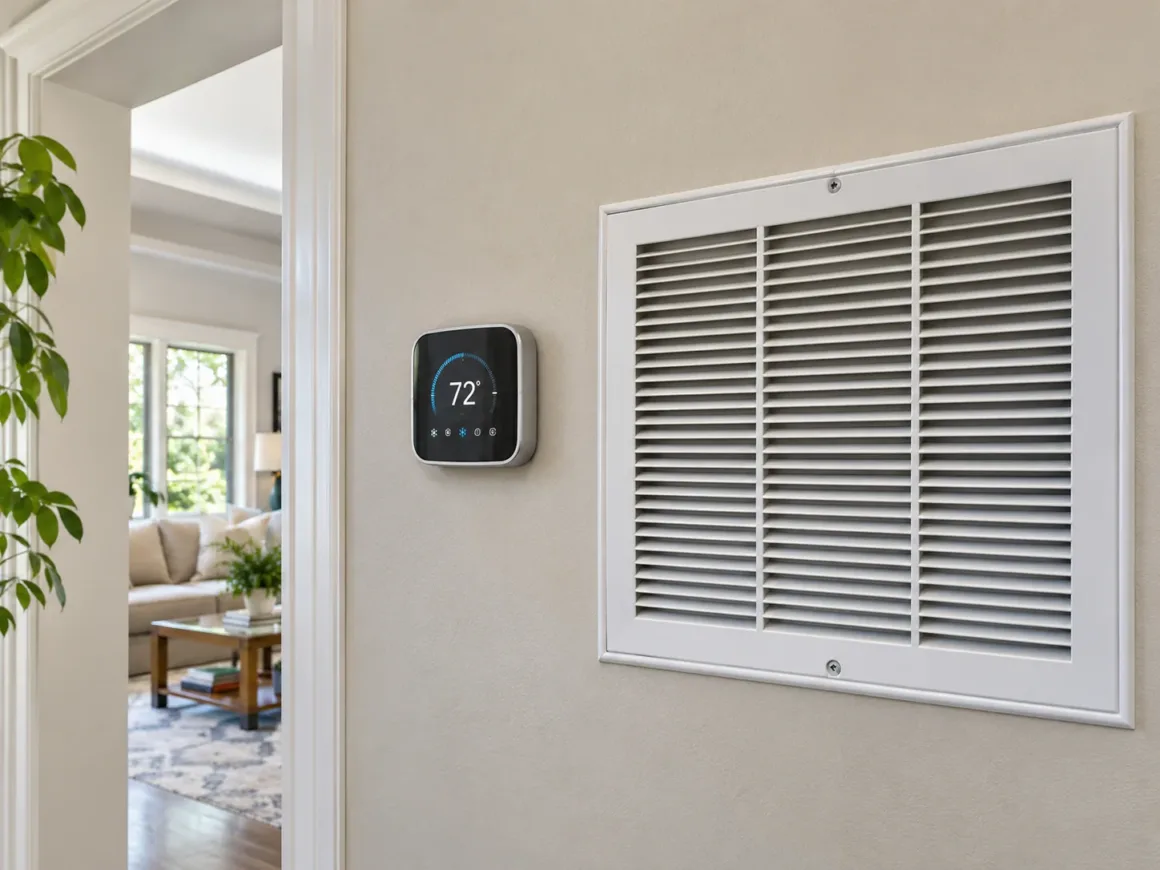
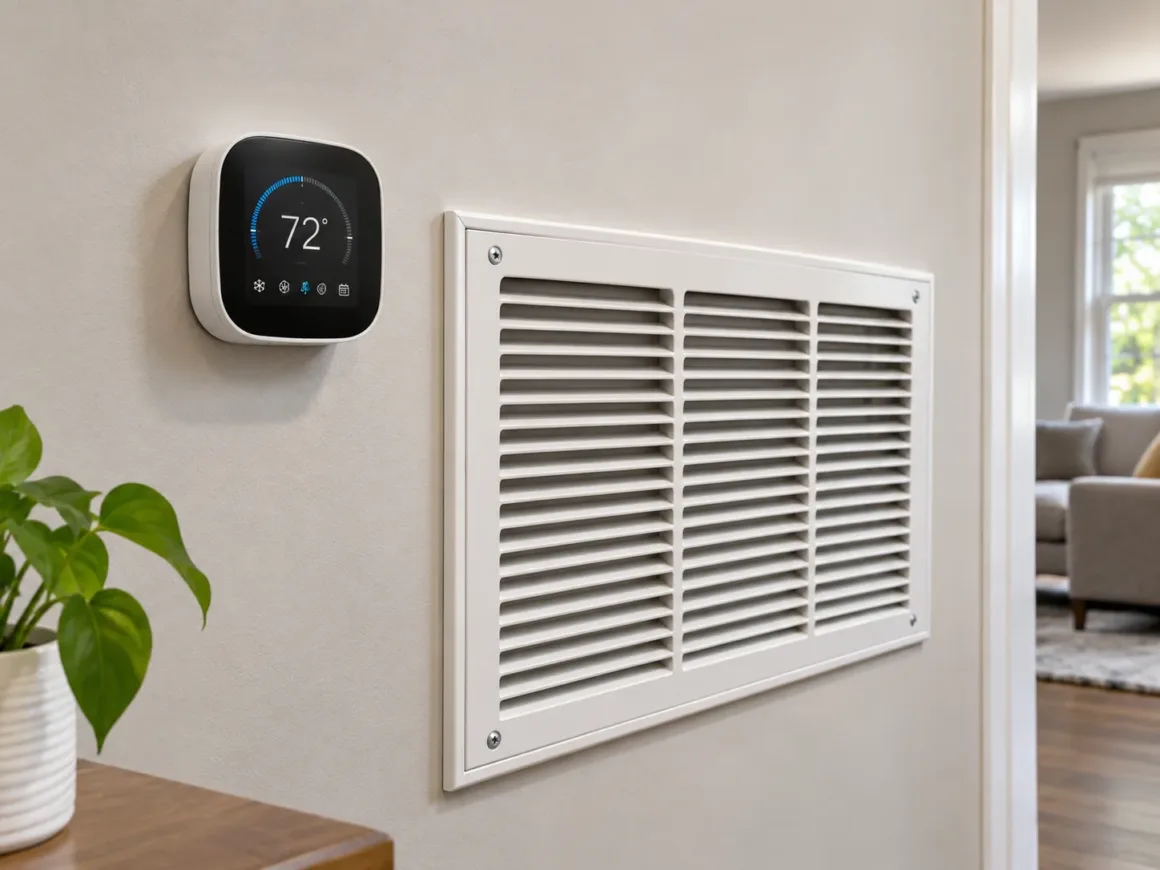
Walk down a narrow hallway while your air conditioner runs, and you may feel air moving toward the return grille. When a wall thermostat sits in that airflow, its temperature sensor may register air from adjoining rooms rather than the conditions around the thermostat. Depending on the airflow pattern, this difference can affect when the HVAC system starts or stops and contribute to uneven temperatures throughout the house, sometimes leading homeowners to seek HVAC repair.
Mounting a thermostat near a return vent does not automatically ruin system accuracy, though. Plenty of homes have a thermostat on the same wall a few feet from a return grille without any comfort issues. Whether that placement causes poor HVAC control comes down to air velocity, grille size, interior door positions, and whether warmer or cooler air from other parts of the floor plan funnels past the thermostat housing.
Quick Answer
Yes, a thermostat near a return vent can cause poor HVAC control when moving air from the grille or adjoining rooms affects the temperature sensor. The thermostat may register a temperature that does not represent the rest of the house, causing the system to stop heating or cooling too early—or run longer than necessary. However, proximity alone does not make a thermostat location unsuitable. The airflow around the sensor determines whether relocation is necessary.
Key Takeaways
- Airflow matters more than distance alone: A thermostat near a return grille may be affected by air moving from adjoining rooms, hallways, or stairwells. The airflow pattern around the sensor matters more than a fixed distance.
- Return airflow can create misleading temperature readings: When air from another part of the house passes across the thermostat, its reading may not reflect the temperature of the room or occupied areas.
- Incorrect readings can affect HVAC cycling: A thermostat that reaches its setpoint too early may shut down heating or cooling before other rooms become comfortable. Airflow interference can also contribute to unnecessarily long run times.
- Temperature comparisons can identify placement problems: Comparing the thermostat display with independent thermometers during HVAC operation can reveal whether readings change when the blower starts.
- Moving the thermostat is not always necessary: Sealing the wire opening behind the thermostat, improving airflow balance, or using compatible remote temperature sensors may address the problem without relocating the wall unit.
How a Return Vent Influences Thermostat Accuracy
Every central forced-air heating and cooling system operates on a continuous air loop. Supply ducts deliver conditioned air into individual rooms, while return ducts draw existing indoor air back to the furnace or air handler for reconditioning. Inside the thermostat housing, a small electronic temperature sensor—known as a thermistor in modern digital units—measures air temperature right at that single point on the wall.
In still room air, that sensor tracks the surrounding living space. Near an active return grille, negative pressure from the blower accelerates air toward the louvers. Moving air can affect thermostat readings by carrying air from other parts of the house across the sensor. Depending on the layout, the return-air path may draw air from stairwells, foyers, hallways, or adjoining rooms that have different temperatures.
Several layout details determine how strongly a return vent affects a nearby thermostat:
- Distance from the grille face: A thermostat mounted close to a return grille may be exposed to stronger airflow, but the effect depends on grille size, blower operation, and the surrounding layout. Even a thermostat several feet away can be affected when a hallway or nearby doorway directs air across the wall.
- Narrow hallway wind tunnels: Many single-return homes place one large grille in a central hallway with the thermostat on the same wall. When the blower runs, that corridor funnels return air from multiple rooms past the sensor at higher speed.
- Closed bedroom doors: In homes without dedicated bedroom returns or transfer grilles, closing bedroom doors can restrict the path for return air. This pressure imbalance may affect airflow throughout the hallway and contribute to uneven temperatures between rooms.
- Open stairwells and foyers: A return grille near a staircase may draw air from different levels of the house, creating temperature differences along the return-air path that can affect a nearby thermostat.
- Unsealed wall cavities behind the thermostat: When the drywall opening behind the thermostat subbase is left unsealed, negative pressure near the return grille pulls unconditioned air from inside the stud bay, attic, or crawlspace onto the back of the circuit board.
Homeowners sometimes treat every wall or ceiling grille as a “vent,” yet return grilles and supply registers create opposite airflow patterns and distort thermostat readings in very different ways.
| Feature | Return Air Grille | Supply Air Register |
|---|---|---|
| Airflow Direction | Pulls indoor air back into the HVAC system | Delivers conditioned air into the room |
| Air Temperature | Usually reflects the temperature of the surrounding indoor air | May be noticeably warmer or cooler than room air |
| Airflow Pattern | Draws air toward the grille | Discharges air in a directional stream |
| Potential Thermostat Effect | May expose the sensor to air moving from other areas of the house | Can cause inaccurate readings when conditioned air blows directly onto the thermostat |
How False Readings Disrupt HVAC Cycling and Indoor Comfort
In a single-zone home, the wall thermostat acts as the sole decision-maker for when heating or cooling starts and stops. If the air passing over that sensor warms or cools faster than the bedrooms and living areas, equipment run times fall out of sync with actual household comfort.
Residential HVAC systems cycle according to the temperature difference between the thermostat reading and its setpoint, along with equipment controls and operating conditions. When airflow around the thermostat causes it to register a temperature that differs from the rest of the house, the system may stop heating or cooling before other rooms reach a comfortable temperature. The opposite can happen when warmer or cooler air causes the sensor to remain above or below the setpoint longer than necessary. These irregular cycles can resemble short cycling or excessive run times, although equipment problems can produce the same symptoms.
Consider how the same hallway placement plays out across seasons:
- Summer cooling: Imagine setting the thermostat to 72°F beside a central hallway return. Cooler air drawn from a shaded lower level or interior room may pass across the thermostat and cause it to register the setpoint before sun-exposed bedrooms down the hall have cooled adequately. If the AC shuts off while other rooms remain uncomfortable, airflow around the thermostat is one possible cause to investigate.
- Winter heating: In the same hallway, warm air rising from a lower level may enter the return-air path and affect the thermostat reading. The thermostat could register its setpoint while exterior bedrooms remain cooler, causing the furnace to stop before those rooms become comfortable.
Frequent interruptions during cooling can also affect humidity removal. An air conditioner removes moisture as humid air passes over its cold evaporator coil and water condenses on the coil surface. If cooling cycles repeatedly end before the system has enough time to remove moisture effectively, indoor humidity may remain higher than expected. Oversized equipment, high blower speeds, and return ducts pulling humid attic air can produce similar symptoms, which is why a seasonal HVAC tune up can help identify airflow or equipment issues alongside thermostat placement.
Five Clues Return Airflow Is Skewing Your Thermostat
You do not need specialized diagnostic tools to spot early signs that return-air movement is distorting your thermostat readings. Watch for these five patterns during normal daily operation:
- Sudden display shifts after blower startup: The thermostat reading changes noticeably soon after the indoor fan starts, even though the temperature in the surrounding room has not changed as quickly.
- Temperature swings tied to bedroom doors: Closing one or two interior doors noticeably changes how quickly the thermostat reaches its target, indicating that shifting return-air paths are redirecting drafts across the wall.
- Accurate idle readings, inaccurate active readings: When the HVAC system has been off long enough for airflow around the thermostat to settle, the display agrees with a reliable room thermometer. Once the blower starts, the two readings begin to diverge.
- Persistent temperature differences in living spaces: The hallway thermostat displays the target temperature while the living room or primary bedroom remains noticeably warmer in summer or cooler in winter.
- Frequent starts and stops on mild days: The system repeatedly starts and stops after unusually brief run times instead of completing normal heating or cooling cycles.
How to Test Your Thermostat Location Before Moving Any Wires
Before hiring a technician to relocate thermostat wiring through finished walls, perform a simple temperature comparison to determine whether airflow around the existing location may be affecting the reading.
- Let the airflow settle: Confirm the fan switch is set to Auto rather than On, then turn the thermostat system switch to Off long enough for active airflow around the thermostat to settle.
- Set out independent digital thermometers: Place one reliable digital thermometer on a table or shelf near the thermostat, away from direct airflow, sunlight, and heat sources. Place a second thermometer in your main living room or bedroom. Avoid holding thermometers in your hand, as body heat can affect the reading.
- Record baseline temperatures: Write down the wall thermostat display and both test thermometers while the system is off. If the readings differ noticeably before the HVAC system starts, check for direct sunlight, nearby electronics, drafts, or an unsealed wire opening behind the thermostat.
- Start a cycle and watch the display: Switch the system back to Heat or Cool so the equipment starts. Observe the thermostat reading as the blower begins operating. A noticeable change that coincides with airflow near the return grille may indicate that moving air is affecting the sensor.
- Test the closed-door effect: On another cycle, close interior bedroom and bathroom doors. Observe whether the airflow near the thermostat or the system’s operating behavior changes. Restricted return-air pathways can affect airflow throughout the house, although this test alone cannot confirm that the thermostat location is the cause.
- Check airflow direction with a tissue strip: Hold a small strip of tissue paper near the thermostat casing while the blower runs to see whether moving air is noticeable around the wall. Inspect the location for direct sunlight, lamps, televisions, kitchen heat, or drafts from an exterior door.
- Inspect the return filter and room registers: Inspect the air filter and replace it if it is dirty or clogged. Make sure supply registers and return grilles are open and unobstructed by furniture, rugs, or other objects. Restricted airflow can affect HVAC performance and may contribute to uneven temperatures. See our guide to common habits that restrict home HVAC performance.
Safety note: Keep homeowner checks outside equipment cabinets. Never open furnace or air-handler electrical panels, bypass door safety switches, or handle copper refrigerant lines.
Where to Mount a Thermostat for Reliable Whole-Home Control
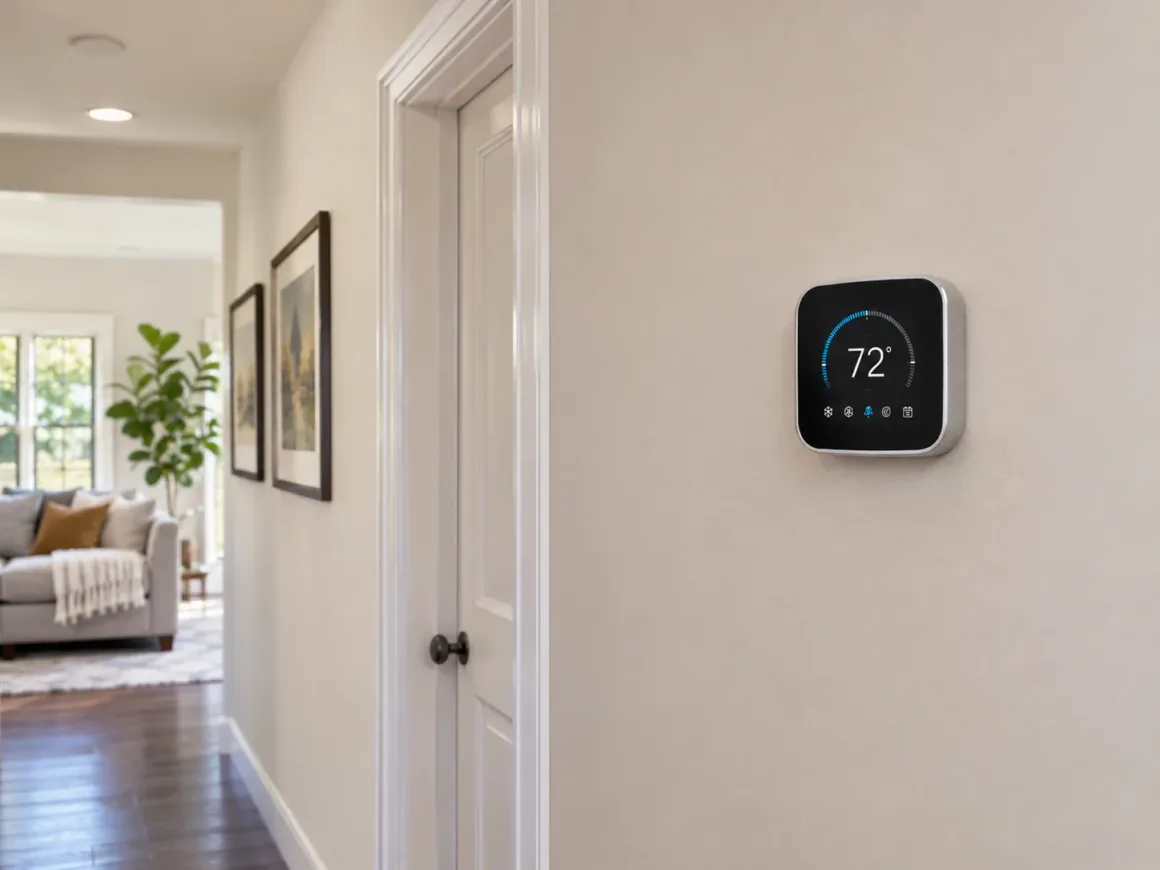
Whether you are installing a new controller or choosing a better spot for an existing one, mount the sensor where indoor air circulates naturally and reflects the temperature of the rooms you use most. A central interior wall away from direct sunlight, drafts, doorways, windows, supply registers, and heat-producing appliances provides a more representative reading. Proper thermostat placement helps prevent localized temperature changes from influencing HVAC operation.
Residential HVAC technicians rely on five practical placement rules:
- Mounting height: Install the thermostat at a height recommended by its manufacturer, typically around eye level for convenient reading and representative room-temperature measurement. Avoid locations close to the floor or ceiling where temperature differences may affect the sensor.
- Interior partition wall: Select an interior wall framed between conditioned rooms rather than an exterior wall or a wall backing onto an unconditioned garage or attic knee space.
- Clearance from grilles and registers: Choose a location away from direct airflow from return grilles and supply registers. The appropriate distance depends on grille location, airflow direction, and room layout. Avoid narrow hallway areas where moving air may pass directly across the thermostat.
- Distance from radiant and appliance heat: Avoid walls near kitchens, fireplaces, sunny windows, table lamps, televisions, and computer monitors.
- Open wall clearance: Leave clear wall space around the thermostat so tall bookshelves, draperies, or wall décor do not trap stagnant air around the housing.
Floor plan layout also shapes the best spot. In a compact single-story home with an open living and dining area, a central interior wall bordering the main living room tracks whole-house comfort well. In a multi-room ranch where bedroom doors stay closed overnight, a central hallway thermostat falls out of sync with bedroom temperatures. Two-story homes controlled by a single downstairs thermostat also experience natural heat rise to the upper level, which a single hallway sensor cannot detect on its own.
| Placement Factor | Recommended Location | Locations to Avoid |
|---|---|---|
| Wall Construction | Central interior partition wall between conditioned rooms | Exterior walls, garage walls, or uninsulated attic knee walls |
| Height Above Floor | At a height recommended by the thermostat manufacturer, typically around eye level | Very low or high locations where temperature stratification may affect readings |
| Airflow Exposure | A wall with normal room circulation, away from direct airflow | Directly in the path of return airflow, supply registers, or drafts from exterior doors |
| Heat & Sun Exposure | Shaded wall away from appliances and electronics | Direct window sunlight, kitchens, fireplaces, lamps, and TVs |
HVAC Problems That Mimic Bad Thermostat Placement
Short run cycles and uneven room temperatures do not always originate at the thermostat. Before paying to relocate the unit, check for mechanical problems and building-envelope issues that can produce similar symptoms:
- Oversized heating or cooling equipment: An air conditioner or furnace with more capacity than the home requires may heat or cool the space quickly, resulting in shorter operating cycles. This can occur even when the thermostat is installed in a suitable location.
- Restricted airflow and dirty coils: A clogged filter, dirty indoor coil, or damaged ductwork can reduce airflow. Depending on the system and severity, restricted airflow may contribute to furnace overheating, cooling performance problems, or evaporator coil icing.
- Leaky or unbalanced ductwork: Disconnected joints in an attic or undersized branch ducts starve distant bedrooms of airflow while over-conditioning central hallways. Addressing disconnected runs through repairing leaky AC ducts in the attic restores delivered airflow to distant rooms.
- Low refrigerant charge: A refrigerant leak can reduce cooling performance and may contribute to evaporator coil icing. The resulting symptoms can resemble thermostat or airflow problems, although refrigerant issues require professional diagnosis.
- Thermostat settings or sensor faults: Incorrect thermostat configuration, loose wiring connections, or a failing temperature sensor can also cause irregular system operation. These problems may produce symptoms similar to airflow interference.
- Attic insulation gaps and window solar gain: Rooms beneath poorly insulated attic areas or behind large sun-facing windows may gain heat faster than other parts of the house. A central hallway thermostat may not reflect these localized temperature changes.
Relocating a Thermostat vs. Remote Sensors and Zoning
Once your comparison test confirms that the thermostat sits in an unrepresentative draft or thermal microclimate, choose among three practical fixes based on your home’s layout and wiring access.
When Moving the Wall Thermostat Makes Sense
Relocating the thermostat makes sense when the ductwork is balanced and rooms heat and cool reasonably evenly, but the existing unit sits in a location affected by return airflow, direct sunlight, or nearby heat sources. Moving the thermostat to a calm interior wall may provide a more representative temperature reading. Before installing the unit on its new wall plate, seal the opening behind the thermostat with an appropriate material to prevent air from the wall cavity from reaching the sensor. Avoid blocking the thermostat’s internal ventilation openings. Before removing or relocating the thermostat, turn off power to the HVAC system at the appropriate disconnect or circuit breaker and follow the thermostat manufacturer’s wiring instructions. If you are unfamiliar with thermostat wiring, have an HVAC technician handle the relocation. For guidance on installing a thermostat on a new wall spot, review the installation process before beginning.
When Wireless Remote Sensors Are the Better Fix
When fishing new thermostat wire through finished walls is difficult—or when a hallway cannot represent the temperature of occupied bedrooms—a compatible smart thermostat with remote temperature sensors may provide a better solution. Some systems allow homeowners to prioritize specific rooms at certain times or average readings from multiple sensors, depending on the thermostat model and settings. This can improve comfort in a single-zone home, although the HVAC system still heats or cools the entire zone based on the selected temperature readings. ENERGY STAR certified smart thermostats offer another option to consider. Weighing the advantages of upgrading to a smart thermostat helps clarify whether remote sensing fits your floor plan.
When Duct Balancing or Zoning Is Required
Neither relocating a thermostat nor adding remote sensors solves a room that receives insufficient conditioned air. When one wing or upper floor consistently remains noticeably warmer or cooler than the rest of the house, a technician can inspect duct airflow, adjust balancing dampers, install transfer grilles or jump ducts where appropriate, or evaluate whether a zoning system is suitable.
When to Bring In a Licensed Technician
Schedule a visit from a licensed HVAC professional when your diagnostic checks point beyond simple sensor location. Contact a technician promptly if you notice:
- Heating or cooling equipment repeatedly starts and stops after unusually brief run times, even with a clean air filter installed.
- Ice or frost forming on the indoor coil cabinet or refrigerant lines.
- Persistent temperature differences between rooms despite open registers and normal system operation.
- A blank thermostat screen, repeated breaker trips, electrical odors, burning smells, or unusual sounds from the HVAC equipment.
- A need to fish new low-voltage thermostat cable through finished walls or measure duct static pressure and zoning options.
Frequently Asked Questions
Can a thermostat near a return vent cause inaccurate temperature readings?
Yes. A thermostat installed too close to a return vent may read air moving through the grille instead of the room’s average temperature. This can cause the HVAC system to turn on or off before the rest of the house reaches the desired temperature.
How far should a thermostat be from a return vent?
There is no universal distance that works for every HVAC system. The thermostat should be positioned away from direct return airflow, supply registers, exterior doors, windows, and other sources of temperature fluctuations. Follow the manufacturer’s placement recommendations and consider the airflow pattern in the room.
Can a return vent cause my thermostat to make the AC run constantly?
Yes. If airflow around the thermostat causes it to register a temperature that differs from the surrounding room, the AC may run longer or stop earlier than expected, depending on the temperature difference and thermostat settings.
How can I tell if my thermostat is affected by a nearby return vent?
Compare the temperature displayed by your thermostat with a separate thermometer placed nearby, away from direct airflow. Watch for sudden temperature changes when the HVAC system starts or stops. If the readings differ consistently, airflow or thermostat placement may be affecting its accuracy.
Should I move my thermostat away from a return vent?
Moving the thermostat may solve the problem if return airflow is affecting its readings. However, temperature differences can also result from poor duct balance, insulation problems, a faulty thermostat, or HVAC equipment issues. Test the location first and consult an HVAC technician before relocating wiring.
Can a smart thermostat or remote temperature sensor fix this problem?
A smart thermostat with a remote temperature sensor can help when the main thermostat is located in a room that does not represent the home’s overall temperature. The sensor allows the system to use temperature readings from a more suitable location, depending on the thermostat’s settings and capabilities.
Author & Editorial Review
Perla Irish writes about home improvement, residential design, renovation, and home maintenance for HouseSumo. Her articles focus on practical guidance that helps homeowners understand common household problems, make informed decisions, and maintain their homes. Explore more of her work on Muck Rack.
HVAC systems differ in equipment, duct layout, and house design. Temperature differences, unusual cycling, or airflow problems may have several causes, so persistent symptoms should be evaluated by an HVAC technician before relocating the thermostat or changing system settings.