• DIY
    • Crafts
      • Outdoors & Garden Projects
    • Decorating
      • Exterior Painting & Decorating
      • Painting & Wallpaper
      • Room by Room
    • Furniture
      • Cabinets
      • Tables
    • Woodworking
  • Home Improvement
    • Real Estate
    • Living
    • Entertaining
    • Home Building & Design
      • Home Interior
      • Home Exterior
    • Home Management
      • Home Organization
    • Remodeling
    • Living Areas
    • Bathroom
    • Kitchen
  • Lawn & Garden
    • Lawn Care
    • Vegetable Gardening
    • Landscaping
      • Irrigating
    • Flowers
    • Trees & Shrubs
  • Categories
    • Home Improvement
    • Lawn & Garden
    • Landscaping
    • Real Estate
Housesumo.com
  • DIY
    • Crafts
      • Outdoors & Garden Projects
    • Decorating
      • Exterior Painting & Decorating
      • Painting & Wallpaper
      • Room by Room
    • Furniture
      • Cabinets
      • Tables
    • Woodworking
  • Home Improvement
    • Real Estate
    • Living
    • Entertaining
    • Home Building & Design
      • Home Interior
      • Home Exterior
    • Home Management
      • Home Organization
    • Remodeling
    • Living Areas
    • Bathroom
    • Kitchen
  • Lawn & Garden
    • Lawn Care
    • Vegetable Gardening
    • Landscaping
      • Irrigating
    • Flowers
    • Trees & Shrubs
  • Categories
    • Home Improvement
    • Lawn & Garden
    • Landscaping
    • Real Estate
Featured of How to Soundproof Existing Walls, Windows, & Ceilings
  • Remodeling
  • DIY
  • Home Improvement

How to Soundproof My Existing Walls and Windows

  • Perla Irish
  • February 24, 2018
Total
60
Shares
60
0
0
0

Looking for ways to make your existing home soundproof? Follow some of these inexpensive, DIY methods to make your walls, windows, and floor soundproof.

If you live in a noisy area, by a railway station, a busy road, or a factory, noise can severely impact your quality of life, affecting sleep and just time spent relaxing.

In order to truly enjoy your home it’s important to hire professionals like Environoise to reduce outside noise. Fortunately, you can soundproof your currently existing walls and windows. Noise coming from outside
Inexpensive Ways How to Soundproof Existing Walls, Windows, & Ceilings

How to Soundproof Existing Walls: Soundproofing Walls and Ceilings

Here are some very good and inexpensive ideas to make your existing walls, floors, windows, doors, and ceiling soundproof. Try these DIY methods for soundproofing your home quickly and easily.

To Soundproof Existing Walls:

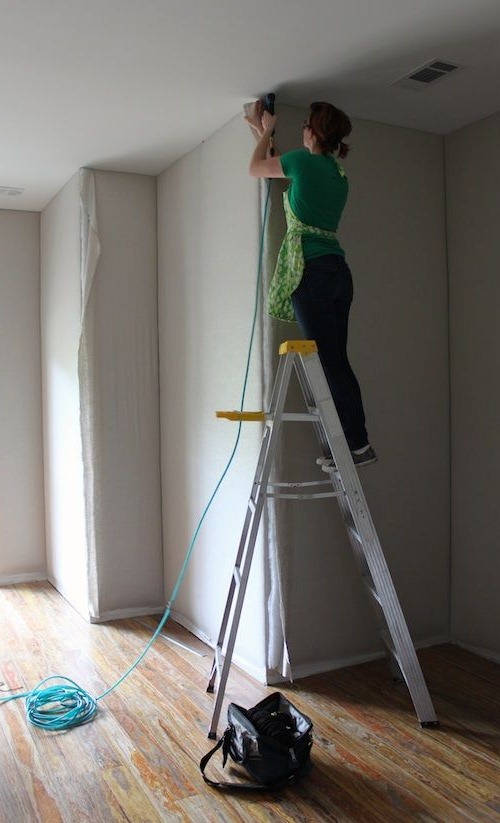
The basic concept of soundproofing your existing wall is to increase the thickness of the wall. Simply making the wall thicker will cut down on the noise. Adding some sound-insulating material will do even more. There are many methods you can use to do this:
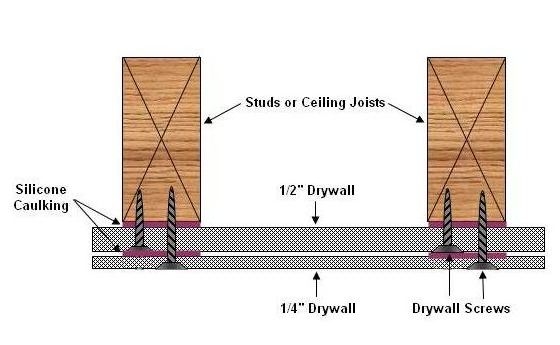
Silicon Caulking - How to Soundproof Existing Walls, Windows, & Ceilings
Silicon Caulking (How to Soundproof Existing Walls, Windows, & Ceilings)
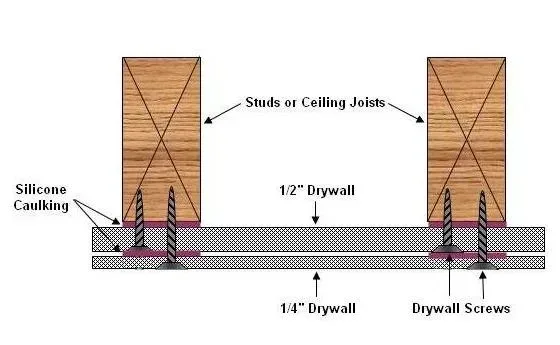
  • If you don’t want major repairs or changes to your existing wall, then the best method is to add ¼ inches of drywall over the existing wall but insert a layer of silicon caulking between them. The silicon caulking separates those two walls with little space which prevents noise from getting through. Secure with drywall screws.
  • Sound waves can travel much easier in a denser medium and travel better through wall studs, which have a higher density than other parts of the wall. Using sound attenuation batts between wall studs will help prevent the transition of sound.
  • Using a good insulating material like cellulose will help, but it can be hard to insert the material into the wall. To insert you will have to make small holes all over the wall and insert cellulose through the holes. Then fill the holes and repaint. Latex paint is the best paint to use to absorb sound.

To Soundproofing Existing Ceiling:

The method to soundproof a ceiling is the same as a wall. However, there are some special considerations. Below are some methods to use for soundproofing a ceiling, based on adding additional drywall and a layer of insulating material.
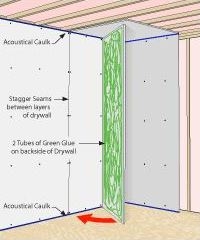
Green Glue - How to Soundproof Existing Walls, Windows, & Ceilings
Green Glue (How to Soundproof Existing Walls, Windows, & Ceilings)
  • Insert an additional layer of green glue between the original ceiling and additional drywall. The green glue is a viscoelastic material and it can be used as a low-frequency sound barrier. This material takes up to 30 days to reach its maximum performance. This method can be used for both floors and walls. The main advantage of this method is that it is less expensive and easy to use.
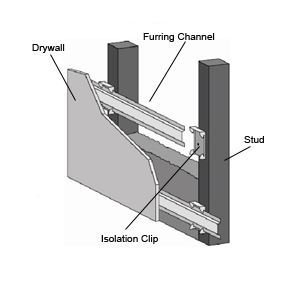
Isolation Clip and Studs - How to Soundproof Existing Walls, Windows, & Ceilings
Isolation Clip and Studs (How to Soundproof Existing Walls, Windows, & Ceilings)
  • The second method is to insert resilient sound isolation clips between the ceiling and additional drywall. They are attached in a row with a constant space between them. Due to this feature, the drywall can be fixed with less contact area. These clips are resilient and allow the drywall to bend. This increases sound absorption.

How to Soundproof Existing Walls and Windows


Must Read:

  • Painting Ideas to Compliment Black Furniture in the Living Room
  • Building Your Own DIY Garden Retaining Wall

To Soundproofing Existing Windows:

There are several varieties of soundproof glass in the market that can be used to replace the existing window glass. This is an expensive option and there are several economically viable alternatives available.
Window Plugs - How to Soundproof Existing Walls, Windows, & Ceilings
Window Plugs (How to Soundproof Existing Walls, Windows, & Ceilings)
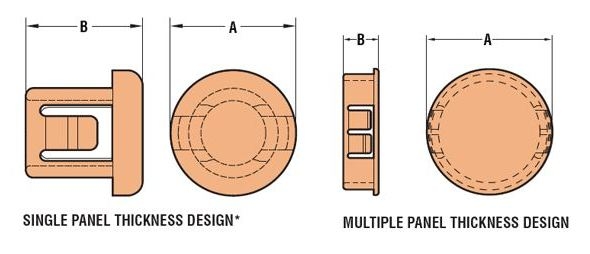
  • Use window plugs to reduce noise by up to 40%. They are available in many sizes and their sizes are indicated according to the color of the plug. A yellow plug has a drill size of 5 mm and a screw size of 6-8 cm. Measure the dimensions of the window to get the depth of the sill and choose a plug according to the sill depth. It is better to include any insulating material in the cavity between the existing window and the window plug.
Sound Proof Curtains - How to Soundproof Existing Walls, Windows, & Ceilings
Sound Proof Curtains (How to Soundproof Existing Walls, Windows, & Ceilings)
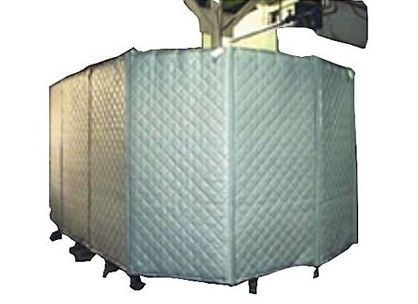
  • Simply using soundproof curtains will reduce noise greatly. They are made of absorbent material and are available in many colors. For a quick fix, curtains could also be used over walls and doors as well. Due to their absorbent nature, they are typically heavier than average curtains so use a sturdy curtain rod. You may also place double-sided tape or magnetic tape on the curtain edges.

To Soundproofing Existing Doors:

Thicker and more solid doors will do a better job of restricting outside noise. Changing the design of the door also helps. For example, a back-to-back attached door style reduces noise. Some other ideas for existing doors are given below:
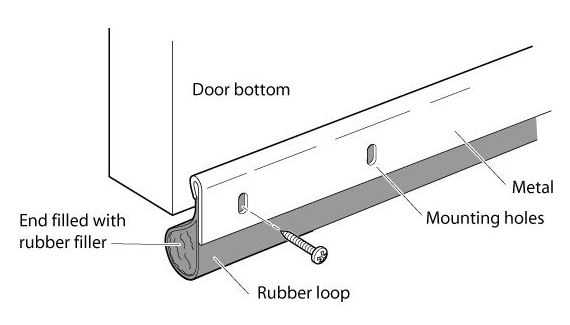
Door Sweep Seal - How to Soundproof Existing Walls, Windows, & Ceilings
Door Sweep Seal (How to Soundproof Existing Walls, Windows, & Ceilings)
  • The spaces at the top and bottom of the door are the main entrance of noise. We can reduce this space up to a limit by attaching a layer of door sweep seal. Purchase the door sweep seal according to the width of the door and attach it to the door.
  • Use foam gasket tape with a sweep seal. Attach it all around the parameter of the door.
  • We have already discussed about acoustical curtain. We can use curtains throughout the frame of the door to decrease the noise frequency by a good amount.

To Soundproofing Existing Floor:

People all around the world use different types of flooring in their houses such as floating flooring, tiles, and concrete.
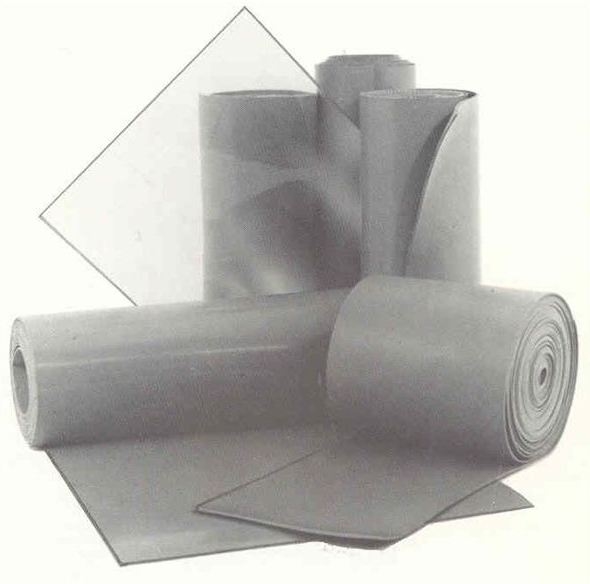
Mass Loaded Vinyl - How to Soundproof Existing Walls, Windows, & Ceilings
Mass Loaded Vinyl (How to Soundproof Existing Walls, Windows, & Ceilings)
  • Impact noise such as footfalls and airborne noise such as noise of TV and audio players coming through the floor are the main noise problems. To get rid of both problems simultaneously, we can use Mass-loaded vinyl (MLV). It can be used as an integral part of a floor and can reduce noise by up to 85%.
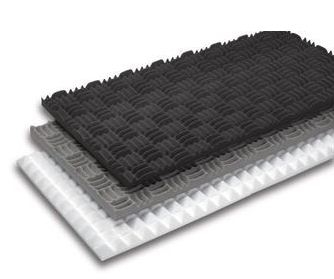
Acoustic Foam - How to Soundproof Existing Walls, Windows, & Ceilings
Acoustic Foam (How to Soundproof Existing Walls, Windows, & Ceilings)
  • For floating flooring, any soundproof material can be used between the sub-floor and the floating floor. Acoustic foam is one of them and has much better quality. On the other hand, for floors constructed with tiles and concrete, we can use acoustic carpets.
  • Adding a layer of soundproof tiles is also a good way. Two of the best soundproof tiles are melamine tiles and rubber flooring tiles.

Quickest & Easiest Soundproofing Method:

If you want to make your room soundproof quickly, try this easy idea “How to Soundproof Existing Walls, Windows, & Ceilings“. Purchase cork tiles according to the volume of the room and level of noise. Cover with wallpaper and hang throughout the room. This decorative approach will cut down on noise as well. Similarly, floor rugs can also absorb noise.

0
0
60
0
Total
60
Shares
Pin it 60
Share 0
Tweet 0
Share 0
Share 0
Previous Article
Featured of How to Install Pergo Flooring Yourself
  • Remodeling
  • DIY
  • Home Improvement

How to Install a Pergo Floor by Yourself

  • Perla Irish
  • February 23, 2018
View Post
Next Article
Featured of DIY Farmhouse Bench Plans, How to Make a Farmhouse Bench
  • Woodworking
  • DIY
  • Furniture

How to Build a Cottage Farm Bench + 15 Free Farmhouse Bench Plans & Ideas to Build Yourself

  • Perla Irish
  • February 25, 2018
View Post

You May Also Like

Flexible living room interior layout illustrated as a system, showing modular seating, storage, and furniture arranged for long-term adaptability rather than fixed styling.
View Post
  • Home Interior

Flexible Living Room Layouts: Designing Spaces That Adapt Over Time

  • Perla Irish
  • January 26, 2026
Neutral living space illustrating eco-friendly interior design through flexible layout and long-term adaptability.
View Post
  • Home Interior

Transforming Your Home With Eco-Friendly Interior Design

  • Perla Irish
  • January 26, 2026
Illustration showing a neutral living room layout with abstract seating zones and circulation space.
View Post
  • Furniture

What Is a Modular Sofa and Why It Works for Modern Living Rooms

  • Perla Irish
  • January 21, 2026
Architectural visualization showing an off-the-plan residential project before construction begins.
View Post
  • Home Building & Design

A Builder’s Guide to Marketing New Property Projects

  • Perla Irish
  • January 13, 2026
Technician checking a refrigerator in a home kitchen in Winter Garden, Florida
View Post
  • Home Improvement

Refrigerator Repair in Winter Garden: A Practical Homeowner’s Guide

  • Perla Irish
  • December 31, 2025
Side-by-side view of common metal finishes showing chrome shine, copper patina, and matte black texture.
View Post
  • Home Improvement
  • Home Interior

How to Choose the Best Metal Plating for Home Fixtures (What Actually Lasts)

  • Perla Irish
  • December 30, 2025
Vintage bathroom with clawfoot tub, subway tiles, and wooden vanity in a timeless, neutral design
View Post
  • Bathroom
  • Home Interior

Vintage Bathroom Décor Ideas That Feel Classic, Not Dated

  • Perla Irish
  • December 29, 2025
Close-up of a pro plasterer applying Venetian plaster with a steel trowel while a homeowner watches in a modern living room
View Post
  • Home Improvement
  • Decorating
  • DIY
  • Home Interior
  • Painting & Wallpaper

Venetian Plaster Technique: Step-by-Step Guide to Luxurious, Marble-Look Walls

  • Perla Irish
  • December 9, 2025

Leave a Reply Cancel reply

Your email address will not be published. Required fields are marked *

This site uses Akismet to reduce spam. Learn how your comment data is processed.

Join 13,000 folks!

Get instant access to our weekly newsletter where we share the best! 100% Privacy. No Spam.

  • Disclosure & Affiliate Policy
  • Privacy Policy
  • Terms of Use
  • About
  • Sitemap
  • Contact Us

Input your search keywords and press Enter.