Most construction problems do not start when concrete is poured. They start weeks earlier, during residential lot clearing and grading, when soil preparation, drainage direction, and subgrade stability are not carefully evaluated. Slab cracking, water intrusion, driveway settlement, and long-term erosion often trace back to decisions made at this stage.
Clearing operations frequently involve compact excavation equipment, and understanding how machines are handled on residential lots helps homeowners evaluate site readiness and safety. If you’re unfamiliar with the machinery used during earthwork, review our guide to compact excavator operation basics for context.
Clearing and grading are not just preliminary steps. They determine whether your home sits on stable, properly directed ground or on soil that will shift, hold water, or erode over time. If this phase is rushed or under-scoped, the consequences surface after framing, landscaping, and occupancy—when corrections are expensive and disruptive.
This guide focuses on decisions, not just process. You will see what commonly fails, what actually drives cost, how long the work realistically takes, and which details must be confirmed before foundation work begins.
If Clearing and Grading Fail, These Problems Surface Later
When earthwork is incomplete or poorly executed, the issues rarely appear immediately. They show up after rainfall, after landscaping, or after the home is fully occupied.
- Water pooling near the foundation due to improper slope or blocked drainage paths.
- Slab cracks and interior stress fractures caused by inadequate compaction or unstable fill.
- Driveway settlement from roots, buried debris, or soft subgrade.
- Erosion around the perimeter when runoff direction was never properly established.
- Drainage disputes with neighbors when grading shifts water toward adjacent properties.
These are not cosmetic defects. They often require regrading, drainage retrofits, or structural evaluation. The cost difference between doing it correctly the first time and correcting it later is substantial.
Clearing and Grading Solve Different Problems
Although the terms are used together, they address different risks.
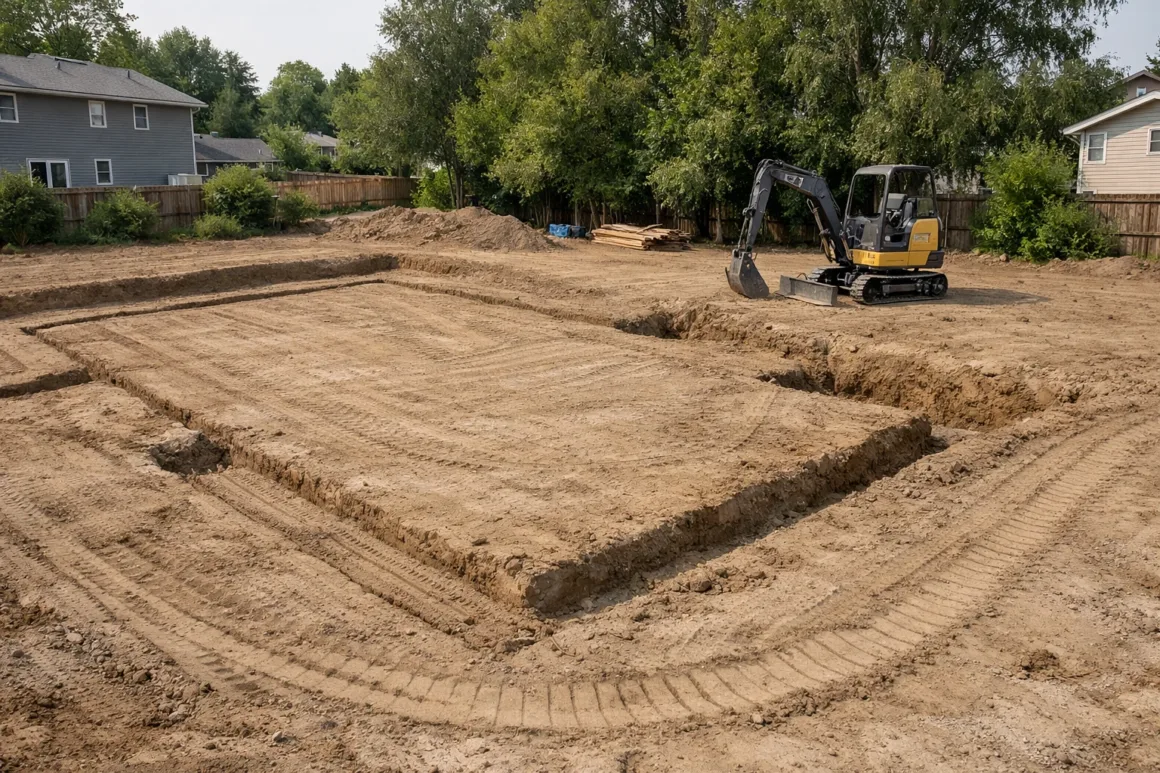
Lot clearing removes trees, brush, stumps, roots, old slabs, debris, and surface obstructions. Its purpose is to eliminate buried instability and create access for equipment.
Grading shapes the land to control water movement and establish stable elevations for the building pad, driveway, and surrounding yard areas.
Clearing makes the site buildable. Grading makes the site functional. Confusing the two leads to one common mistake: assuming the lot is ready for foundation work simply because vegetation is gone.
Five Decisions to Lock Down Before Equipment Arrives
- Property boundaries and setbacks confirmed. Clearing beyond limits can trigger disputes or regulatory issues.
- Drainage direction established. Water must move away from the future structure and toward approved discharge points.
- Scope of removal defined. Roots, buried debris, and unsuitable soils should not remain beneath slabs or driveways.
- Compaction expectations clarified. Moisture conditioning, proof-rolling, and fill standards should be understood before work begins.
- Disposal responsibility identified. Haul-off volume and distance often drive unexpected cost increases.
If any of these points remain vague, delays and change orders become more likely.
Questions to Ask Before Hiring an Earthwork Contractor
- Is debris removal and disposal clearly itemized?
- How is compaction verified?
- Has similar soil or slope been handled before?
- Is drainage direction documented in the grading plan?
What Actually Drives Cost in Residential Clearing and Grading
Cost is rarely determined by lot size alone. The true drivers are complexity, disposal volume, soil conditions, and stabilization requirements. On relatively simple residential lots, clearing and grading may remain within a moderate budget range, while wooded, sloped, or soil-challenged sites can move into low-five figures or higher depending on permit requirements and material handling needs.
- Vegetation density and tree size
- Stump extraction requirements
- Soil type and moisture content
- Slope correction and cut/fill balance
- Imported fill or stabilization needs
- Haul-off distance and disposal fees
- Inspection and regulatory requirements
In more complex situations, elevation verification and drainage modeling may require input from licensed professionals familiar with local soil behavior and regulatory standards. In some cases, this can involve coordination with experienced civil engineering professionals in Texas to confirm site-specific conditions before foundation work proceeds.
While regional engineering support may be appropriate in some cases, the broader principle remains the same: elevation control and drainage verification should be handled by qualified professionals familiar with local soil and regulatory conditions.
On relatively simple residential lots, clearing and rough grading often remain within a moderate budget range. Heavily wooded properties, steep slopes, or sites requiring soil stabilization and import fill can increase totals substantially. The largest cost swings usually come from disposal volume, compaction requirements, and soil conditions rather than equipment time alone. Sites with unstable or expansive soils may require additional stabilization steps that significantly affect final pricing.
How Long Clearing and Grading Actually Take
Weather and soil conditions affect timeline more than equipment size.
- Pre-work planning and approvals: days to weeks
- Clearing: often 1–5 days on standard residential lots
- Rough grading: typically 1–4 days
- Compaction and conditioning: 1–3 days, depending on soil
- Final fine grading: usually scheduled before landscaping
Rain delays are common. Working saturated soil creates long-term compaction issues. If the pad has not been verified or proof-rolled, foundation work should not proceed.
On sites with expansive clay or previously disturbed fill, additional steps such as moisture conditioning or formal compaction testing may be required before foundation approval.
Once grading and compaction are complete, foundation work typically follows. For a clearer understanding of what happens next in the build sequence, see our overview of commercial concrete services involved in structural slab and foundation preparation.
Red Flags During Clearing and Grading
- Standing water forming before slab work begins
- Loose, fluffy soil left in driveway or pad areas
- No visible elevation checks or stake verification
- Fill placed directly against trees meant to remain
- Drainage paths not defined before backfill
Addressing these signs immediately is far less costly than repairing drainage or structural issues later. Many long-term foundation issues trace back to early site preparation decisions that were overlooked during initial grading.
Do You Need a Permit for Lot Clearing and Grading?
In many municipalities, clearing and grading require permits, especially when significant soil movement, tree removal, or drainage modification is involved. Requirements vary by jurisdiction, floodplain status, and total disturbed area. Failing to secure proper approval can delay foundation inspections and trigger stop-work orders.
Before equipment mobilizes, confirm whether local regulations require erosion control measures, stormwater management plans, or engineered grading drawings.
Permit fees themselves may range from modest administrative charges to several hundred dollars depending on site size and environmental review requirements. Budgeting for permitting early helps avoid unexpected delays before foundation work begins.
Is the Lot Truly Build-Ready?
Site preparation decisions directly influence structural components that follow, including beam placement and load distribution. For deeper insight into material strength considerations, explore our guide on structural beam selection.
- Pad elevations verified against foundation plans
- Drainage confirmed away from structure
- Compaction completed and, if required, tested
- Unstable or organic material fully removed
- No ponding visible after rainfall
Frequently Asked Questions
How much does residential lot clearing and grading cost?
Costs vary based on vegetation density, soil type, slope correction, and disposal requirements. Simple suburban lots are significantly less complex than wooded or steep sites requiring soil stabilization.
How long does clearing and grading take?
Most standard residential projects take several days to a few weeks depending on site conditions, weather, and inspection requirements.
Can I skip soil testing before building?
Skipping soil evaluation increases the risk of foundation settlement and drainage issues. Sites with expansive clay or previously disturbed fill may require testing before foundation work proceeds.
Why Proper Clearing and Grading Determine the Success of Your Build
Clearing and grading may appear preliminary, but they set the trajectory for every stage that follows. Drainage direction, soil stability, and elevation control determine whether the foundation performs as intended or develops long-term issues.
A stable, well-drained site protects your structure, your investment, and the long-term performance of the home. Decisions made during this phase are not temporary site work—they shape the durability of the entire build.
Author & Editorial Review
Author: Perla Irish is a design and home living writer specialising in interior materials, furniture performance, and long-term home decision-making. View her published work at Muck Rack.
Editorial Review: This article was reviewed by the HouseSumo Editorial Board to ensure clarity, neutrality, factual accuracy, and alignment with long-term interior sustainability principles. Content is evaluated for long-term usefulness rather than promotional intent.