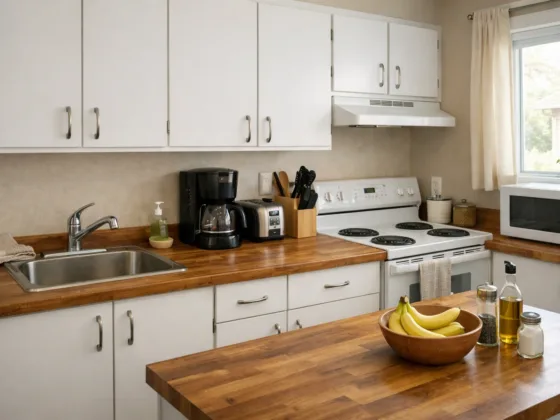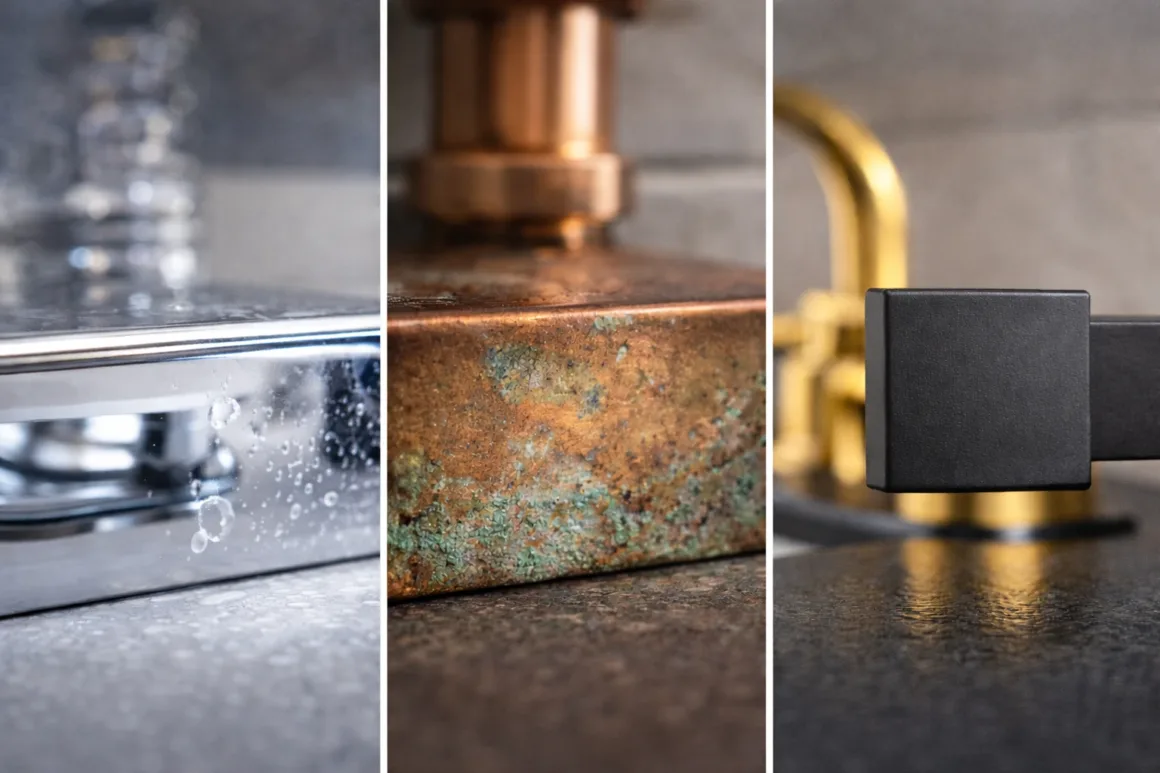
Most people only start thinking about metal finishes when something begins to look worn — a handle that’s lost its shine, a faucet that stains too easily, or outdoor hardware that no longer feels solid. These details seem small at first, but over time, they become surprisingly noticeable in daily life.
The finish you choose often decides whether a fixture quietly holds up in the background or keeps demanding attention. This guide looks at metal plating in a practical, lived-in way: how it behaves over time, how it compares with other finishes, and how to choose something that actually works in real homes.
What Metal Plating Actually Does
Metal plating is essentially a way of giving one metal a protective skin made from another metal. That outer layer helps guard against moisture, corrosion, and everyday wear, while also shaping how the surface looks — glossy, satin, or softly brushed.
In apartments and smaller homes especially, plating appears on things you touch constantly: faucets, cabinet hardware, light fixtures, and door components. When it’s done well, these pieces tend to age more evenly instead of developing dull patches or early corrosion.
Metal Plating Compared With Other Common Finishes
When choosing a finish, most homeowners end up weighing plating against powder coating or paint. Each option has its place, but they behave quite differently once installed.
- Metal plating becomes part of the surface itself. Because the coating bonds directly to the base metal, details stay sharp and finishes tend to look cleaner even after regular handling. This makes plating a common choice for faucets, handles, and decorative hardware.
- Powder coating forms a thicker protective shell. It performs well on outdoor furniture, railings, or parts exposed to impact. The trade-off is that chips or scratches tend to be more noticeable and harder to repair.
- Paint is the simplest and least expensive option, but it usually wears faster — especially in kitchens, bathrooms, or entry areas where moisture and frequent cleaning are part of daily life.
For a clearer breakdown of how plating compares with coating in real-world use, this overview explains the differences in a straightforward way.
Common Types of Metal Plating Used in Homes
| Finish Type | Typical Look | Durability (1–5) | Maintenance Level | Common Uses |
|---|---|---|---|---|
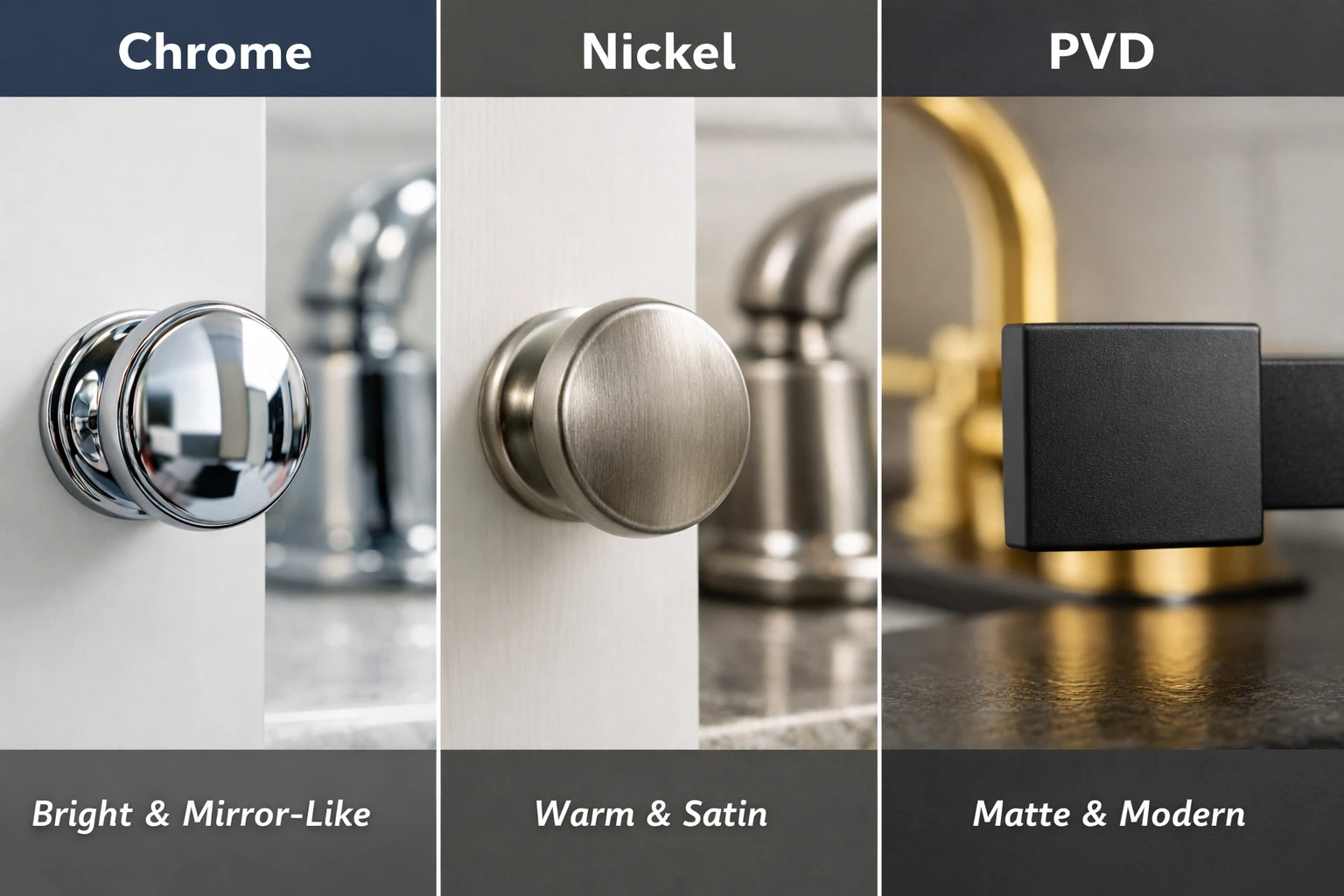
| Chrome | Bright, mirror-like | 3 | Medium | Kitchens, bathrooms |
| Nickel | Warm, slightly muted | 4 | Low | High-touch fixtures |
| PVD | Matte or satin | 5 | Very low | Premium fixtures |
| Black Nickel | Dark, reflective | 4 | Low | Contemporary hardware |
| Copper | Warm, evolving patina | 2–3 | Medium–High | Accent pieces |
Note on scores: Durability ratings reflect relative resistance to corrosion, abrasion, and visible wear under typical residential conditions (1 = lowest, 5 = highest). These assessments are informed by real-world household use patterns and commonly referenced industry practices, including guidance from organizations such as ASTM International.
Chrome is usually the most affordable option and widely available, but it shows water spots more easily. Nickel tends to cost slightly more and is often preferred in bathrooms because it hides fingerprints and mineral marks better. PVD finishes usually cost more upfront, but their long-term durability and color stability often justify the investment.
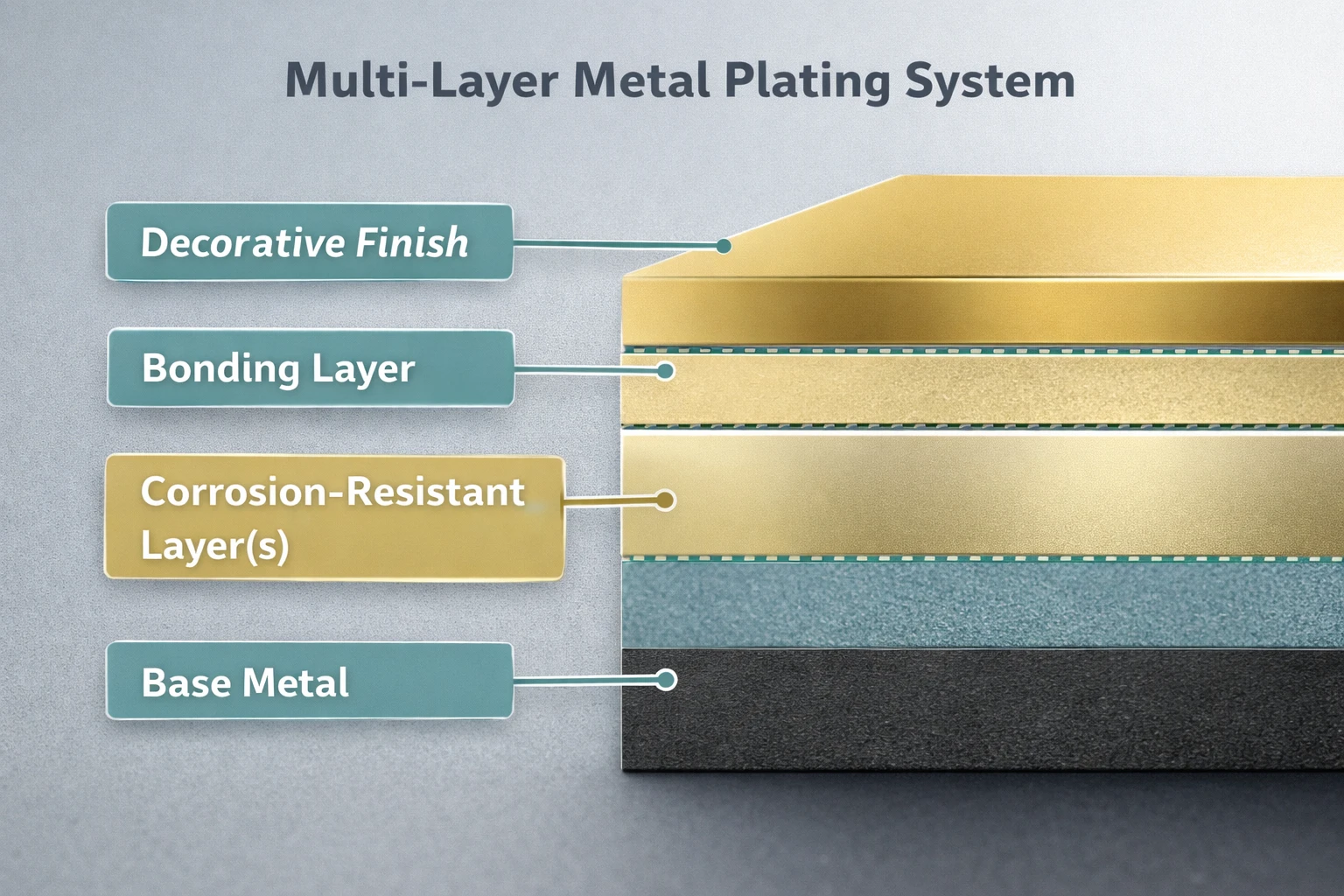
Behind the scenes, durability also depends on how the plating is built. Higher-quality fixtures often use multi-layer systems — typically a bonding layer, one or more corrosion-resistant layers, and a final decorative surface. This layered structure helps finishes wear more evenly and resist moisture over time.
Where These Finishes Make the Most Sense
The environment matters just as much as the finish itself. In smaller homes, everything tends to get handled more often — doors, drawers, and switches — so wear shows up faster if materials aren’t matched to daily use.
- Indoor fixtures: faucets, cabinet pulls, towel bars, and switch plates benefit from plated finishes that handle frequent contact. For visual consistency, this overview of popular hardware finish colors helps connect finish choice with overall style.
- Semi-outdoor areas: balcony railings, entry handles, and outdoor light fixtures need better resistance to moisture and dust.
- Decorative elements: shelves or metal accents can use plating or powder coating, depending on whether durability or visual impact matters more.
Maintenance That Actually Works
Most plated finishes don’t need special products or complicated routines. What matters more is using the right approach for each surface.
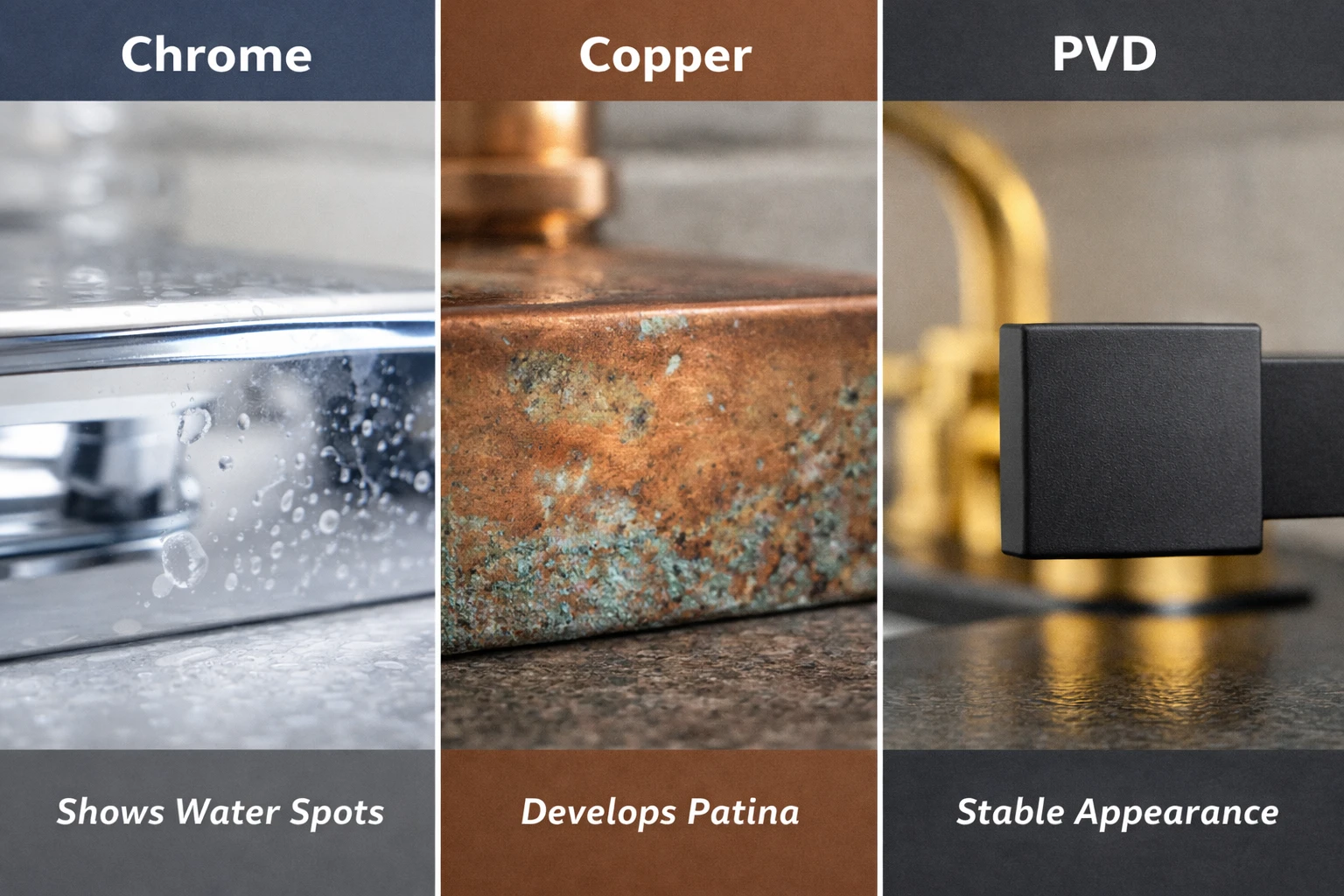
- Chrome: Clean with mild soap and water; dry afterward to reduce visible water spots.
- Nickel: Gentle cleaners work best; diluted vinegar can help with mineral buildup if used sparingly.
- Copper: Avoid acidic or abrasive cleaners unless patina removal is intentional.
- PVD finishes: Wipe with a soft cloth and mild cleaner; avoid abrasives to preserve the coating.
- Outdoor hardware: Rinse occasionally to remove dust or salt residue, especially in coastal environments.
Common Mistakes Homeowners Make
- Choosing finishes based only on appearance, without considering daily use.
- Assuming all shiny metals behave the same over time.
- Using abrasive cleaners that slowly wear down protective layers.
- Treating indoor and outdoor hardware as interchangeable.
- Skipping proper preparation when refinishing or replacing parts.
A Practical Checklist Before You Decide
- Where will this piece actually be used — indoors or outdoors?
- How often will it be touched or cleaned?
- Is long-term durability or appearance more important in this spot?
- What base metal sits under the finish?
- How easy will routine cleaning be in daily life?
Finishes rarely feel like a big decision at the start, but months later, you usually notice which ones held up — and which ones didn’t. When materials match real daily use, they tend to age more gracefully and demand far less attention.
Author & Editorial Review
Author: Perla Irish is a design and home living writer specialising in interior materials, furniture performance, and long-term home decision-making. View her published work at Muck Rack.
Editorial Review: This article was reviewed by the HouseSumo Editorial Board to ensure clarity, neutrality, factual accuracy, and alignment with long-term interior sustainability principles. Content is evaluated for long-term usefulness rather than promotional intent.