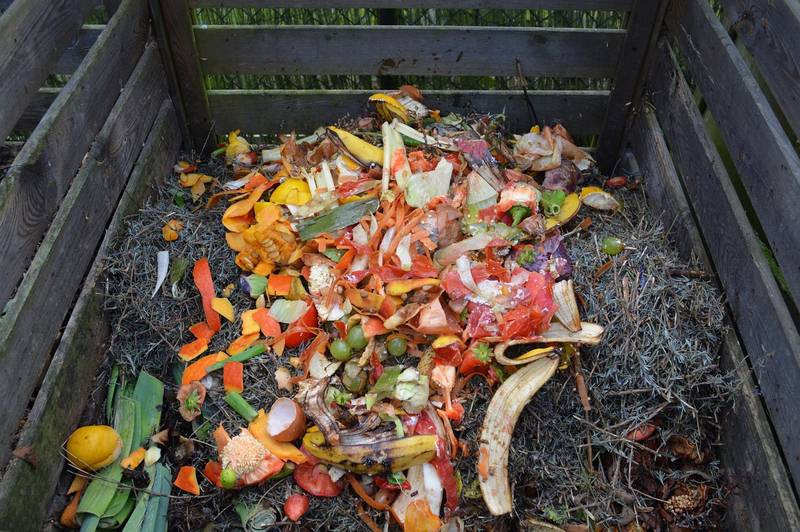
How to compost in your backyard is not time-consuming, unsanitary or difficult. It just takes a bit of education and preparation.
Backyard composting not only improves your soil’s fertility and workability, but it also saves you money at the garden-supply store as you’ll no longer need to buy fertilizers—artificial or otherwise. It also reduces the strain on your local landfill and helps to lessen the number of chemicals being produced and added to the environment.
Advantages of Composting
Chemical fertilizers are made from nonrenewable, carbon-footprint heavy, fossil fuels. They have to be manufactured, packaged and shipped. Compare that environmental nightmare with making your own, natural fertilizer from items at hand (that would otherwise clog landfills). It’s simple, fun and healthier for you and the planet. Plus, it’s easy on the budget.
And, boy, will your garden love it. Adding compost substantially increases your soil’s fertility in several ways: It adds macro and micronutrients, improves the structure of the soil, increases water retention and buffers the soil’s pH.
How to Compost and Build a Compost Heap
Read Also:
- Natural Deer Deterrent, Living, Loving & Gardening with Deer
- The Most Common Plant Diseases and How to Cure Them
- The Best Vegetables for Container Gardening
- The Basics of Herb Gardening in Containers
- How to Keep Your Houseplants Alive and Healthy
- Using Grey Water for Irrigation in the Organic Garden
- 5 Steps to Ensuring the Health of Your Vegetable Crops
What You’ll Need
To make compost you need five things: organic matter, air, moisture, heat and a place where all these things can work together to cause decomposition.
Organic matter can be any plant material that decomposes easily and that your household produces or discards. Some examples are vegetable debris from your kitchen, coffee grounds, tea bags, paper towels, shredded newspapers, dead vegetable and flower plants, grass clippings, leaves, weeds, etc.
You can also add horse, cow, chicken, sheep or goat manure to your compost heap. Mixing in these manures is safe because these animals are vegetarians, so there is no protein matter in their waste. The wonderful thing about animal manure is that it heats up the compost pile very efficiently, thus causing the pile to “cook” faster. This fuels the decomposition that produces compost.
Note:
Animal flesh and bones—and manure from animals that eat solely or mostly protein—are not usable in a compost heap (without special treatment) because protein breaks down too slowly and attracts pests and disease.
Container Matters
One key consideration in composting is how the compost will be contained, if at all. The options vary from simply adding your debris to a pile—maybe surrounding the heap with four posts and chicken wire or wood slats—to building or buying a solid container.
You can keep your composting simple by piling all your organic matter and lots of straw, hay, and leaves in a big mound in your backyard keeping your heap moist (not wet) and turning it regularly to assure that it remains aerated and weed-free. This big-pile method is more appropriate in the country than in a small backyard, but you can still do it this way.
A more efficient and neighbor-friendly approach is to keep your compost enclosed. You can build your own container or buy a special one designed just for composting.
A ready-made unit is an excellent choice for a novice who is intimidated by the whole process of turning garbage into garden gold. And they are relatively cheap when the cost of materials and time are factored in. Compost bins and supplies are available at most home and garden stores and online.
Care and Feeding
After deciding on containment, you need to feed your pile. You can keep a bucket in the kitchen for all of your non-protein refuse and dump it on your compost heap every few days. The odor should not be a problem as long as you empty and clean the bucket frequently. It helps to occasionally set it outside to get some air.
Also, metal is less odoriferous than plastic, which holds the scent of whatever is stored in it. You may want to keep the bucket out of the way, however, because it isn’t all that pleasant to look at. A top will help in this regard—and for minimizing unpleasant aromas.
To add bulk to your compost pile, be on the lookout for grass clippings, leaves and any other garden waste that neighbors may be discarding. More organic matter equals better compost and less refuse to go to a landfill. Every few months, it’s helpful to visit the local feed store to get a few bales of rotting hay and straw to add.
At least every 3-4 weeks you should turn and water your pile. It’s exciting to watch as a big mound of refuse reaching nearly to the top of the container reduces itself by half in a month’s time. And what is left from all that unusable waste? Nutrient-rich soil!
Every time you turn your pile, you should add the most decomposed stuff (found at the bottom) to your garden. The new soil at the lowest level of your heap is a natural home for earthworms that love to eat the matter, so each time you add compost to your garden, you’ll be adding worms, too. Every organic garden should have bucketfuls of worms as they aerate the soil. For convenience, you might want to place your compost heap right next to your garden beds.
Composting is rewarding because you save money on fertilizers and it’s a marvelous way to aid the environment. You’ll reduce chemical pollution and the need for landfills—while helping to rebuild the Earth’s soil from the ground up, backyard by backyard.