Sustainable interior design is often reduced to material checklists—low-VOC paints, bamboo flooring, recycled finishes. While these choices matter, they rarely address the deeper issue driving waste and frequent renovation: interiors that cannot adapt as lives change.
A truly Eco-Friendly home is not defined only by what it is made from, but by how long its design decisions remain useful. Longevity, flexibility, and reusability play a larger role in sustainability than surface-level material swaps.
This guide approaches sustainable interior design as a system—one that prioritises adaptability, repairability, and long-term relevance over trend-driven replacements.
Sustainable Design Is About Reducing Replacement Cycles
One of the largest contributors to residential waste is not initial construction, but repeated interior replacement. Furniture that no longer fits a space, layouts that fail new routines, and finishes chosen for appearance rather than durability all shorten a home’s usable lifecycle.
Designing sustainably means anticipating change. Homes evolve—households grow, work patterns shift, and rooms take on new roles. Interiors that cannot respond to these changes are more likely to be torn out and replaced.
Flexibility as a Core Sustainability Principle
Flexibility reduces waste by extending usefulness. A space that can be reconfigured without demolition or full replacement stays relevant longer and requires fewer new resources over time.
This principle applies across interior decisions—from room layouts and storage systems to lighting plans and furniture selection. Modular, adjustable, and repairable elements consistently outperform fixed alternatives when evaluated over a long-term horizon.
Real-World Applications of Sustainable Interior Systems
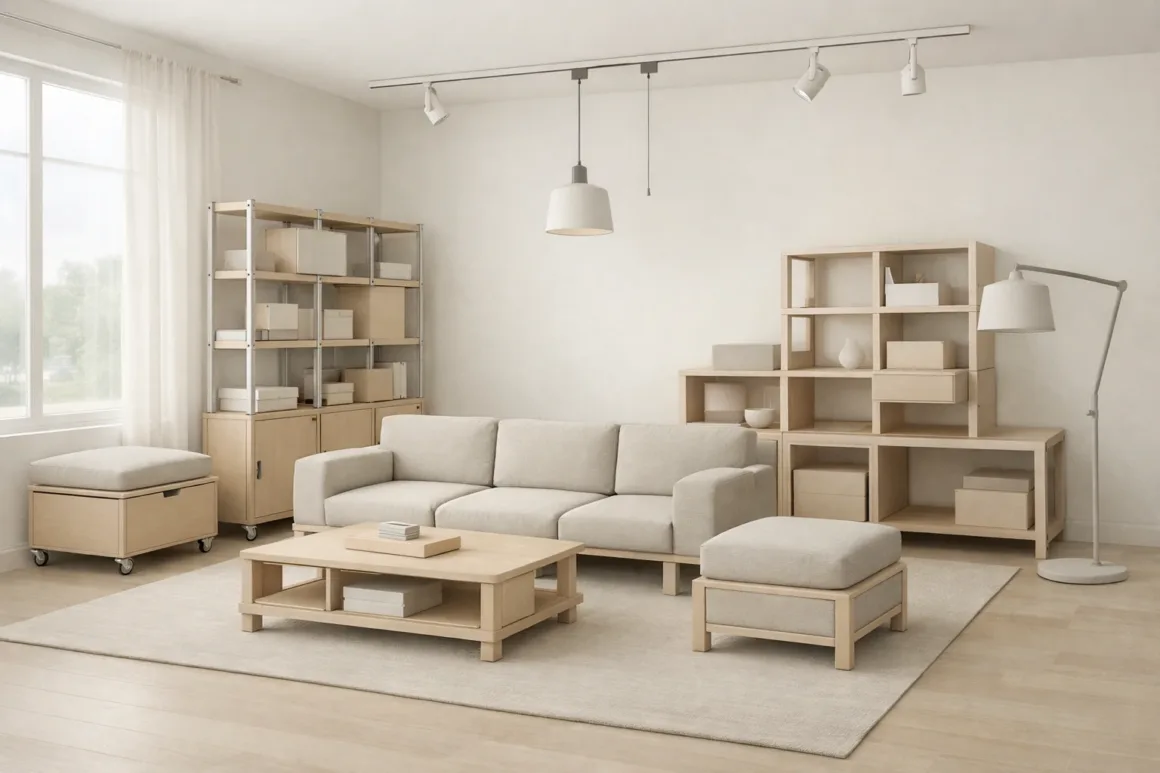
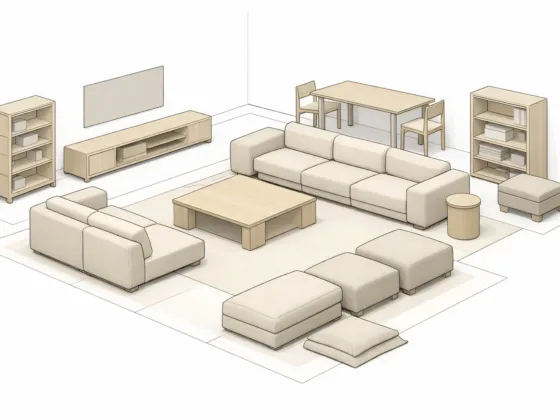
Sustainable interior design becomes most effective when flexibility is applied across multiple elements, not just one. In practice, system-based design allows different parts of the home to respond to change without triggering full replacement.
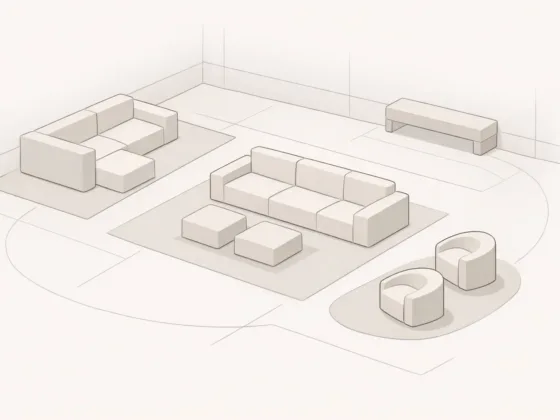
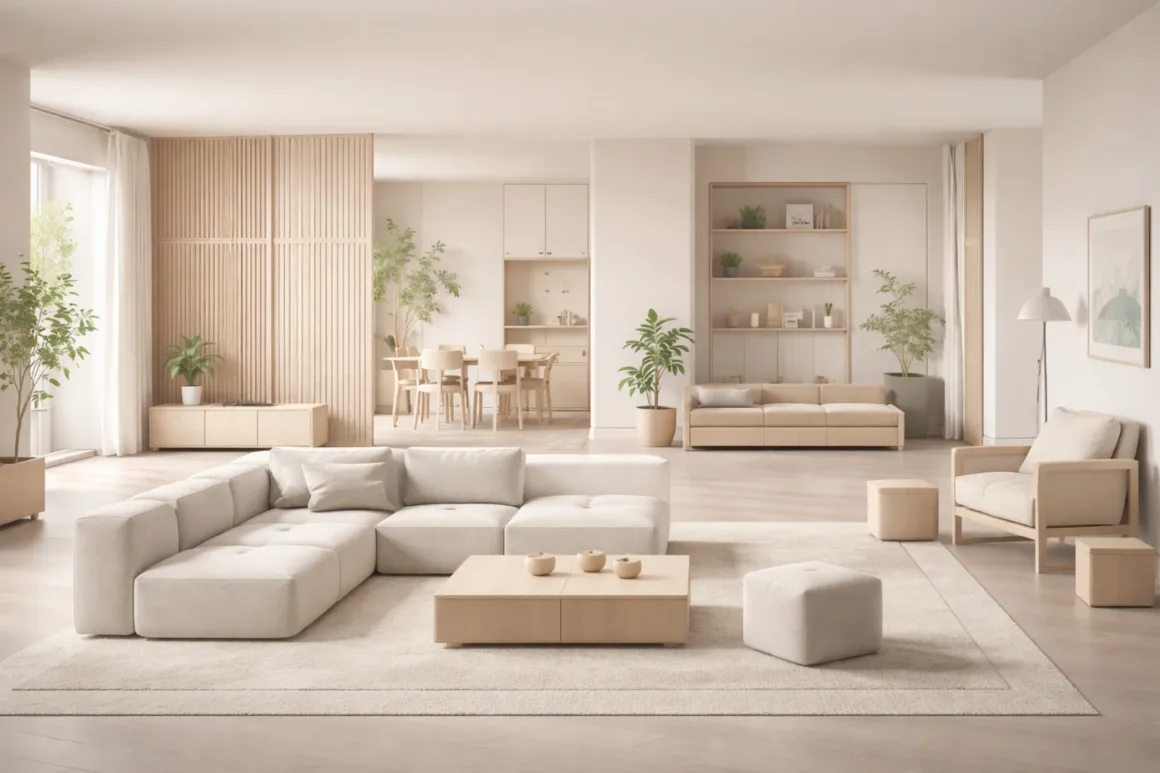
Seating systems provide a clear example. Modular sofas can shift from linear arrangements to corner or facing layouts as household needs change. This avoids replacing an entire seating unit when room functions evolve, such as accommodating remote work, entertaining, or growing families.
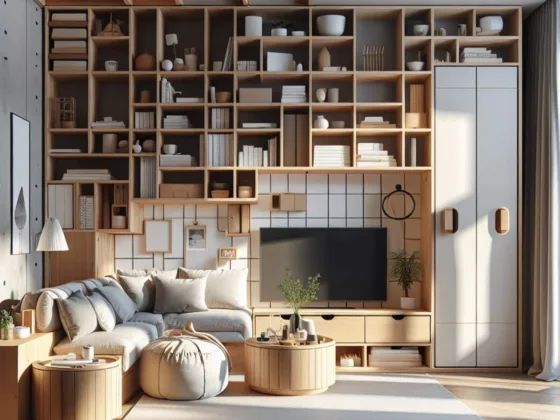
Storage follows a similar pattern. Modular shelving and cabinetry systems allow components to be expanded vertically, reconfigured, or partially replaced. When storage adapts incrementally, homes avoid the waste associated with removing and rebuilding fixed cabinetry.
Lighting systems also benefit from adaptive thinking. Track lighting, movable fixtures, and layered lighting plans enable spaces to support different activities without rewiring or structural changes. This reduces both material waste and labour-intensive renovations.
When flexibility is applied consistently across furniture, storage, and lighting, interiors function as coordinated systems rather than isolated design decisions. This system-based approach is where sustainability delivers its greatest long-term impact.
Furniture as a Design System
Furniture plays a central role in interior sustainability because it absorbs the most wear and adapts most frequently to lifestyle changes. Systems that allow components to be reconfigured, replaced, or expanded reduce the need for complete disposal.
A clear example is modular seating, which supports evolving layouts without requiring an entirely new purchase when room functions change. When viewed as a system rather than a single object, furniture becomes part of a sustainable interior strategy rather than a disposable item.
For a deeper exploration of how modular furniture supports long-term adaptability, see: What Is a Modular Sofa and Why It Works for Modern Living Rooms.
Material Choices That Support Longevity
Sustainable interiors prioritise materials that age predictably, can be repaired, and maintain performance over time. Durability often outweighs novelty when evaluating environmental impact.
- Solid wood and engineered hardwood outperform thin veneers in repairability.
- High-density foams and replaceable upholstery extend furniture lifespan.
- Mechanical connectors and modular assemblies reduce full-system failure.
Choosing materials that tolerate wear reduces premature replacement and lowers cumulative resource use—even when initial costs are higher.
Cost Efficiency Over Time, Not at Checkout
Sustainable design often carries higher upfront costs, but long-term analysis tells a different story. Interiors that adapt reduce renovation frequency, labour costs, and material disposal.
Replacing one damaged component instead of an entire system—whether furniture, cabinetry, or storage—has a measurable impact on both cost and environmental footprint.
Common Misconceptions About Eco-Friendly Interior Design
Eco-Friendly interior design is often misunderstood as a narrow focus on specific materials or a premium aesthetic. These misconceptions can discourage practical adoption and obscure where sustainability actually delivers value.
Misconception 1: Sustainable design is only about materials.
While material choice matters, many environmentally responsible homes still generate waste through inflexible layouts and short-lived furniture. Design decisions that prevent premature replacement often have a greater environmental impact than swapping one finish for another.
Misconception 2: Eco-Friendly interiors are always more expensive.
Although some sustainable systems cost more upfront, they often reduce long-term expenses by avoiding frequent replacements. Repairable furniture, adaptable layouts, and modular components typically lower lifetime costs even when initial prices are higher.
Misconception 3: Sustainable interiors require a specific look.
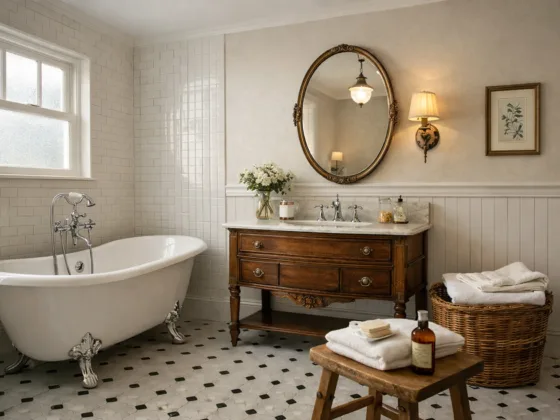
System-based design principles apply across styles, from minimal to traditional. Flexibility, durability, and adaptability are structural qualities, not visual ones.
Clarifying these misconceptions helps reposition sustainability as a practical framework rather than a stylistic or material checklist.
Planning Interiors for Change
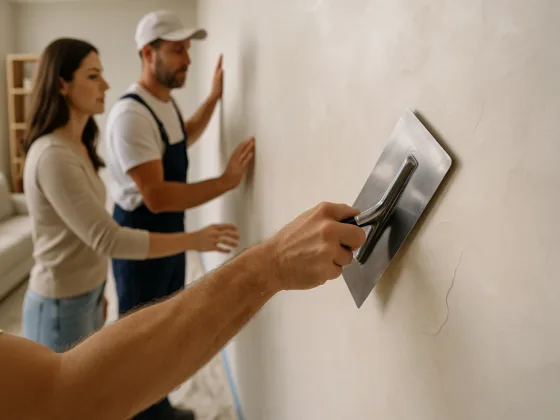
Homes designed with future flexibility in mind maintain relevance longer. Planning for change does not require complex systems—only thoughtful allowance for adjustment.
- Allow clearance for reconfiguration and circulation.
- Avoid permanently fixing elements that may need repositioning.
- Prioritise systems that expand or contract with minimal disruption.
Why Sustainable Interiors Are System Decisions
Sustainability is rarely achieved through isolated choices. It emerges when layouts, materials, and furnishings work together to reduce waste across the home’s lifespan.
Seeing interiors as adaptive systems—not static compositions—helps reduce environmental impact while maintaining comfort, usability, and long-term value.
Frequently Asked Questions About Sustainable Interior Design
Is sustainable interior design only relevant for new builds?
No. Many sustainability gains come from adapting existing homes through flexible furniture, modular systems, and incremental upgrades rather than full renovation.
Does flexibility reduce design quality?
When planned intentionally, adaptable interiors often improve functionality without compromising comfort or aesthetics. Design quality depends more on planning than permanence.
How does modular furniture support sustainability?
Modular systems allow partial replacement, reconfiguration, and extended use, reducing the need to discard entire pieces when needs change.
Author & Editorial Review
- Author: Perla Irish is a design and home living writer specialising in interior materials, furniture performance, and long-term home decision-making. View her published work at Muck Rack.
- Editorial Review: This article was reviewed by the HouseSumo Editorial Board to ensure clarity, neutrality, factual accuracy, and alignment with sustainable home living principles. Content is evaluated for long-term usefulness rather than promotional intent.
Last updated: January 2026