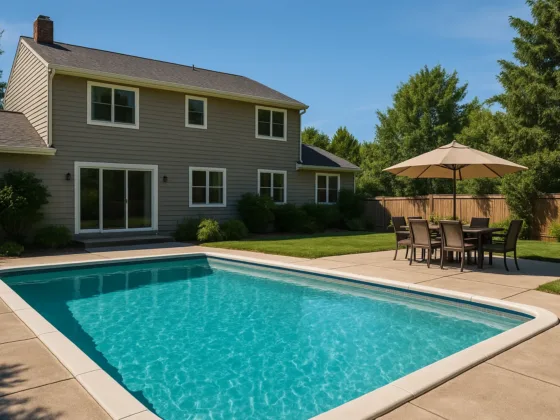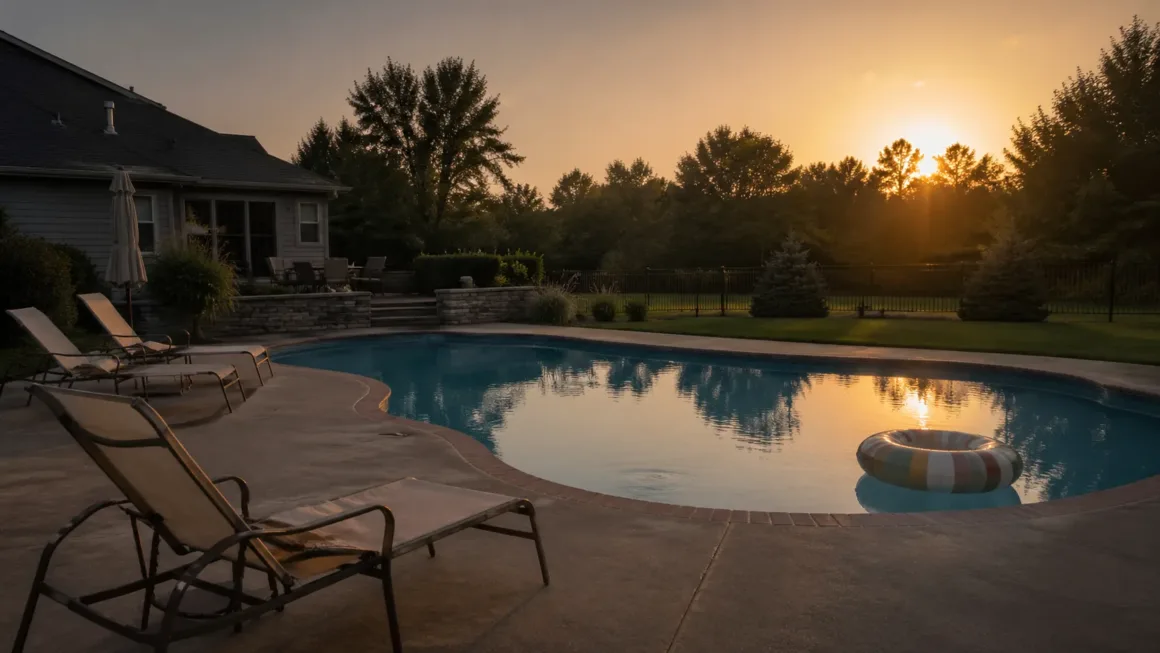
Most people assume they need to upgrade their pool. In reality, they need to change how they use it.
Most backyard pools don’t fail because of design—they fail because the experience becomes repetitive.
What looks exciting during installation quickly becomes predictable within weeks. Same timing. Same use. Same outcome. Once the pattern repeats, usage drops—not because the pool is bad, but because it stops evolving.
Here’s the part most homeowners overlook: adding features rarely solves that problem. It often makes it worse.
Long-term usability comes from how the space functions, not how much is added to it.
A backyard pool feels boring when usage becomes repetitive and requires effort before use. The fastest fix is not adding features, but changing how the space functions—through multi-use zoning, lower maintenance friction, and variation in timing and activity.
The most effective backyard pool ideas focus on usability: create active and relaxation zones, reduce preparation time, support social interaction, and adjust the environment (lighting, shade, sound) to extend how long people stay.
Expanded Answer
The best backyard pool ideas focus on usability, variation, and low friction—not features. Pools stay engaging when they support multiple types of use and remain easy to access without preparation.
- Design for multiple uses (active + relaxation zones)
- Reduce friction (clean water, ready-to-use setup)
- Change timing (morning, evening, social use)
- Support interaction (games, shared use)
- Control the environment (shade, lighting, sound)
This pattern shows up clearly in behavioral design and environmental psychology: spaces that change keep people engaged, while static ones don’t.
This is why many well-designed pools still end up underused.
What Makes a Backyard Pool Stay Engaging Long-Term
Most pools are designed as features but used like systems.
When a pool supports only one type of activity—cooling off—it quickly reaches saturation. This creates a closed habit loop: same trigger, same action, same result.
Spaces stay relevant when people use them differently over time. They make it easy to use the space in multiple ways at different times.
Micro-controversy: Expensive pool upgrades often reduce long-term usage because they reinforce a single use pattern instead of expanding it.
Backyard Pool Ideas That Actually Get Used
Most pool ideas look good in photos but don’t change how the space is actually used. The ones that get used focus on behavior.
1. Dual-Zone Layout (Active + Passive)
Separating the space into activity and relaxation zones extends usage time. One supports movement, the other supports staying.
2. Time-Based Use Design
Morning, afternoon, and evening use feel completely different. Lighting and temperature shift perception without changing the structure.
3. Interaction Layers
Floating games, light competition, or shared use increase engagement. Passive-only pools lose attention quickly.
4. Environmental Control
Shade, sound, and lighting determine comfort. These factors influence dwell time more than the pool itself.
This follows the same principle used in adaptable home layouts where spaces evolve instead of remaining fixed (see Flexible Living Room Layouts: Designing Spaces That Adapt Over Time).
Common Pool Design Mistakes That Lead to Disuse
Most unused pools share the same design problems.
- No shaded seating area
- No transition space between pool and rest
- Over-focus on visuals, under-focus on usability
- High maintenance friction
- No support for social or multi-use activity
These issues don’t appear immediately. They show up after the novelty fades.
What Makes a Pool Get Used vs Ignored
| High-Usage Pool | Low-Usage Pool |
|---|---|
| Supports multiple activities (relax, play, socialize) | Designed for a single purpose only |
| Always ready to use (low maintenance friction) | Requires cleaning or setup before use |
| Includes shaded and comfortable seating | No place to stay outside the water |
| Used at different times (morning, evening, social) | Used only during peak heat hours |
| Encourages interaction and shared use | Used individually and inconsistently |
| Environment adapts (lighting, sound, layout) | Static setup with no variation |
The difference isn’t the pool—it’s how the space is used in practice.
Friction Is What Quietly Kills Pool Usage
Small barriers are enough to stop people from using the pool altogether. If the pool requires preparation, people delay using it—or skip it entirely.
This reflects a simple pattern: the more effort required before use, the less likely people are to use it.
Some homeowners reduce that friction by improving circulation systems such as pool pumps, which help maintain water clarity and reduce manual effort.
When the pool is always ready, it becomes part of daily behavior—not a planned activity.
How to Design a Pool Area That Doesn’t Get Boring
The goal isn’t to improve the pool. It’s to improve how the space functions over time.
- Design for flexibility, not a fixed use
- Reduce effort before use
- Create multiple entry points (relax, play, socialize)
- Support both solo and shared experiences
- Allow the environment to change throughout the day
This follows the same pattern seen in multi-use spaces, where flexibility increases long-term usability (see Reasons Renovating or Remodeling a Home Can Improve Daily Living).
Why Most Backyard Pools Feel “Stale” After a Few Weeks
It’s not the pool. It’s the pattern.
Repetition without variation leads to behavioral fatigue. This pattern shows up in most home features tied to comfort rather than necessity.
When nothing changes, the experience stops feeling intentional—even if the space still works perfectly.
Frequently Asked Questions
Why does my pool feel boring after a few weeks?
Most pools follow a single-use pattern—cooling off at the same time each day. This creates repetition, which leads to behavioral fatigue. Without variation or multiple ways to use the space, engagement naturally drops.
How do I make my backyard pool more interesting without renovating?
Focus on changing how the space is used rather than upgrading the structure. Introduce multiple zones (active and relaxation), adjust timing (morning or evening use), and add interaction such as games or casual social use. These changes reset the experience without construction.
What are the most important backyard pool ideas that actually work?
The most effective ideas prioritize usability: dual-zone layouts, shade for thermal comfort, lighting for evening use, and low-maintenance systems that reduce effort before swimming. These elements increase how often and how long the pool is used.
Does adding more features make a pool better?
Not always. Additional features can reinforce the same usage pattern instead of expanding it. Pools that stay engaging usually support different types of activity rather than relying on more equipment.
How does maintenance affect pool usage?
Maintenance directly affects how often the pool is used. If cleaning or preparation is required before swimming, usage drops. Reducing friction—by keeping water consistently clean and systems reliable—makes spontaneous use more likely.
If the pool still feels underused after reading this, the issue is usually visible in a few simple checks:
Quick Checklist: How to Fix a Pool That Feels Boring
- ☐ Add a second zone (not just swimming)
- ☐ Create shade for longer stays
- ☐ Make the pool always ready (no prep needed)
- ☐ Introduce simple interaction (games or shared use)
- ☐ Use lighting to extend evening usability
- ☐ Change when you use it, not just how
- ☐ Add a place to sit, not just swim
- ☐ Reduce friction before entering the water
- ☐ Rotate small visual elements (towels, layout, setup)
- ☐ Allow the space to support both solo and social use
If most of these boxes are unchecked, the issue isn’t the pool—it’s how the space is being used.
Final Takeaway
The best backyard pool ideas don’t add complexity. They remove friction and introduce variation.
A pool stays relevant when it supports different ways of using it—not just one routine. Without that, even the most expensive setup becomes background noise.
Author & Editorial Review
Author: Perla Irish is a design and home living writer specialising in interior materials, furniture performance, and practical home decision-making. View her published work at Muck Rack.
Editorial Review: This article was reviewed by the HouseSumo Editorial Board to ensure clarity, neutrality, factual accuracy, and alignment with current home living practices. Content is evaluated for long-term usefulness and informational integrity rather than promotional intent.
Last updated: April 2026