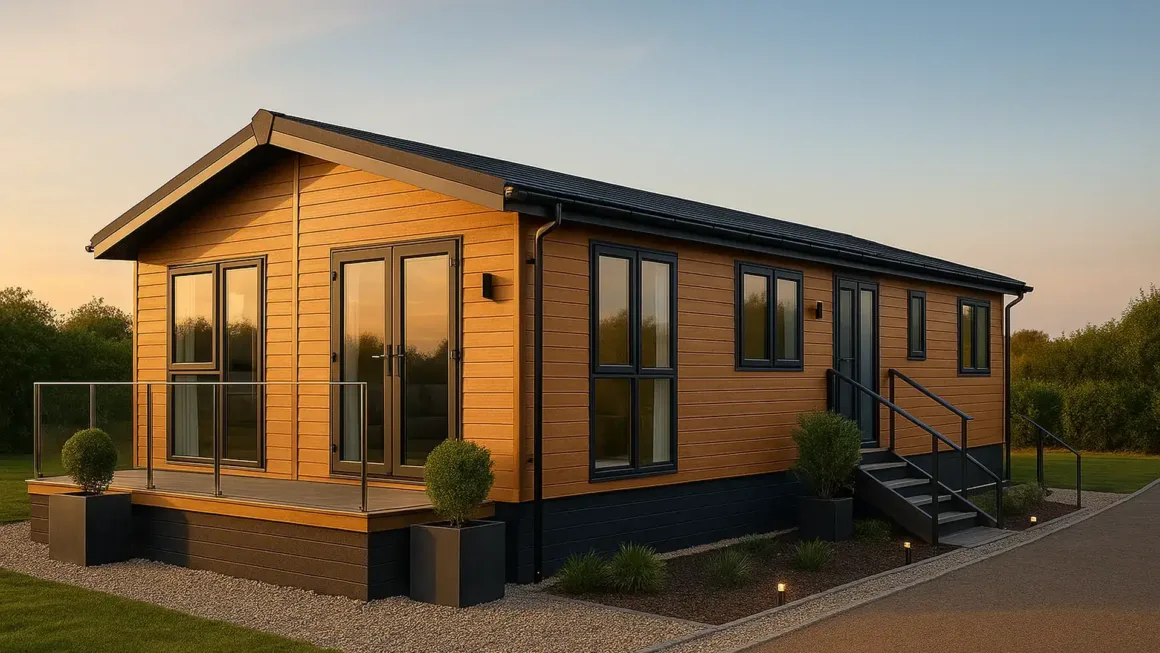
This guide to mobile homes in the UK covers planning routes, fees and the 10% resale commission, EPC rules, and step-by-step buying checks.
Quick Answer: In UK planning law a “mobile home” (including twin-unit park homes) is a caravan that must remain moveable and fit statutory size limits. On protected residential parks you pay a pitch fee and, on resale, the site is entitled to up to 10% commission. For garden annexes, many owners use a Lawful Development Certificate when the use is ancillary to the main house.
Looking for designs? Browse UK-built mobile homes † for residential and holiday use.
What “Mobile Homes” Mean in UK Law (Why It Matters)
For planning/licensing, a mobile home is a caravan (single or twin-unit) that is assembled on site, remains capable of being moved by road, and fits maximum limits: approx. 20 m length (external, excl. drawbar), 6.8 m width, and 3.05 m internal height for twin-units. These tests govern whether you can use garden siting routes or must seek full planning, and they underpin park-site licensing.
Planning Scenarios (Garden Annexe vs. Park Home)
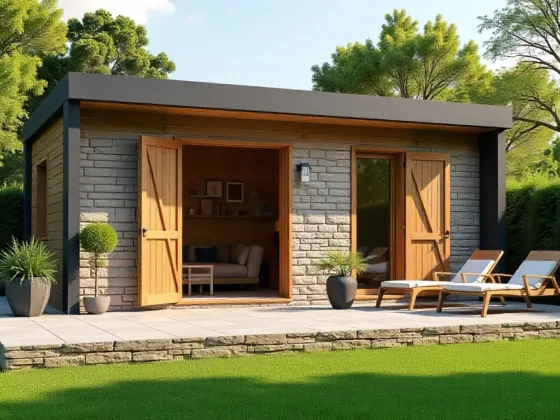
- Garden annexe (within your curtilage): Where use is incidental to the main dwelling (no separate household/tenancy), many owners seek a Lawful Development Certificate to confirm no full planning is required.
- Residential park home (protected site): You buy the home (not the land) and occupy a pitch under a written statement. Pitch fees apply and are reviewable; residents have specific rights.
- Holiday park or mixed-use site: Usually subject to occupancy restrictions—not a substitute for a full-time primary residence. Confirm the licence type before paying a deposit.
Case Studies (Composite, 2-minute reads)
1) Garden Annexe via LDC: “The Smiths” added a twin-unit annexe for a parent. They kept a shared power/water supply, no separate postal address, and no letting. Their council granted a Lawful Development Certificate confirming ancillary use—useful proof during future sale of the main house.
2) Residential Park Purchase: “Janet (retiree)” bought on a protected park. She verified pitch-fee history, site rules, and the home’s BS 3632 spec, and budgeted for insurance, annual chassis checks, and eventual resale commission. She skipped a high-street mortgage and used cash from downsizing.
Costs & Ongoing Fees You’ll Actually Pay
- Pitch fee (parks): Charged by the site owner and reviewed annually via a set process; disputes can go to the tribunal.
- Resale commission: Up to 10% of the sale price is payable to the site owner on a park-home resale.
- Council Tax: Residential park homes are commonly in Band A (confirm locally).
- Utilities: Confirm how gas/electric/water are billed and that resale pricing follows the correct rules; request the last 12 months of statements.
- Insurance & maintenance: Budget for roof/cladding care, chassis/underside checks, resealing, and steps/deck safety.
Buying a Park Home vs. Bricks-and-Mortar
| Topic | Park/Mobile Home | House/Flat |
|---|---|---|
| Tenure | Home only; pitch agreement with site owner | Freehold/leasehold including land |
| Mortgage | Standard mortgages uncommon; specialist finance or cash is typical | Conventional mortgages widely available |
| EPC on sale | Not required for park-home sales | Required (with exemptions) |
| Resale commission | Up to 10% to site owner | None |
| Build standard | Ask for BS 3632 residential spec | Building Regulations at construction |
Energy & Comfort: What to Check
- BS 3632: Year-round residential spec (insulation, glazing, heating). Ask the seller for documentation.
- Running-cost proof: Request the last 12 months of energy bills and details of insulation/heating upgrades to benchmark costs.
- Upgrades to consider: Under-floor insulation, roof recoating, smart heating, safe non-slip steps/deck.
Finance & Legal Due Diligence
- Finance: Because you don’t buy land, most high-street lenders won’t mortgage park homes; cash, equity-release, part-exchange or specialist lenders are common.
- Site licence & rules: Confirm it’s a protected residential site (not just holiday use). Read the written statement + site rules; check pitch-fee review notices.
- Survey: Get a specialist park-home survey (chassis, moisture, insulation continuity, services).
- Resale process: Standard process with the buyer/seller forms and retention/remittance of the 10% commission to the site owner.
Viewing Checklist (Print or Save)
- Park type confirmed (residential vs holiday)
- Written statement & current site rules reviewed
- Pitch-fee history (12 months) and review notices seen
- Utilities billing method & last 12 months’ statements
- Build standard noted (ask for BS 3632)
- Recent energy bills/insulation details
- Specialist survey booked (chassis, ingress, services)
- Resale commission terms understood (up to 10%)
Internal Links: Keep Reading on HouseSumo
- Winter Home Maintenance Checklist
- Roofing Replacement: The Essential Guide
- Guide to Deck Installation
- Real-Estate Trends
FAQs
Do I need an EPC to sell a park home?
No. Park-home sales are exempt. Share recent bills/specs to reassure buyers.
Can I get a standard mortgage on a park home?
Typically no. Buyers often use cash, equity release, part-exchange, or specialist lenders.
What size can a twin-unit mobile home be?
Common limits: up to 20 m length, 6.8 m width, and 3.05 m internal height—while remaining moveable.
References (official)
- GOV.UK — Park homes: selling or giving away a park home (EPC exemption; sale process)
- DLUHC — Buying a park home (pitch fees, 10% commission overview) [PDF]
- Caravan Sites Act 1968 — Section 13 (twin-unit definition) [PDF]
- Statutory Instrument 2006/2374 — Amendment to caravan definition (size limits) [PDF]
- Planning Portal — Lawful Development Certificates
- LEASE — Selling a park home (commission retention process)
- Age UK Factsheet 71 (Feb 2025–Jan 2026) — Park homes [PDF]
† Editorial note: External links are included for reader utility. We do not accept payment for inclusion.
{ “@context”:”https://schema.org”, “@type”:”Article”, “headline”:”Mobile Homes in the UK: Costs, Rules, and Smart Buying Guide (2025)”, “description”:”A practical guide to UK mobile homes/park homes: planning scenarios (garden annexe vs protected residential park), legal definition and size limits (Caravan Sites Act 1968 s.13 as amended by SI 2006/2374), pitch fees and up-to-10% resale commission, EPC rules, finance realities, surveys, and a printable viewing checklist.”, “mainEntityOfPage”:{“@type”:”WebPage”,”@id”:”https://www.housesumo.com/mobile-homes-uk-guide/”}, “datePublished”:”2025-11-06T09:00:00+00:00″, “dateModified”:”2025-11-06T09:00:00+00:00″, “image”:”https://www.housesumo.com/wp-content/uploads/2025/11/mobile-homes-uk-hero-1920×1080-1-1160×653.webp”, “articleSection”:”Real Estate”, “keywords”:[“mobile homes UK”,”park homes”,”BS 3632″,”planning permission”,”garden annexe”,”pitch fees”,”EPC”,”UK property”], “author”:{“@type”:”Person”,”name”:”Perla Irish”,”url”:”https://www.housesumo.com/about/”}, “contributor”:{“@type”:”Person”,”name”:”Martin Gaine, MRTPI”,”jobTitle”:”Chartered Town Planner”,”url”:”https://martingaine.com/what-is-a-chartered-town-planner/”}, “publisher”: { “@type”: “Organization”, “name”: “HouseSumo”, “url”: “https://www.housesumo.com/”, “logo”: { “@type”: “ImageObject”, “url”: “https://www.housesumo.com/wp-content/uploads/2024/03/HS-logo-1x.png”, “width”: 600, “height”: 60 } } } { “@context”:”https://schema.org”, “@type”:”HowTo”, “name”:”Mobile homes in the UK: smart buying checklist”, “description”:”Step-by-step checks for buying UK park homes or using a mobile home as a garden annexe.”, “mainEntityOfPage”:”https://www.housesumo.com/mobile-homes-uk-guide”, “image”:”https://www.housesumo.com/wp-content/uploads/2025/11/mobile-homes-uk-hero-1920×1080-1-1160×653.webp”, “step”:[ {“@type”:”HowToStep”,”name”:”Confirm site type”,”text”:”Verify protected residential park vs holiday-only; read the site licence, rules, and written statement.”}, {“@type”:”HowToStep”,”name”:”Check legal definition & size limits”,”text”:”Ensure the unit qualifies as a caravan under Caravan Sites Act 1968 s.13 (as amended by SI 2006/2374).”}, {“@type”:”HowToStep”,”name”:”Budget core costs”,”text”:”Pitch fees, utilities, insurance, maintenance; understand up to 10% resale commission on park-home sales.”}, {“@type”:”HowToStep”,”name”:”Assess energy & comfort”,”text”:”Ask for BS 3632 spec, review recent energy bills, and note insulation/heating upgrades.”}, {“@type”:”HowToStep”,”name”:”Arrange survey & finance”,”text”:”Commission a specialist park-home survey; consider cash/equity release/specialist lenders because standard mortgages are rare.”} ] }