Last updated: January 2026
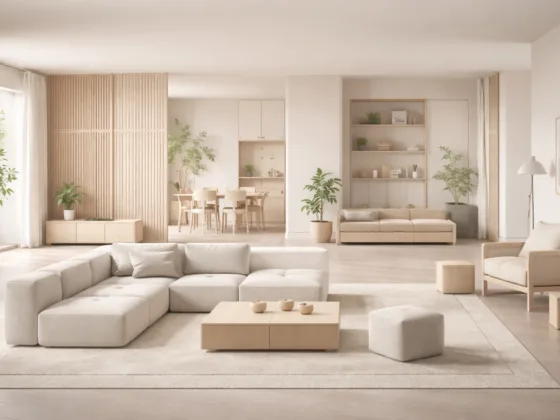
Living rooms today are rarely static spaces. They shift between family use, casual entertaining, and everyday downtime. As homes evolve to support more flexible lifestyles, furniture choices increasingly need to adapt alongside them. One seating option that continues to suit these changing needs is the modular sofa, largely because it allows homeowners to reconfigure seating without replacing the entire system.
Rather than locking a living room into a single layout, modular sofas support long-term adaptability. This makes them especially relevant for modern homes where space, household size, and daily routines can change over time.
What Is a Modular Sofa?
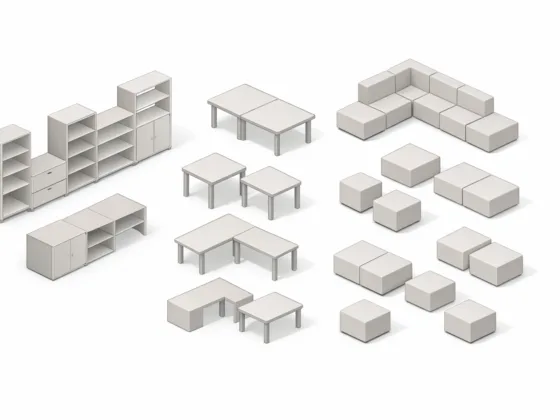
A modular sofa is constructed from individual seating sections, often called modules, that connect to form a complete seating arrangement. In practical terms, this refers to systems commonly referred to as modular sofa systems, where each section functions independently while remaining structurally stable when joined.
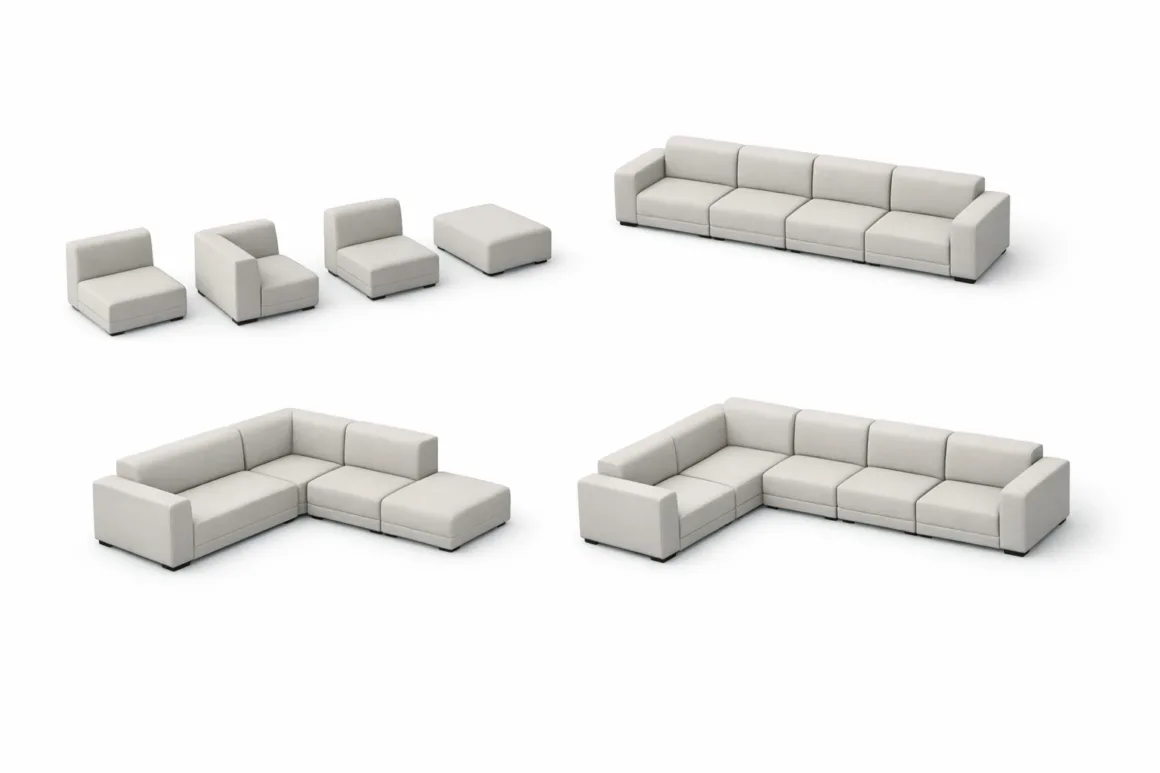
These systems typically support multiple configurations, including straight layouts, L-shaped corners, U-shaped seating, and chaise extensions. In some designs, centre modules can be removed and repurposed as ottomans or informal tables during social gatherings.
Unlike traditional sofas with a fixed footprint, modular designs prioritise flexibility over time. This allows seating arrangements to evolve as needs change due to relocation, renovation, or lifestyle adjustments.
Why Modular Sofas Suit Contemporary Living Spaces
Solving Real Layout Challenges
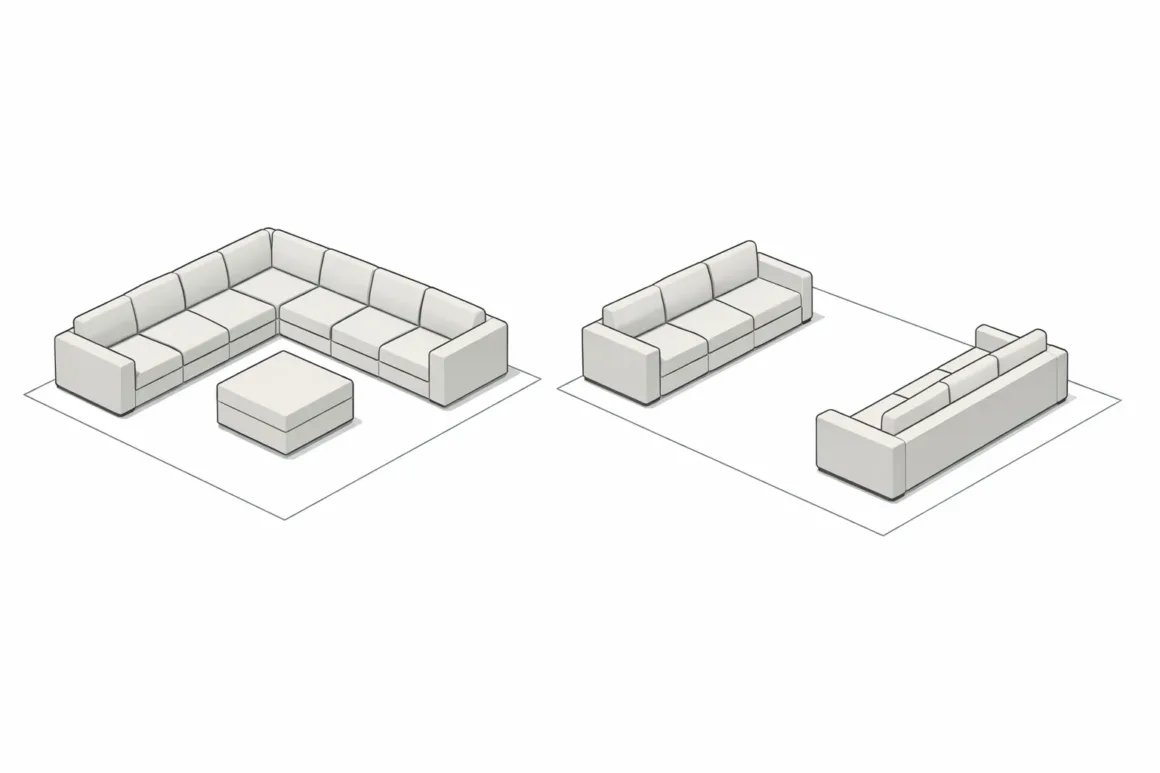
Modern living rooms often face layout constraints such as open-plan zones, narrow footprints, or shared dining and lounge areas. Modular sofas address these challenges by allowing seating to be shaped around the room rather than forcing the room to accommodate a rigid design.
For example, a U-shaped configuration used for family lounging can be reassembled into two facing sofas when hosting guests, improving conversation flow without introducing extra furniture.
Supporting Multiple Daily Uses
In many households, the living room performs several roles throughout the day. Modular sofas support this flexibility by allowing quick adjustments based on use, whether opening up space for relaxation or grouping seating more closely for gatherings.
This adaptability reduces reliance on additional chairs or temporary furniture, helping maintain a balanced and uncluttered space.
Long-Term Practicality
Instead of replacing an entire sofa when needs change, modular systems often allow individual sections to be added, removed, or replaced. This makes them a practical option for households planning to stay in their homes long term.
Long-Term Cost Considerations
While modular sofas often come with a higher upfront investment, the cost difference becomes more nuanced when viewed over a longer period. In general terms, a quality modular sofa typically falls within the range of $2,000–$8,000, depending on size, materials, and construction.
By comparison, a well-built fixed sofa or sectional of similar quality often ranges between $1,500–$5,000. The key difference lies in how each option ages. When a fixed sofa wears unevenly or no longer fits a new layout, full replacement is often the only option.
With modular systems, individual sections can usually be replaced or reconfigured independently. Over time, this can reduce total replacement costs, especially in households where seating receives uneven wear or layouts change due to relocation or renovation.
- Partial replacement: Replacing one worn module instead of an entire sofa.
- Extended lifespan: Layout changes without full repurchase.
- Resale flexibility: Usable modules retain value independently.
Planning the Right Configuration
- Measure walkways, doors, and circulation paths before choosing a layout.
- Decide which modules need to remain fixed and which should stay flexible.
- Check whether modules can be expanded or replaced individually.
- Plan for future changes such as moving, renovation, or household growth.
Case Example: Optimising a Small Studio Living Area
In a compact studio apartment measuring approximately 40 square metres, space efficiency becomes critical. A three-module sofa was initially arranged as a straight 7-foot layout against the main wall to maximise open floor area.
When hosting guests, the left and right arm modules were reconnected to form a 7×5-foot corner configuration, freeing up wall space for a separate work desk. The centre module could then be detached and used as an ottoman or informal seating, eliminating the need for additional furniture.
This flexibility allowed the living area to support both daily living and occasional entertaining without compromising circulation or comfort.
Design and Material Considerations
Beyond layout flexibility, construction quality plays a key role in long-term comfort and stability. Well-designed modular sofas typically use concealed heavy-duty steel connectors combined with reinforced locking brackets, helping prevent shifting between modules during daily use.
High-quality frames are commonly built from kiln-dried hardwood or steel-reinforced structures, while seating comfort often relies on high-density foam cores layered with softer top cushioning to balance support and comfort over time.
Upholstery choices should reflect household needs. High-traffic homes may benefit from stain-resistant fabrics, while comfort-focused spaces may prioritise texture and softness.
Material choices also play a role in long-term performance and environmental impact, which is a key principle in sustainable interior design.
Quick Comparison: Modular vs Traditional Sectional Sofas
- Modular sofas: Reconfigurable, expandable, and adaptable to changing layouts.
- Traditional sectionals: Fixed layouts with limited flexibility once placed.
Design Tip: Making Modular Seating Feel Intentional
Large area rugs can visually anchor modular seating, preventing arrangements from feeling fragmented. Consistent cushion styling and side tables also help unify individual modules into a cohesive layout.
Final Thoughts
As living spaces continue to evolve, furniture that supports adaptability becomes increasingly valuable. Modular sofas offer a balance between structure, comfort, and long-term flexibility, making them a practical solution for modern living rooms.
Author & Editorial Review
Author: Perla Irish is a design and home living writer specialising in interior materials, furniture performance, and practical home decision-making. View her published work at Muck Rack.
Editorial Review: This article was reviewed by the HouseSumo Editorial Board to ensure clarity, neutrality, factual accuracy, and alignment with current home living practices. Content is evaluated for long-term usefulness and informational integrity rather than promotional intent.