Refrigerators rarely fail all at once. More often, something feels slightly off first — a soft change in sound, uneven cooling, or moisture where it never used to appear. These early signs are easy to dismiss, especially during busy weeks.
In Winter Garden, those small signals show up more often during long warm stretches. Higher humidity and longer cooling cycles put extra pressure on refrigerator components, which can quietly accelerate wear compared to cooler or drier climates.
When these signs start to stack up, refrigerator repair becomes less about urgency and more about understanding what your appliance is communicating before a minor issue turns costly.
How refrigerator problems begin in Central Florida homes
Most refrigerator issues don’t start dramatically. One part slowly compensates for another, cooling cycles grow longer, and subtle symptoms appear. In Central Florida homes, this pattern is often amplified by heat and moisture.
Inconsistent temperature
Homeowners in Winter Garden often notice that produce spoils faster or that items on certain shelves freeze while others feel warm. In many cases, this happens when condenser coils collect dust faster due to humidity, or when airflow is restricted inside the cabinet.
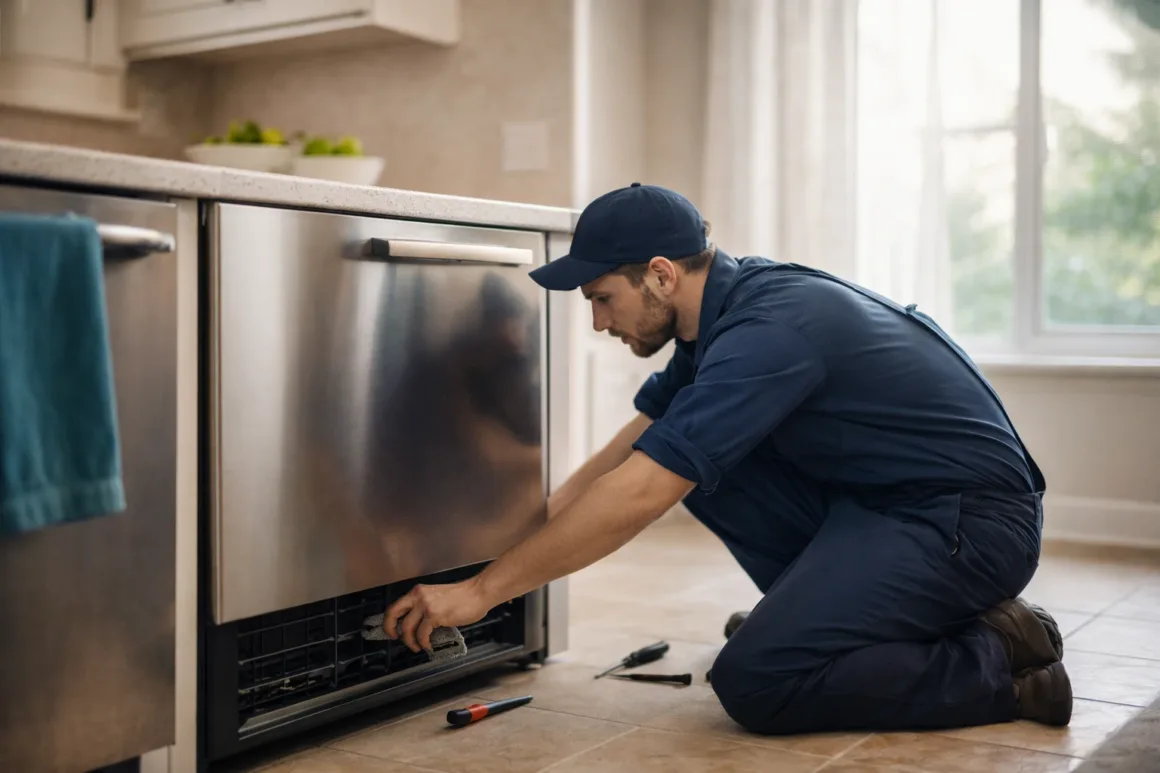
For example, a side-by-side Whirlpool refrigerator in a nearby Winter Garden neighborhood recently showed uneven cooling simply because pet hair had built up around the lower coils — something that tends to happen faster in homes with indoor-outdoor airflow.
New or unfamiliar noises
Every fridge makes background noise, but clicking or buzzing that appears suddenly can signal strain. In several local cases, owners of older GE and Frigidaire models reported louder cycling during peak summer afternoons, when compressors run longer to maintain temperature.
These sounds are often early warnings rather than emergencies, but they shouldn’t be ignored for months at a time.
Water collecting near the base
In Winter Garden’s humid conditions, clogged defrost drains are a common source of water pooling beneath refrigerators. Condensation builds up faster, and when drainage slows, moisture has nowhere to go.
Homeowners sometimes assume this is harmless condensation, but over time it can damage flooring or cabinetry if left untreated.
Frost forming where it shouldn’t
Frost buildup inside the freezer often points to defrost system stress. In Central Florida, longer compressor run times during hot months can make this problem appear sooner than expected, even in mid-age refrigerators.
What you can safely check before calling for service
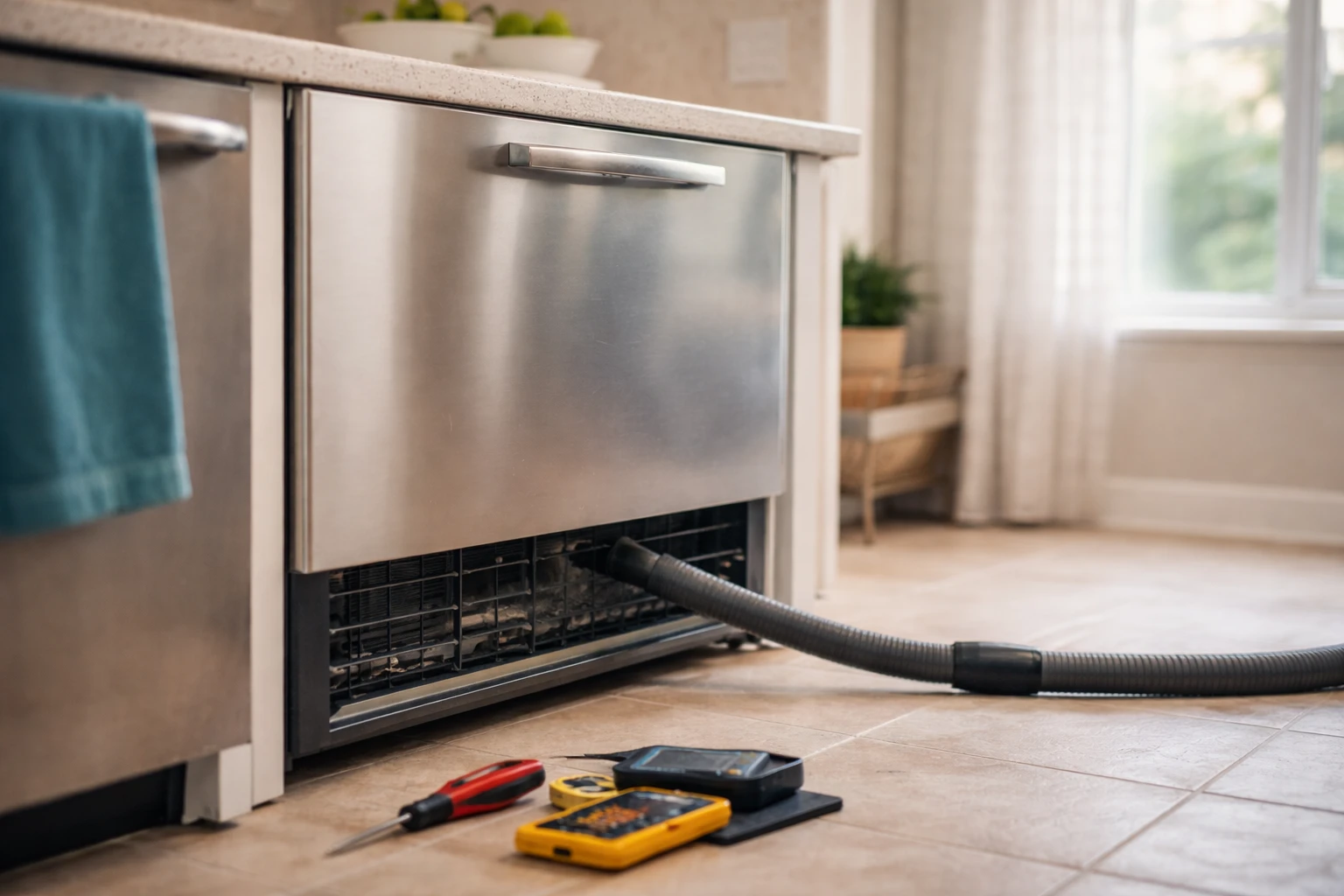
Before assuming a serious failure, a few simple checks can help narrow down what’s happening. These steps don’t replace professional diagnosis, but they often clarify whether the issue is minor or escalating.
- Confirm the refrigerator is powered on and temperature settings haven’t changed.
- Clean dust, lint, or pet hair from condenser coils.
- Check that interior vents are not blocked by containers or packaging.
- Test door seals using a paper or dollar-bill method.
If performance doesn’t improve after these steps, continuing to experiment may do more harm than good.
When professional repair makes sense
Certain symptoms point to problems that usually require trained diagnosis, especially when electrical or sealed components are involved.
- The refrigerator runs constantly but never reaches a stable temperature.
- The freezer cannot keep food fully frozen.
- You notice electrical smells or moisture near wiring.
- The same issue returns after basic checks.
If compressor behavior seems irregular, this guide on how to reset a refrigerator compressor explains what homeowners can safely review before scheduling service.
Habits that help refrigerators last longer in humid climates
Climate plays a bigger role in appliance lifespan than many people realize. In warmer, more humid areas, small maintenance habits can meaningfully reduce strain.
- Clean condenser coils every few months, especially if pets are present.
- Avoid overcrowding shelves so cold air circulates freely.
- Keep door gaskets clean and flexible.
- Make sure the refrigerator sits level so doors seal properly.
When replacement becomes the more practical choice
Most refrigerators last roughly 10–15 years. When repairs become frequent or costs add up, replacement may be the more reasonable long-term decision.
For homeowners weighing that choice, this overview on appliance repair and expected lifespans offers helpful perspective on how long different models typically last.
Common mistakes homeowners make
- Ignoring early warning signs because the fridge still “mostly works.”
- Assuming moisture is harmless condensation.
- Waiting months before tracking repeated symptoms.
- Trying multiple fixes without identifying the underlying cause.
A short checklist worth keeping nearby
- Check temperature consistency weekly
- Clean coils every 3–6 months
- Test door seals regularly
- Listen for new or changing sounds
- Write down changes before they escalate
Final thought
Refrigerator problems rarely arrive without warning. They whisper first — a slight sound, a subtle temperature shift, a small patch of moisture. Paying attention early helps keep daily routines steady and avoids rushed decisions later.
Editorial Review: Reviewed by the Housesumo editorial team to ensure clarity, accuracy, and alignment with internal quality standards for home maintenance guidance.