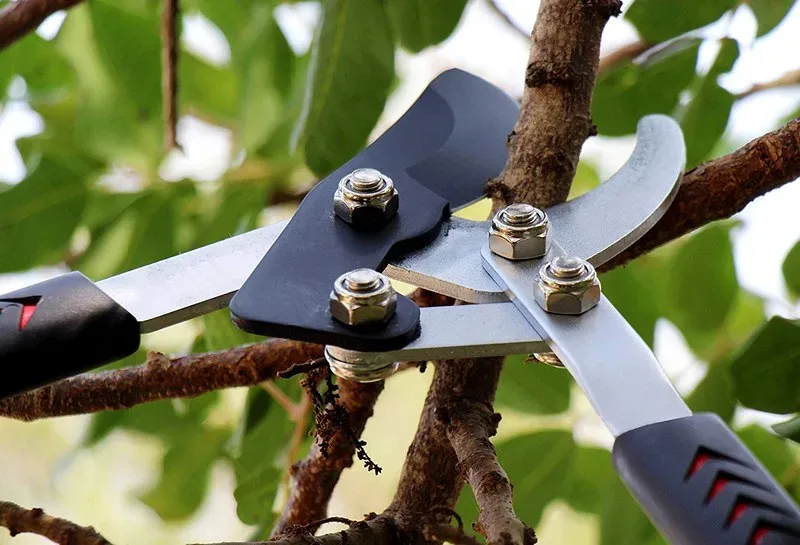
Of the different manual tools for garden cutting, garden loppers are the largest.
Garden loppers are a kind of scissors that are gardener uses to prune and trim small branches and twigs. Every gardener needs a pair of loppers in their garden because it always comes in handy.
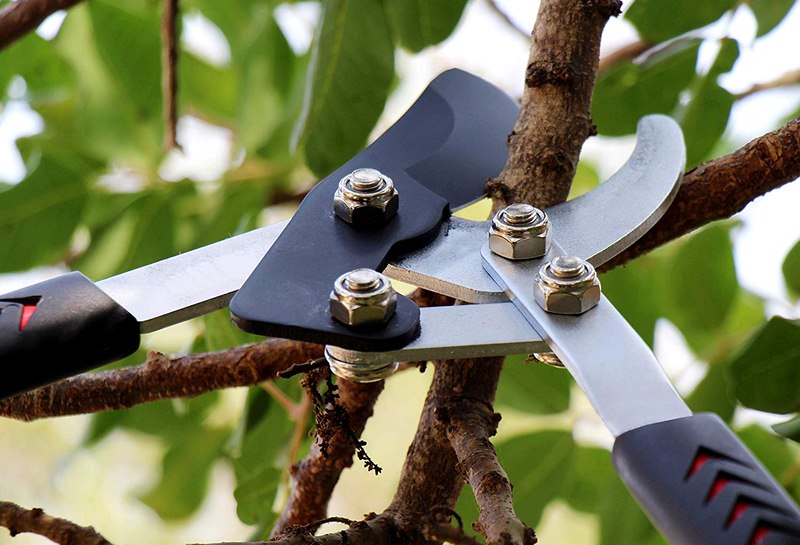
One may think of garden loppers as large-sized pruners. They are useful for keeping gardens in good condition and appearance. They cut off tough stems or branches with, better than regular small-sized pruners.
However, like every other garden tool, garden loppers need care and maintenance. Without proper care, this vital garden tool could lose its efficiency. And this can make gardening more tasking. For example, using blunt loppers would make cutting overgrown branches arduous. Even worse, it could make it impossible.
Agreed, anyone who owns and uses garden loppers should take care of them. This involves using the best pruning loppers for the right function(s). It also extends to carrying out proper maintenance. These points are below. Additional tips on sharpening garden loppers are also in the following.
How to Care for Garden Loppers
Caring for loppers goes beyond placing them in a toolbox or shelf when not in use. It also does not stop at being careful not to drop them on a hard floor. It takes more than that. It, however, is not a tedious ordeal to keep loppers in good condition.
The ways of caring for garden loppers are the following.
-
Using the Right Loppers for the Proper Work
Garden loppers are of two types. They are either bypass loppers or anvil loppers, just as there are pruners. Each of these types has its peculiar qualities and by extension, functions. For example, bypass loppers are very effective for chopping live wood. They even do it better than anvils.
Using bypass loppers to cut dry and dead branches, though possible, damages loppers. When this type of loppers cut too many dried up plants, its blades may eventually jam. It is also possible that the blades could bend.
The point is that caring for garden loppers crucially involves the proper use of the loppers.
-
Cleaning the Loppers’ Blades
Every time loppers preen plants; some amount of moisture gets in contact with its blades. This moisture, or even plant matter, could result in rusting of the blades. In turn, this would render the blades blunt and greatly hamper the usefulness of the loppers.
To avoid any of the above problems, one must be sure to clean the blades of the loppers. After each use is the best time to do this. The fulcrum of the tool also needs attention. To clean, only soft rags and rubbing alcohol would suffice.
-
Not Overusing the Loppers
This follows closely with using loppers for the right purposes. Garden loppers are inarguably very useful. However, they are not the tool for every gardening activity. It would not be proper care to use the lopper for just any pruning task.
For instance, it is inappropriate to use loppers for pruning large branches. They only fit for medium and small diameters.
Overusing the loppers would mean using it to perform too many tasks. This includes, for example, grass-cutting, tree-cutting, and weeding flowerbeds, all at a go. Finding the appropriate tools for these other tasks is very important.
-
Lubricating the Blades
It is important to regularly apply lubricating oil as a light coating to the lopper blades. The oil coating will prevent the chances of the blades rusting due to moisture. Lubricating is essential if the lopper will stay in storage or unused for a long time.
Lubricating the blades combats rust. Whereas, lubricating the fulcrum prevents stiffness and maintains ease of use.
Sharpening Garden Loppers
The strength and efficiency of a garden lopper lie primarily in the sharpness of its blades. After all, of what use is a lopper that cannot cut? It is therefore important that the blades of the lopper remain sharp. Below are some tips for sharpening garden loppers.
Lopper blades might not necessarily often need sharpening. However, sharpening should follow immediately blades show signs that necessitate sharpening. These signs will include a dulling or blunting of the blades.
In the event of signs, the process of lopper blade sharpening is very easy. The process involves using a sharpener to sharpen the blades. The type of sharpener would determine the exact sharpening procedure. Here is a brief examination of the general sharpening procedure.
-
Checking the Manufacturer’s Guide
This is an essential step in lopper care. It is important to follow the steps outlined for sharpening the tool if any. The manuals often contain specific cautions and instructions.
-
Making Sure the Blades are Clean
This simply involves cleaning the blade with soapy water and a stiff brush. Kerosene or similar solvents will remove the sap from blades if any.
-
Choosing Which Sharpening Tool to Use
The options range from flat files to grinding stones. There are sharpening steels, and then, whetstones. Whetstones are the most common sharpening tools for loppers.
They should be wet with water or motor oil (lightweight) for use. The blade lies on the concave side of the whetstone during sharpening. Sharpening requires continuous smooth strokes of the blade.
It is more effective when the blade goes in one direction. Also, it is not necessary to apply much force. The occasional addition of more oil or water is helpful.
Flat files, on the other hand, only require water for lubrication. Using them for sharpening would mean running the file against the beveled edge of the lopper.
-
Testing the Blades’ Sharpness
The light-reflection test can tell the sharpness of the blade. If the blade edge reflects light when it is up a light source, it needs more sharpening. Checking the sharpness with actual twigs and branches is more effective. Sharper blades leave cleaner cuts.
-
Coating with Oil
Adding a light coat of oil to the sharpened blades would complete the sharpening process.
These processes are of relevance to proper gardening. This is because sharpened garden tools, including loppers, are advantageous. For one thing, they make tasks faster and easier. Also, they ensure plants stay healthy by giving clean cuts.
Bottom Line
Loppers are handy tools in the garden. For them to stay relevant, however, proper maintenance and care are important. After obtaining any of the pruning loppers, maintenance is of the essence.
In the above are maintenance tips for garden loppers. These tips cover how to sharpen and care for garden loppers. Considering these tips and incorporating them will greatly improve the gardening experience.